Hawaii has extraordinary drone terrain: active lava fields, 3,000-foot sea cliffs, volcanic calderas, and coastal valleys unlike anything in the continental US โ but airspace rules require careful planning.
iOS app: $2.99/mo ยท 7-day free trial
Hawaii's airspace is more restricted than it looks on a map. Hawaii Volcanoes and Haleakala national parks prohibit drones entirely. Hickam Air Force Base and Pearl Harbor Naval Station on Oahu, Pohakuloa Training Area on the Big Island, and Marine Corps Base Hawaii on Kaneohe Bay all create significant restricted zones. Hawaii also has a state law specifically regulating drone use on state land. The clearest legal flying areas are DLNR state forest reserves and private land outside restricted zones. Always verify airspace and current regulations before every flight โ check FAA B4UFLY alongside DroneCast conditions.
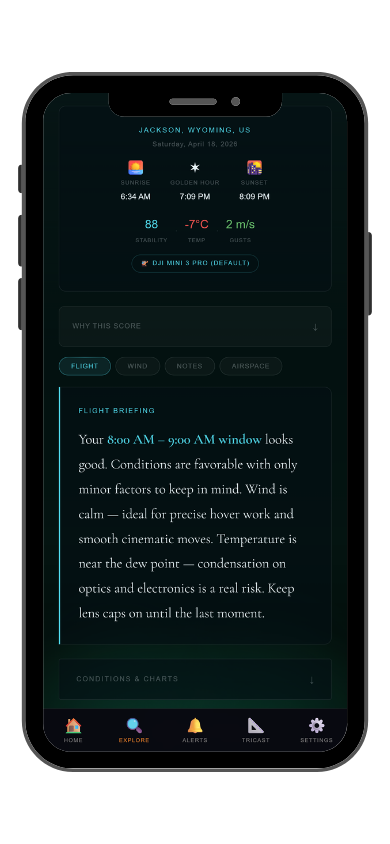
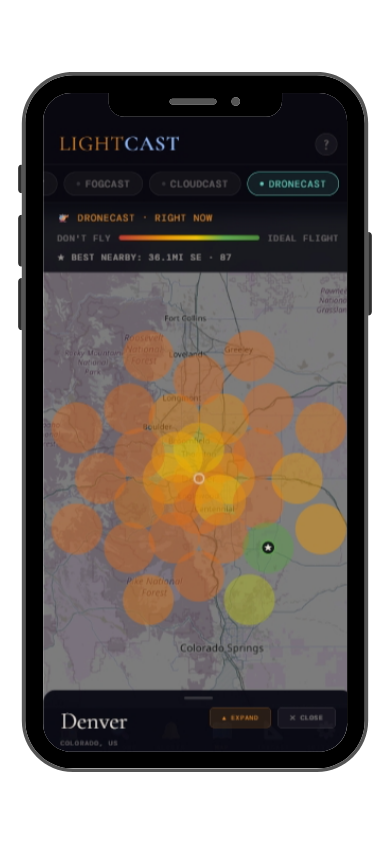
Hawaii's trade winds are consistent and often strong, especially on windward coasts and ridge tops. The Na Pali ridge and Molokai's north cliffs regularly see winds that ground most consumer drones. Morning is the best window on most islands. DroneCast scores wind, gusts, precipitation, visibility, and temperature into a single flight verdict. GoldCast (same app) gives you golden hour timing for any location.
Wind & gusts ยท Precipitation ยท Visibility ยท Temperature
$2.99/mo after 7-day free trial