DroneCast ยท Fog Flying Guide
LightCast

Can You Fly a Drone in Fog?

Fog reduces visibility below FAA minimums and saturates electronics with moisture. For most pilots, the answer is no โ€” but the window after burn-off is often excellent for aerial photography.

Check Flight + Fog Conditions โ€” iOS App Check today's conditions free on web โ†’

iOS app: $2.99/mo ยท 7-day free trial ยท Cancel anytime

Why fog grounds most drone pilots

Visibility, Moisture, and Line of Sight

Fog creates two problems simultaneously: a regulatory problem and a hardware problem. Both apply at once, and neither has an easy workaround for most recreational and Part 107 pilots.

๐Ÿ‘๏ธ
Visibility Below FAA Minimums
FAA regulations require 3-mile minimum visibility for drone operations. Dense fog routinely reduces visibility to a quarter mile or less. Flying in fog is a regulatory violation for most pilots without a specific waiver. This alone is sufficient reason to ground the drone.
๐Ÿ’ง
Moisture and Electronics
Fog consists of tiny water droplets suspended in air โ€” flying through it is similar to flying in light rain. Consumer drones have no weather sealing. Moisture accumulates on motors, ESCs, and camera electronics, risking corrosion and short circuits. Damage may not appear immediately but can cause failures on subsequent flights.
๐Ÿ”๏ธ
Above the Fog: A Legal Grey Area
Some pilots attempt to fly above a low fog layer, emerging above it in clear air. This eliminates visual line of sight through the fog below โ€” a regulatory violation without a waiver. Positioning yourself on a ridge above fog with a camera (not a drone) achieves the same shot legally.
๐ŸŒค๏ธ
After Burn-Off: Often Excellent Conditions
Fog requires calm wind to form. Once it burns off, conditions often include low wind, good visibility, and atmospheric depth from residual moisture โ€” excellent for aerial photography. FogCast estimates burn-off timing so you can have the drone ready when conditions clear.
LightCast DroneCast
๐Ÿ“
FogCast + DroneCast in One App
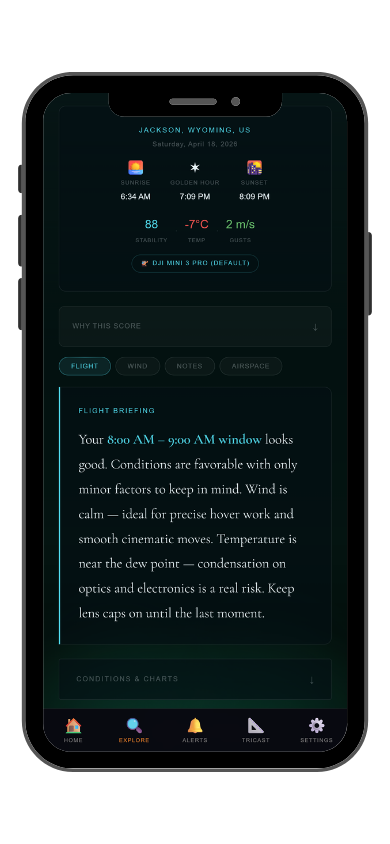
FogCast estimates fog burn-off timing. DroneCast scores flight conditions. Both in the same LightCast iOS app โ€” monitor when fog clears and the flight window opens simultaneously.
Common Questions
Can you fly a drone in fog?
No, for most pilots. Fog reduces visibility below FAA's 3-mile minimum and saturates electronics with moisture. Both are grounds to ground the drone. After fog burns off, conditions are often excellent โ€” monitor both in the LightCast iOS app.
Can flying in fog damage a drone?
Yes. Fog droplets accumulate on motors and electronics. Consumer drones have no weather sealing โ€” fog exposure is similar to light rain and can cause corrosion and electronic damage.
What about flying above the fog?
Launching through fog eliminates visual line of sight โ€” a regulatory violation for most pilots without a waiver. Positioning yourself on a ridge above fog with a camera (not a drone) achieves the same composition legally.
Is it good to fly a drone after fog clears?
Often yes. Post-fog conditions frequently include low wind and good visibility. FogCast estimates burn-off timing so you can plan to have the drone ready when conditions open up.
What is LightCast DroneCast?
DroneCast scores flight conditions using wind, gusts, precipitation, visibility, and temperature. FogCast (same app) estimates fog formation and burn-off timing. Free flight conditions on web, both tools in the iOS app. $2.99/month after a 7-day free trial.
LightCast
Know when the fog clears and the flight window opens.

FogCast burn-off timing ยท DroneCast flight score ยท Visibility
Saved locations ยท All tools in one app

Download LightCast for iOS
or
Check today's conditions free on web โ†’

$2.99/mo after 7-day free trial ยท Cancel anytime in App Store