Frequently asked
Is it safe to fly a drone in Charleston today?
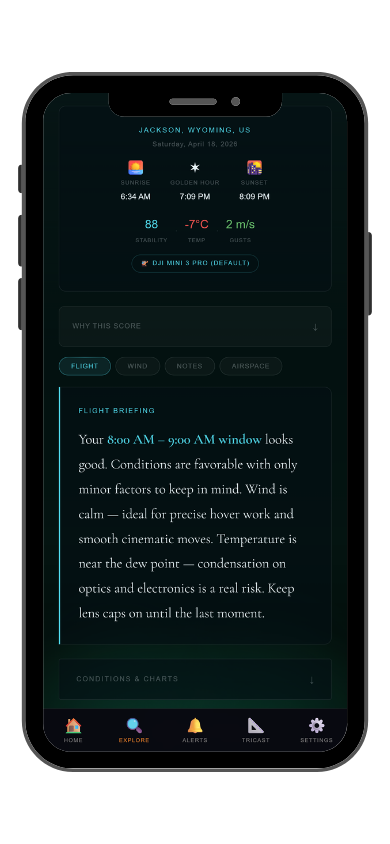
The live score above pulls today's forecast and scores wind, gusts, visibility, precipitation, and temperature into a single flight verdict. 90+ is ideal. Below 60, conditions require caution or postponement. Charleston sits on a low peninsula between the Ashley and Cooper rivers just miles from the Atlantic, making it highly exposed to coastal wind, sea breezes, afternoon thunderstorms, and tropical weather systems from June through November.
Where can I fly a drone in Charleston?
Charleston International Airport (CHS) and the adjacent Joint Base Charleston create overlapping FAA and military airspace restrictions over the entire metro. The historic peninsula, harbor, Fort Sumter, and Isle of Palms beach areas require LAANC authorization or are outright prohibited. James Island County Park and Caw Caw Interpretive Center in the outer areas offer more accessible recreational flying. Check B4UFLY, FAA DroneZone, and military NOTAMs before every flight.
What wind speed is too high for drone flying?
Above 10–12 mph sustained, footage quality degrades. Above 20 mph or with gusts 15+ mph above sustained wind, most consumer drones are at risk. Charleston's Atlantic coastal exposure means consistent onshore winds with sea breeze fronts that can increase sharply in the afternoon. Hurricane season is a real planning factor for summer and fall flying. DroneCast's real-time scoring helps identify the calm windows worth launching in.
What is DroneCast by LightCast Suite?
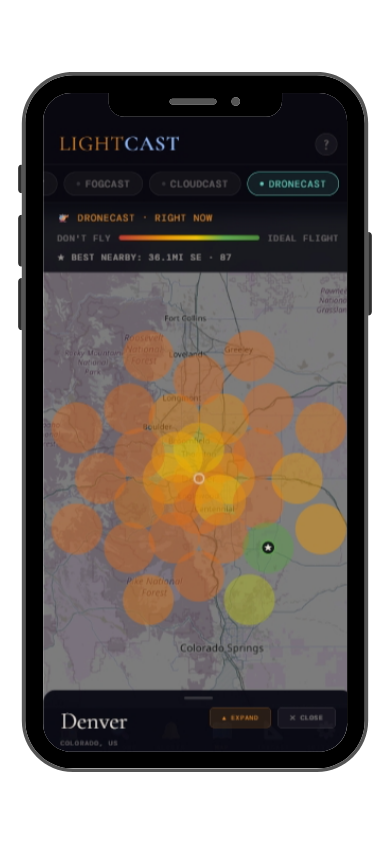
DroneCast scores flight conditions using wind, gusts, precipitation, visibility, and temperature. GoldCast (same app) scores golden hour quality and timing. Free on web at
lightcastsuite.com/dronecast, full features in the
LightCast iOS app. $2.99/month after a 7-day free trial.