Frequently asked
Is it safe to fly a drone in Flåm today?
The live score above pulls today's forecast and scores wind, gusts, visibility, precipitation, and temperature into a single flight verdict. 90+ is ideal. Below 60, conditions require caution or postponement. Flåm sits at the innermost end of Nærøyfjord — the narrowest and most dramatic branch of Sognefjord — at near sea level in western Norway. Extreme fjord wall height relative to fjord width creates one of the most turbulent aerial environments in Scandinavia, with katabatic wind, waterfall spray, and near-constant aircraft and cruise traffic overhead.
Where can I fly a drone in Flåm?
Nærøyfjord is a UNESCO World Heritage Site — Norway's Civil Aviation Authority (Luftfartstilsynet) requires drone registration and EASA compliance. Flåm is one of Norway's busiest cruise ports in summer with helicopter sightseeing traffic that creates complex low-altitude conflicts. The Flåm Railway corridor is a further airspace consideration. Commercial work requires operator certification. Check current Norwegian CAA rules and assess all air traffic carefully before launching.
What wind speed is too high for drone flying?
Above 10–12 mph sustained, footage quality degrades. Above 20 mph or with gusts 15+ mph above sustained wind, most consumer drones are at risk. Nærøyfjord's extreme walls funnel wind with tremendous force — conditions at the fjord surface can seem calm while the air column above is severely turbulent. Pre-dawn in calm high-pressure conditions is the only reliably safe flying window here; summer afternoons and any windy days should be avoided entirely.
What is DroneCast by LightCast Suite?
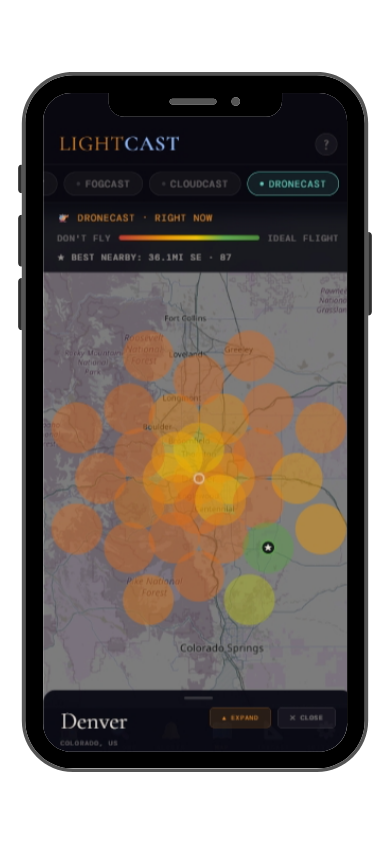
DroneCast scores flight conditions using wind, gusts, precipitation, visibility, and temperature. GoldCast (same app) scores golden hour quality and timing. Free on web at
lightcastsuite.com/dronecast, full features in the
LightCast iOS app. $2.99/month after a 7-day free trial.