Frequently asked
Is it safe to fly a drone in La Palma today?
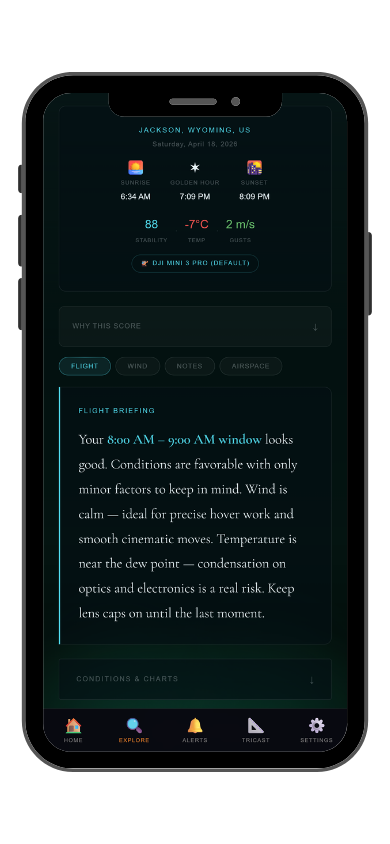
The live score above pulls today's forecast and scores wind, gusts, visibility, precipitation, and temperature into a single flight verdict. 90+ is ideal. Below 60, conditions require caution or postponement. La Palma is the steepest island in the world by gradient — the Caldera de Taburiente creates dramatic uplift, trade wind acceleration on the northeastern slopes, and rapid weather transitions between the arid south and the cloud-forested north. The 2021 Cumbre Vieja eruption left new lava fields with complex local wind patterns.
Where can I fly a drone in La Palma?
Caldera de Taburiente National Park prohibits drone use without authorization. The Cumbre Vieja volcanic zone — including the 2021 lava fields — has ongoing restrictions managed by the Canary Islands government. Spain's AESA requires drone registration and EU EASA compliance. La Palma's UNESCO Biosphere Reserve status adds further sensitivity. Open coastal and agricultural areas in the south may offer accessible options. Always verify current AESA rules and any active volcanic zone restrictions before flying.
What wind speed is too high for drone flying?
Above 10–12 mph sustained, footage quality degrades. Above 20 mph or with gusts 15+ mph above sustained wind, most consumer drones are at risk. La Palma's dramatic topography creates significant wind variation across short distances — the northeast trade wind that powers the island's cloud forest can be severe on the eastern ridgeline while the southwest remains calm. Always assess conditions at your specific planned location rather than relying on island-wide readings.
What is DroneCast by LightCast Suite?
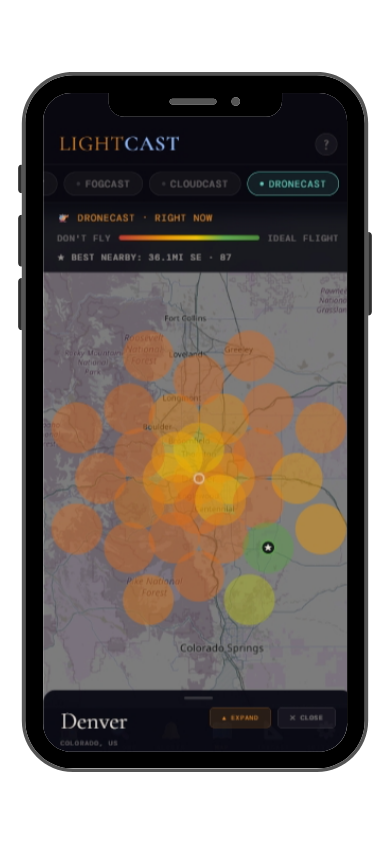
DroneCast scores flight conditions using wind, gusts, precipitation, visibility, and temperature. GoldCast (same app) scores golden hour quality and timing. Free on web at
lightcastsuite.com/dronecast, full features in the
LightCast iOS app. $2.99/month after a 7-day free trial.