Frequently asked
Is it safe to fly a drone in Little Rock today?
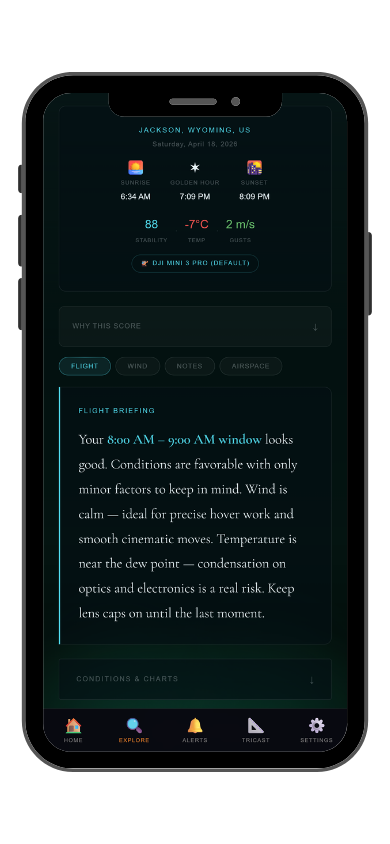
The live score above pulls today's forecast and scores wind, gusts, visibility, precipitation, and temperature into a single flight verdict. 90+ is ideal. Below 60, conditions require caution or postponement. Little Rock sits in the Arkansas River valley at the transition zone between the Ouachita Mountains and the Mississippi Delta flatlands, putting it in a prime corridor for spring tornado and severe weather activity. Southerly winds off the Gulf frequently fuel active weather systems from March through May.
Where can I fly a drone in Little Rock?
Bill and Hillary Clinton National Airport (LIT) generates Class C airspace over the metro. The Arkansas River waterfront, downtown, and Riverfront Park require LAANC authorization. Little Rock Air Force Base to the north adds military restricted airspace. Pinnacle Mountain State Park west of the city and Lake Maumelle offer more accessible recreational flying outside restricted zones. Check B4UFLY, FAA DroneZone, and military NOTAMs before every flight.
What wind speed is too high for drone flying?
Above 10–12 mph sustained, footage quality degrades. Above 20 mph or with gusts 15+ mph above sustained wind, most consumer drones are at risk. Little Rock's river valley and proximity to the Great Plains severe weather corridor mean spring gust fronts and tornado-producing supercells are a real seasonal consideration. DroneCast's real-time scoring helps identify the calm windows worth launching in.
What is DroneCast by LightCast Suite?
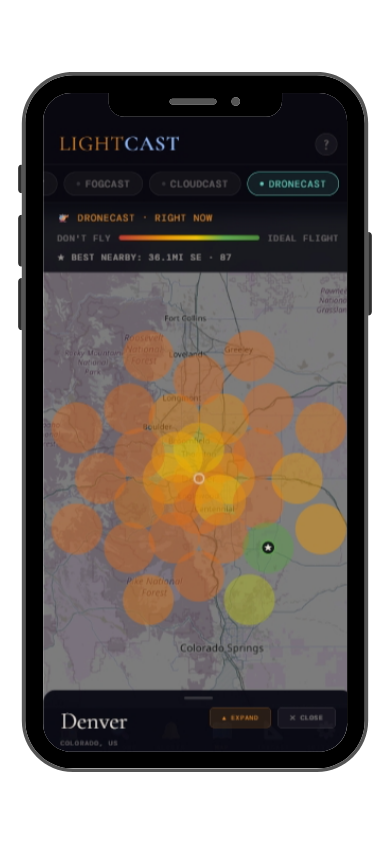
DroneCast scores flight conditions using wind, gusts, precipitation, visibility, and temperature. GoldCast (same app) scores golden hour quality and timing. Free on web at
lightcastsuite.com/dronecast, full features in the
LightCast iOS app. $2.99/month after a 7-day free trial.