Frequently asked
Is it safe to fly a drone in the Lofoten Islands today?
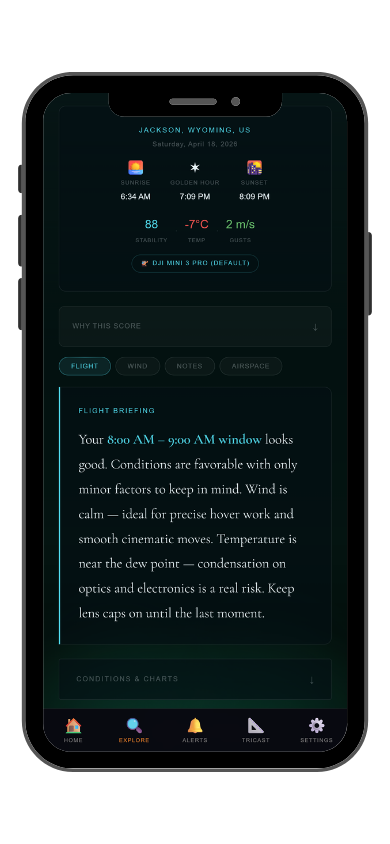
The live score above pulls today's forecast and scores wind, gusts, visibility, precipitation, and temperature into a single flight verdict. 90+ is ideal. Below 60, conditions require caution or postponement. The Lofoten Islands rise sharply from the Norwegian Sea — dramatic but wind-exposed terrain means gusts can accelerate violently around peaks and headlands, and weather changes fast throughout the year.
Where can I fly a drone in the Lofoten Islands?
Norway follows EASA drone regulations — register your drone, complete online training, and follow Open Category rules (below 120m, away from people, within visual line of sight). Many of Lofoten's most photographed locations — Reine, Nusfjord, Hamnøy — are in populated areas where proximity rules limit where you can legally fly. Svolvær Airport creates a controlled airspace zone. Always check the Norwegian CAA's Drone Norway map before flying at any location in Lofoten.
What wind speed is too high for drone flying?
Above 10–12 mph sustained, footage quality degrades. Above 20 mph or with gusts 15+ mph above sustained wind, most consumer drones are at risk. Lofoten's exposed Norwegian Sea position and mountain peaks that rise directly from the water create extreme wind acceleration — what feels manageable at sea level can be dangerous at the altitude needed for dramatic shots.
What is DroneCast by LightCast Suite?
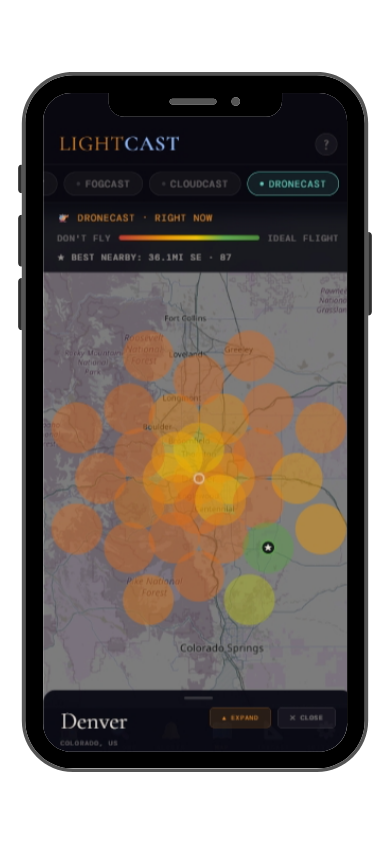
DroneCast scores flight conditions using wind, gusts, precipitation, visibility, and temperature. GoldCast (same app) scores golden hour quality and timing. Free on web at
lightcastsuite.com/dronecast, full features in the
LightCast iOS app. $2.99/month after a 7-day free trial.