Frequently asked
Is it safe to fly a drone at Pico del Teide today?
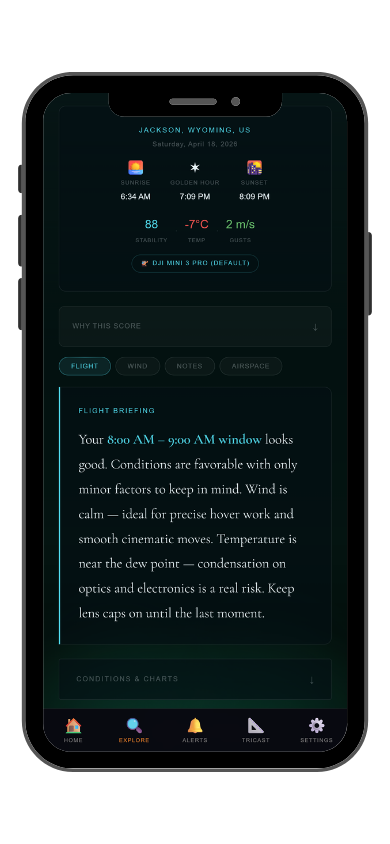
The live score above pulls today's forecast and scores wind, gusts, visibility, precipitation, and temperature into a single flight verdict. 90+ is ideal. Below 60, conditions require caution or postponement. Pico del Teide rises to 3,715 meters — Spain's highest peak and one of the world's largest volcanoes. At summit altitude, thin air reduces drone lift significantly, battery drain accelerates in cold temperatures, and wind at the crater rim can be severe even when conditions appear benign at lower elevations on Tenerife.
Where can I fly a drone near Pico del Teide?
Teide National Park is a UNESCO World Heritage Site — drone use is strictly prohibited within the national park without authorization from the park authority. Spain's State Aviation Safety Agency (AESA) requires drone registration and compliance with EU EASA regulations. The park covers the entire Las Cañadas caldera and summit area. Drone use outside the park boundary on private or urban land may be possible — verify current AESA rules and any Tenerife municipal restrictions before flying.
What wind speed is too high for drone flying?
Above 10–12 mph sustained, footage quality degrades. Above 20 mph or with gusts 15+ mph above sustained wind, most consumer drones are at risk. At 3,715 meters, air density is roughly 65% of sea level — drones must work harder to maintain altitude and may not be able to hold position in wind that would be manageable at lower elevations. Cold summit temperatures further reduce battery capacity; plan for significantly shorter flights than at sea level.
What is DroneCast by LightCast Suite?
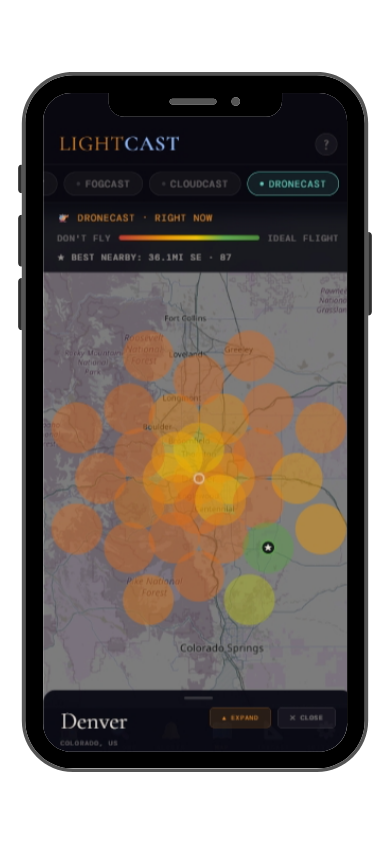
DroneCast scores flight conditions using wind, gusts, precipitation, visibility, and temperature. GoldCast (same app) scores golden hour quality and timing. Free on web at
lightcastsuite.com/dronecast, full features in the
LightCast iOS app. $2.99/month after a 7-day free trial.