Frequently asked
Is it safe to fly a drone in Tulsa today?
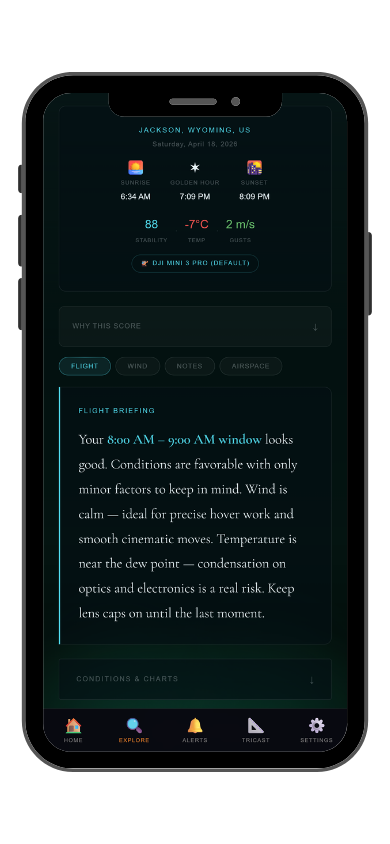
The live score above pulls today's forecast and scores wind, gusts, visibility, precipitation, and temperature into a single flight verdict. 90+ is ideal. Below 60, conditions require caution or postponement. Tulsa sits in the Arkansas River valley in northeastern Oklahoma at the eastern edge of the Great Plains, making it a frequent target for spring severe weather systems moving northeast out of Tornado Alley. Wind is a consistent year-round factor across the flat terrain surrounding the city.
Where can I fly a drone in Tulsa?
Tulsa International (TUL) generates Class C airspace over the metro. The Arkansas River parks corridor, downtown, and the Gathering Place area require LAANC authorization. Richard Lloyd Jones Jr. Airport (RVS) in south Tulsa adds Class D airspace to the southern metro. Keystone Lake and Oologah Lake to the northwest and northeast offer accessible recreational flying outside the Class C boundary. Check B4UFLY and FAA DroneZone before every flight.
What wind speed is too high for drone flying?
Above 10–12 mph sustained, footage quality degrades. Above 20 mph or with gusts 15+ mph above sustained wind, most consumer drones are at risk. Tulsa's Great Plains exposure means sustained winds are common even on calm-looking days, and spring supercell storm systems can produce catastrophic gust fronts with little warning. DroneCast's real-time scoring helps identify the calm windows worth launching in.
What is DroneCast by LightCast Suite?
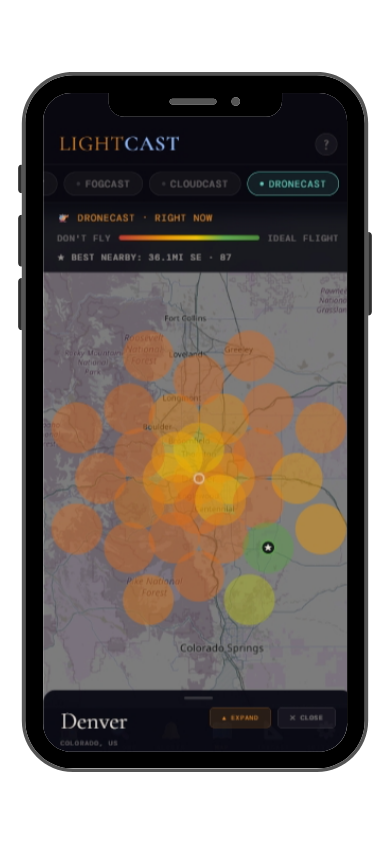
DroneCast scores flight conditions using wind, gusts, precipitation, visibility, and temperature. GoldCast (same app) scores golden hour quality and timing. Free on web at
lightcastsuite.com/dronecast, full features in the
LightCast iOS app. $2.99/month after a 7-day free trial.