DroneCast ยท Flight Conditions Guide
LightCast

How Does Wind Direction Affect Drone Flight?

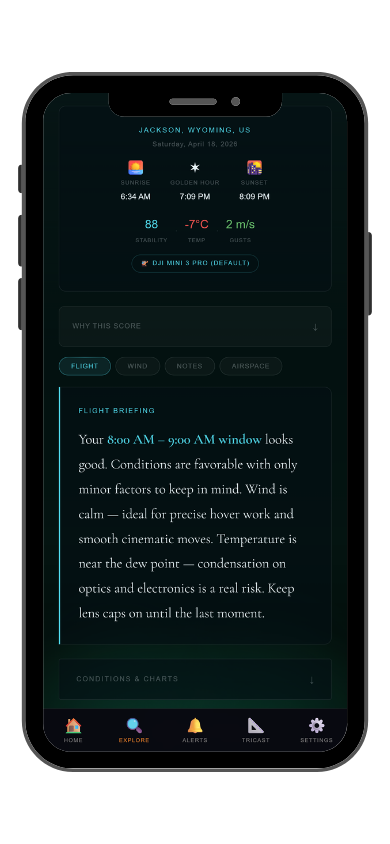
Wind speed gets all the attention. Wind direction is what actually determines your battery budget and return safety. LightCast DroneCast scores both for your location before you fly.

Check Flight Conditions โ€” iOS App Learn More โ†’

iOS app: $2.99/mo ยท 7-day free trial ยท Cancel anytime

The rule that saves batteries

Always Fly Into the Wind First

Most drone pilots watch the wind speed number and ignore the direction arrow. Direction determines your entire flight energy budget. Flying downwind on the outbound leg feels easy in the air โ€” the drone moves fast with less motor effort โ€” but the return into a headwind with a partially depleted battery is where flights get cut short or drones don't make it home. The rule is simple: take off pointing into the wind and fly into it first.

๐Ÿ”‹
Headwind on Outbound: Safe
Flying into the wind on the way out means the return leg is a tailwind. The drone uses less motor effort, less battery, and gets home faster than it left. Low-battery warnings trigger with enough margin to return safely. This is the correct flight path in any meaningful wind.
โš ๏ธ
Tailwind on Outbound: High Risk
Easy going out, dangerous coming back. The drone's battery percentage estimate is calibrated for average load โ€” sustained headwind return draws more current than the estimate accounts for, and low-battery warnings may not trigger with enough runway to return safely. Avoid when wind is above 8 mph.
๐Ÿ“น
Crosswind: Stability and Footage Quality
Crosswind pushes the drone laterally during hover and slow tracking shots, creating micro-drifts that require constant correction. Video quality degrades noticeably above 10 mph crosswind for most consumer gimbal systems. Slow orbits and lateral tracking moves are most affected.
๐Ÿ’จ
Gusts: More Dangerous Than Sustained Wind
A sustained 15 mph wind is manageable for most drones. A 10 mph average with 20 mph gusts is more dangerous: gusts create sudden attitude changes the drone must aggressively compensate for, spiking current draw and destabilizing footage. DroneCast flags gust intensity separately from sustained wind speed.
LightCast DroneCast
What to check before you fly

Direction, Speed, and Gusts Together

Wind speed alone doesn't tell you whether a flight is safe. You need speed, direction, and gust data together to plan a flight path with a safe battery margin. DroneCast scores all three as part of a single 0โ€“100 flight condition score for any location, so you can decide before you drive to the site whether the conditions support the shot you're planning.

๐Ÿ“
App Exclusive
DroneCast is only in the iOS app, alongside FogCast, CloudCast, StarCast, GoldCast, and TriCast. GoldCast and StarCast send push alerts when golden hour or night sky conditions hit your threshold โ€” useful if you're combining a drone flight with a photography session at the same location.
Common Questions
Should I fly into the wind or with the wind?
Always fly into the wind on your outbound leg. The return with a tailwind is easier and uses less battery, which means your low-battery warnings trigger with more margin. Flying downwind first creates a high-risk return that catches pilots off guard. Check DroneCast for wind direction at your location before launch.
How does wind direction affect battery life?
Headwind requires more motor effort, which drains battery faster. Tailwind reduces motor effort. The issue is the return trip: if you flew downwind on the way out, you face a headwind on the way back with a partially depleted battery โ€” and the battery percentage display becomes unreliable under sustained high-load return flight.
What wind direction is worst for drone photography?
Crosswind at moderate speeds is the hardest for stable footage because it creates lateral drift during hover and slow tracking. For safety, a tailwind on the outbound leg is the most dangerous because of return battery risk. DroneCast scores wind direction, speed, and gusts together to flag both issues.
Are gusts worse than sustained wind?
Usually yes. Gusts create sudden attitude changes that spike motor current, degrade footage stability, and make the drone harder to control precisely. A steady 15 mph wind is often easier to manage than a 10 mph average with 20 mph gusts. DroneCast flags gust intensity separately from sustained speed.
What is LightCast DroneCast?
DroneCast scores flight conditions from 0 to 100 using wind speed, gusts, direction, precipitation, humidity, visibility, and temperature for any location. Free on web at lightcastsuite.com/dronecast, with saved locations in the LightCast iOS app. $2.99/month after a 7-day free trial.
LightCast
Know the wind before you launch.

Wind speed & direction ยท Gust intensity ยท Flight condition score
Visibility ยท Precipitation risk ยท Saved locations

Download LightCast for iOS
or
Check today's conditions free on web โ†’

$2.99/mo after 7-day free trial ยท Cancel anytime in App Store