DroneCast ยท Flight Limits Guide
LightCast

How Far Can You Fly a Drone?

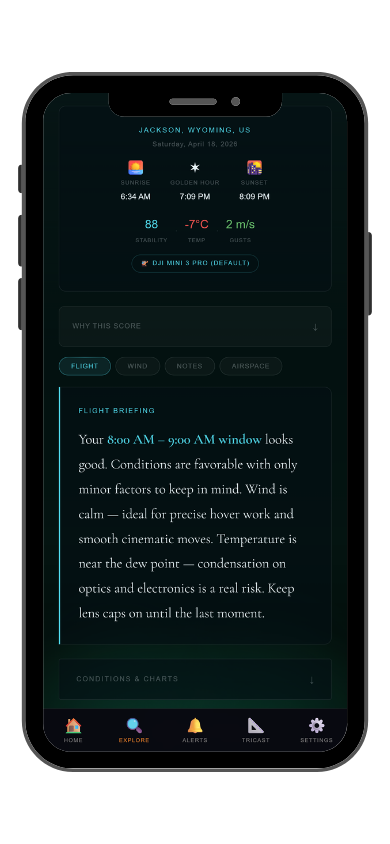
The legal limit is visual line of sight, not a number. The practical limit is wind, battery, and visibility. LightCast DroneCast scores all three for your location before you fly.

Check Flight Conditions โ€” iOS App Learn More โ†’

iOS app: $2.99/mo ยท 7-day free trial ยท Cancel anytime

Legal limits first

What the FAA Actually Says

There is no stated horizontal distance limit in FAA regulations. The rule is visual line of sight: you must be able to see your drone with unaided eyes at all times. In practice, that limits most flights to 1,500โ€“2,000 feet horizontally in clear conditions โ€” less in haze, low visibility, or with a small aircraft. Altitude is capped at 400 feet AGL.

๐Ÿ“
Horizontal Range: Visual Line of Sight
No fixed number โ€” it depends on visibility, drone size, and your eyesight. Most pilots lose reliable visual contact beyond 1,500 to 2,000 feet in clear conditions. Haze, smoke, or low visibility reduces this significantly. Flying beyond visual line of sight requires a specific FAA waiver, which is rarely granted for recreational use.
๐Ÿ“
Altitude: 400 Feet AGL Maximum
400 feet above ground level for both Part 107 and recreational pilots. One exception: within 400 feet of a structure, you can fly higher than 400 feet as long as you stay within 400 feet of the structure. Controlled airspace near airports requires LAANC authorization regardless of altitude.
๐Ÿ”‹
Practical Limit: Battery and Wind
Most consumer drones have a technical range of several miles, but battery management and wind make this irrelevant in practice. A drone fighting a 15 mph headwind on the return leg uses far more battery than in calm conditions. Always plan your return flight with more battery than you think you need โ€” especially in wind.
๐Ÿ‘๏ธ
Visibility Affects Both Legal and Practical Range
FAA rules require minimum 3-mile visibility for drone operations. Haze, fog, and smoke reduce both legal compliance and practical control. DroneCast flags visibility conditions alongside wind and precipitation so you see the full picture before launch.
LightCast DroneCast
Wind is the real range limiter

Why Wind Matters More Than Technical Range

Consumer drone specs list impressive range numbers measured in ideal, windless conditions. Real flights are rarely windless. A 10 mph headwind on the outbound leg becomes a 10 mph headwind again on the return โ€” and your battery is already partially depleted. DroneCast scores wind speed, gusts, and direction so you can judge whether the day's conditions support your planned flight distance before you take off.

๐Ÿ“
App Exclusive
DroneCast is only in the iOS app, alongside FogCast, CloudCast, StarCast, GoldCast, and TriCast. GoldCast and StarCast send push alerts when golden hour or night sky conditions hit your threshold โ€” useful if you're combining a drone flight with a photography session.
Common Questions
How far can you legally fly a drone?
The FAA doesn't specify a horizontal distance โ€” the rule is visual line of sight at all times. In practice that's roughly 1,500โ€“2,000 feet in clear conditions. Beyond visual line of sight requires a specific FAA waiver. Check DroneCast for today's visibility conditions at your location.
How high can you fly a drone?
400 feet above ground level for both Part 107 and recreational pilots. Exception: within 400 feet of a structure you can fly higher while staying within 400 feet of it. Controlled airspace near airports requires LAANC authorization through the FAA system.
Does wind affect how far you can fly?
Significantly. Headwind drains battery faster on the return leg. Always budget more battery than you think you need in windy conditions and plan to return earlier than the low-battery warning โ€” actual remaining capacity is less reliable in wind and cold. LightCast DroneCast scores wind speed and gusts for your location.
What is the technical range of consumer drones?
DJI's consumer lineup lists ranges from 6 to 12+ miles depending on model. These are measured in ideal, obstacle-free, windless conditions and are rarely achievable in practice โ€” and visual line of sight rules make them legally irrelevant for most pilots without a waiver.
What is LightCast DroneCast?
DroneCast scores flight conditions from 0 to 100 using wind speed, gusts, precipitation, humidity, visibility, and temperature for any location. Free on web at lightcastsuite.com/dronecast, with saved locations in the LightCast iOS app. $2.99/month after a 7-day free trial.
LightCast
Know the conditions before you launch.

Wind speed & gusts ยท Visibility ยท Precipitation risk
Flight conditions score ยท Saved locations ยท Multi-day comparison

Download LightCast for iOS
or
Check today's conditions free on web โ†’

$2.99/mo after 7-day free trial ยท Cancel anytime in App Store