LightCast · Badlands National Park, SD

Badlands National Park Photography Guide

Reading today's conditions…

Photography viewpoints · Badlands

Where to Shoot

Badlands is one of the most otherworldly landscapes in North America — eroded buttes, pinnacles, and spires striped in bands of red, orange, yellow, and purple clay. The light here is extreme: flat midday sun kills the texture, but golden hour rakes across the formations and makes every layer pop. Thunderstorm light in summer is legendary among Great Plains photographers.

🌅
Badlands Loop Road Overlooks Highway 240 · Sunrise
The 31-mile Badlands Loop Road strings together a series of pull-offs and overlooks above the Wall — the abrupt escarpment where the prairie drops into the eroded basin. Big Badlands Overlook and Pinnacles Overlook are the strongest sunrise positions, with the formations lit warm orange from the east while the western sky still holds blue. Arrive before civil twilight to watch the color build across the banded spires.
🌩️
Yellow Mounds and Conata Basin Interior · Color Layers
The Yellow Mounds area along the north unit road is one of the most colorful sections of the park — the clay layers shift from mustard yellow to lavender to brick red within a few hundred feet of elevation. Late afternoon side-light in fall is exceptional here. Conata Basin to the south gives wide-open views across prairie and spires, ideal for storm photography when weather is building from the west.
🌌
Sage Creek Wilderness Area Bortle 2-3 · Night Sky
The remote Sage Creek area in the park's southwest corner has some of the darkest skies in the eastern half of the US. The Bortle class drops to 2 away from the Loop Road, and the spire silhouettes make extraordinary foreground for wide Milky Way compositions. The galactic core rises to the south from May through August. Bison frequently graze nearby at night — keep your distance and watch where you step.
🦬
Notch Trail and Castle Trail Interior Trails · Elevated Views
The Notch Trail scrambles up a log ladder to a ledge above the White River Valley — the elevated position gives a sweeping view of the badlands basin that's impossible from road level. Castle Trail is the longest in the park (10 miles) and passes through eroded formations that change character completely in different light. Both trails require hiking into the formations rather than shooting from overlooks, and reward patience with compositions no one else is getting.

Inside LightCast Suite
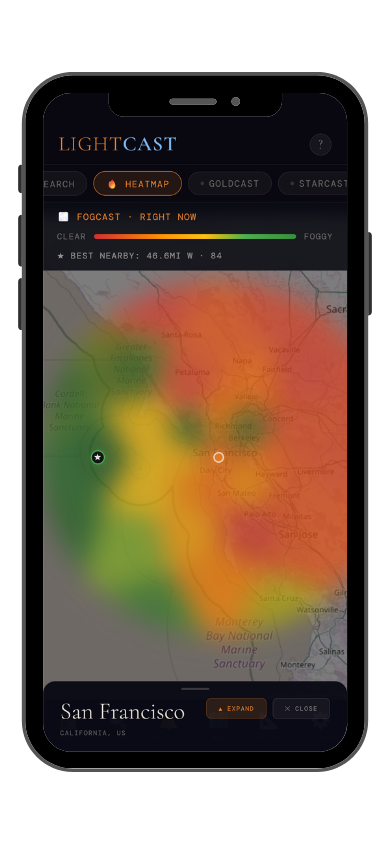
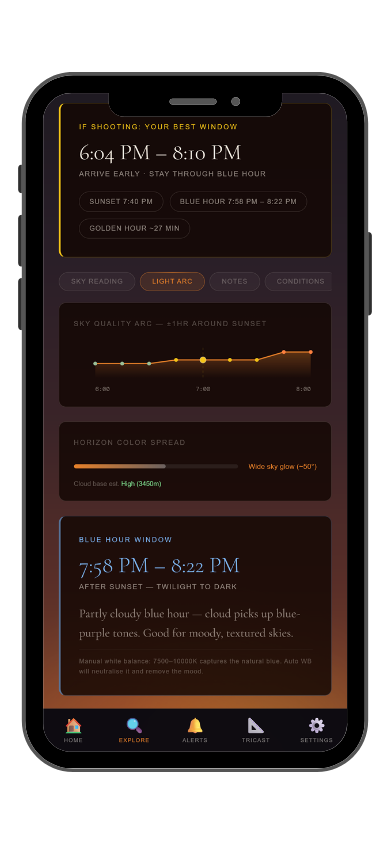
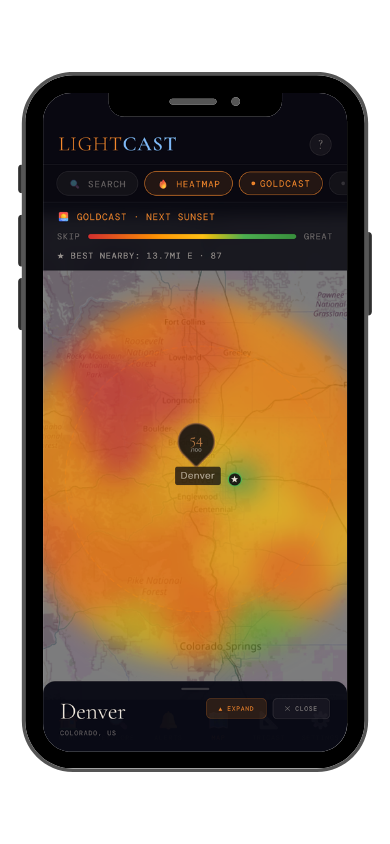
GoldCast golden hour forecast GoldCast conditions heatmap

GoldCast: golden hour score (left) · conditions heatmap (right)

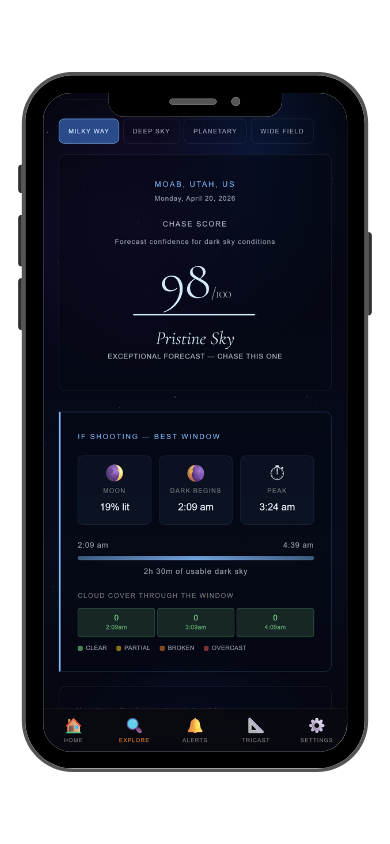
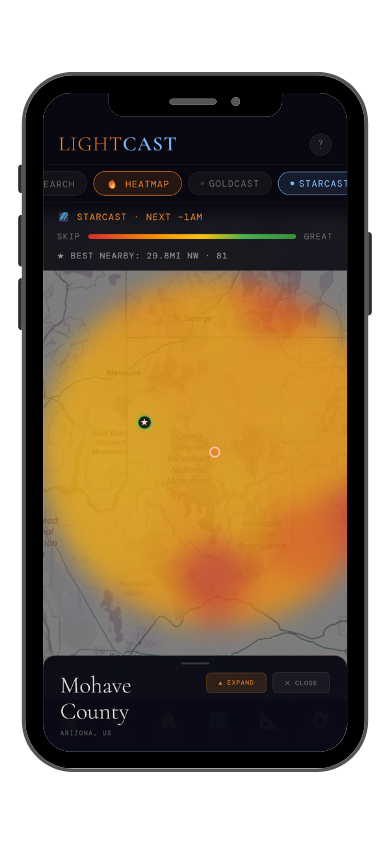
StarCast night sky forecast StarCast heatmap

StarCast: night sky score (left) · conditions heatmap (right)

LightCast Get a live forecast for your favorite spot


Frequently asked
What is the best time to photograph Badlands National Park?
Late spring (May–June) and early fall (September–October) offer the best conditions — golden hour rakes across the layered spires and makes every color band pop. Summer thunderstorm light can be spectacular but unpredictable. Check GoldCast for cloud cover and exact golden hour timing before heading out.
Can you see the Milky Way at Badlands?
Yes — Badlands is one of the best Milky Way locations in the lower 48. The Sage Creek Wilderness area reaches Bortle 2, and the spire silhouettes make extraordinary foreground subjects. The galactic core is visible from late April through September on new moon nights. Check StarCast for moon phase and sky conditions before making the drive out.
Are drones allowed at Badlands?
Drones require a Special Use Permit and are rarely approved for recreational use. Check current NPS rules and FAA TFRs before any flight near park boundaries.
How do I photograph Badlands storm light?
Summer thunderstorms build over the Great Plains almost daily — the window between storm and clear sky at golden hour produces some of the most dramatic landscape light in North America. Conata Basin and the Loop Road overlooks give unobstructed western views for watching weather approach. Use GoldCast to time the light window.
What is LightCast?
LightCast is a suite of photography weather tools. GoldCast handles golden hour timing with cloud and fog forecasts. StarCast scores night sky conditions. DroneCast covers wind and visibility for drone pilots. All three are free on web; full features including 7-day forecasts and push alerts are in the LightCast iOS app — $2.99/month after a 7-day free trial.
LightCast
Plan your next shoot.

Search any city, park, or location worldwide

Get LightCast on iPhone
or
Learn More →

$2.99/mo after 7-day free trial