LightCast · Canyonlands National Park, UT

Canyonlands National Park Photography Guide

Reading today's conditions…

Photography viewpoints · Canyonlands

Where to Shoot

Canyonlands is the largest national park in Utah and the most remote — the Colorado and Green rivers carve the landscape into three distinct districts separated by hundreds of miles of dirt road. Island in the Sky is the most accessible and most photographed, sitting atop a 1,500-foot mesa with views across the entire canyon system. The scale here dwarfs everything; human figures disappear in the landscape entirely.

🌅
Mesa Arch Island in the Sky · Sunrise
Mesa Arch is the most competitive sunrise position in Utah — a low sandstone arch at the rim of Island in the Sky that frames the canyon 1,200 feet below. At sunrise the underside of the arch glows bright orange from reflected canyon light before the sun clears the horizon, a phenomenon that lasts only a few minutes. The 0.5-mile trail is flat; arrive 45 minutes before sunrise to claim a spot on the rock in peak season. A wide-angle lens (16–24mm) is the tool here.
🏜️
Grand View Point and Green River Overlook Island in the Sky · Canyon Views
Grand View Point at the southern tip of Island in the Sky gives the widest canyon panorama in the park — the Colorado River gorge drops away on three sides and the Needles district is visible 50 miles to the south. The Green River Overlook on the west side frames the entrenched meander of the Green River against red canyon walls in late afternoon light. Both are drive-up overlooks that reward a wide lens at sunset.
🌌
Upheaval Dome and Deadhorse Point Bortle 2-3 · Night Sky
The Island in the Sky district has some of the darkest skies in the Colorado Plateau. Upheaval Dome — a mysterious circular crater formation — creates a unique foreground for wide Milky Way shots. Dead Horse Point State Park, just outside the park boundary, is one of the most famous night sky locations in the West, with the Colorado River's entrenched meander 2,000 feet below visible by starlight on clear nights.
🗺️
The Needles District Southeast Canyonlands · Remote
The Needles district in the southeast corner of the park is accessed by a separate entrance 75 miles from Island in the Sky. Cedar Mesa Sandstone spires — striped red and white — rise from a maze of canyons accessible only on foot or by 4WD. Photographers willing to backpack 2–3 days into the Joint Trail and Chesler Park area find some of the most intimate canyon light in the park system. Plan carefully — no services, limited water, and long drives between locations.

Inside LightCast Suite
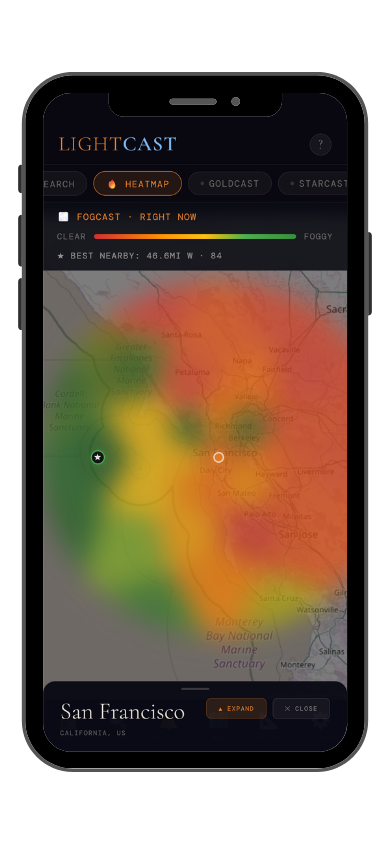
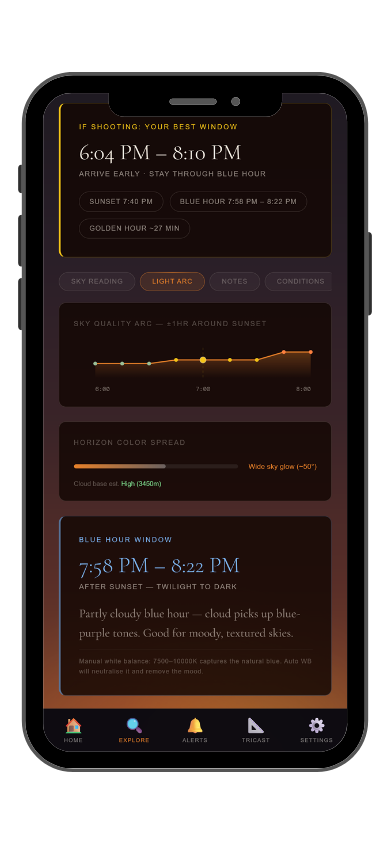
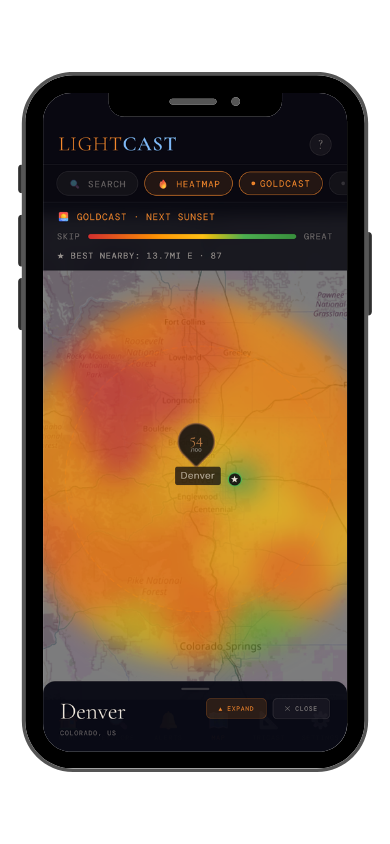
GoldCast golden hour forecast GoldCast conditions heatmap

GoldCast: golden hour score (left) · conditions heatmap (right)

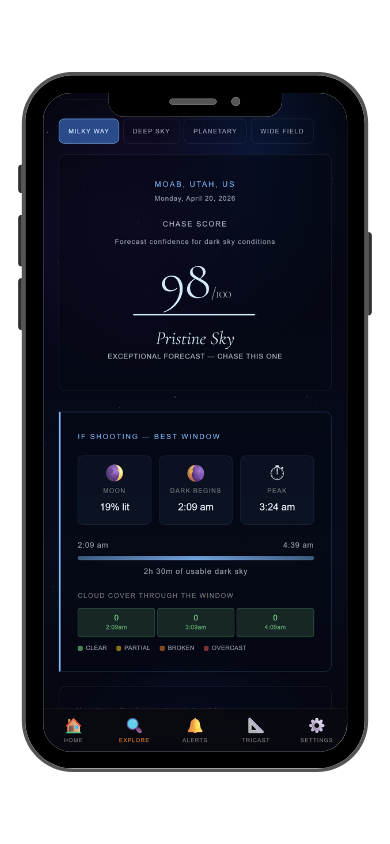
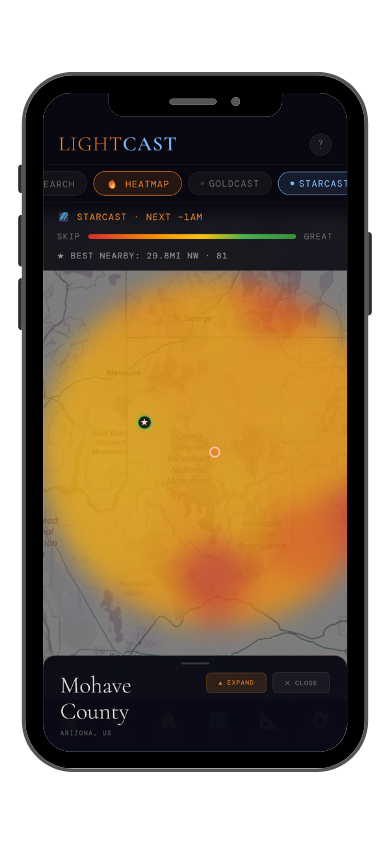
StarCast night sky forecast StarCast heatmap

StarCast: night sky score (left) · conditions heatmap (right)

LightCast Get a live forecast for your favorite spot


Frequently asked
What is the best time to photograph Canyonlands National Park?
Spring and fall offer the best light and temperatures. Mesa Arch at sunrise is the signature shot — the arch glows orange from reflected canyon light for just a few minutes before sunrise. Check GoldCast for cloud cover the night before; even thin clouds can kill the glow effect.
Can you see the Milky Way at Canyonlands?
Yes — Canyonlands has Bortle 2-3 skies and is one of the darkest parks in the country. Mesa Arch and Dead Horse Point make exceptional foreground subjects. The galactic core is visible from late April through September. Check StarCast before heading out.
Are drones allowed at Canyonlands?
Drones are prohibited without a Special Use Permit. Check current NPS rules and FAA TFRs before any flight near the park.
How early do I need to arrive at Mesa Arch for sunrise?
In peak season (spring and fall), arrive 45–60 minutes before sunrise to claim a front-row position on the rock. The trail is only 0.5 miles but the arch draws large crowds. The glow on the underside of the arch lasts only a few minutes — there's no recovering from arriving late.
What is LightCast?
LightCast is a suite of photography weather tools. GoldCast handles golden hour timing with cloud and fog forecasts. StarCast scores night sky conditions. DroneCast covers wind and visibility for drone pilots. All three are free on web; full features including 7-day forecasts and push alerts are in the LightCast iOS app — $2.99/month after a 7-day free trial.
LightCast
Plan your next shoot.

Search any city, park, or location worldwide

Get LightCast on iPhone
or
Learn More →

$2.99/mo after 7-day free trial