LightCast · Glacier National Park, MT

Glacier National Park Photography Guide

Reading today's conditions…

Photography viewpoints · Glacier

Where to Shoot

Glacier National Park sits on the spine of the Continental Divide in northwest Montana, where jagged arête peaks, glacially carved valleys, and over 700 lakes create a landscape that resembles the Canadian Rockies without the crowds. The Going-to-the-Sun Road — one of the most spectacular mountain drives in North America — threads through the park at elevation and opens the alpine zone to photographers for only a few months each year. Move fast; the glaciers the park is named for are disappearing.

🌅
Lake McDonald and McDonald Creek West Glacier · Sunrise
Lake McDonald is the largest lake in the park and sits in a deep glacially carved valley on the west side. The colorful rounded rocks on the shallow north shore are the most iconic Glacier foreground — blues, greens, reds, and purples smoothed by the ancient glacier. Sunrise turns the Garden Wall peaks at the far end of the lake warm orange while the water holds blue. Arrive early — the colored rock beaches are small and accessible spots fill before dawn in summer.
🏔️
Many Glacier and Swiftcurrent Lake East Side · Mountain Reflections
The Many Glacier valley on the east side of the park is the most dramatic mountain scenery accessible by road — Grinnell Point, Mount Wilbur, and Wynn Mountain reflect in Swiftcurrent Lake on calm mornings. The Many Glacier Hotel boathouse at the lake's edge makes a strong foreground element at sunrise. The Grinnell Glacier Trail (11 miles round trip, 1,600 feet) is the best elevated hiking position for compressed mountain photography in the park.
🌌
Two Medicine Lake Bortle 2-3 · Night Sky
Two Medicine on the southeast side of the park is the least-visited developed area and has correspondingly darker skies. The lake's mirror surface reflects the Milky Way on calm nights, with the jagged silhouette of Sinopah Mountain rising from the far shore. The galactic core is visible to the south from May through September. Arrive after dark and walk the short trail to the lake's north shore for the mountain reflection composition.
🌼
Logan Pass and Hidden Lake Overlook Continental Divide · Alpine
Logan Pass at 6,646 feet on the Continental Divide is the high point of Going-to-the-Sun Road and the most-visited location in the park. The Hidden Lake Overlook trail (2.7 miles round trip) crosses alpine meadows full of beargrass, Indian paintbrush, and glacier lilies in July and August. Mountain goats and bighorn sheep are frequently photographed here. The parking lot fills by 7 AM in peak season — either arrive at dawn or use the park's shuttle system.

Inside LightCast Suite
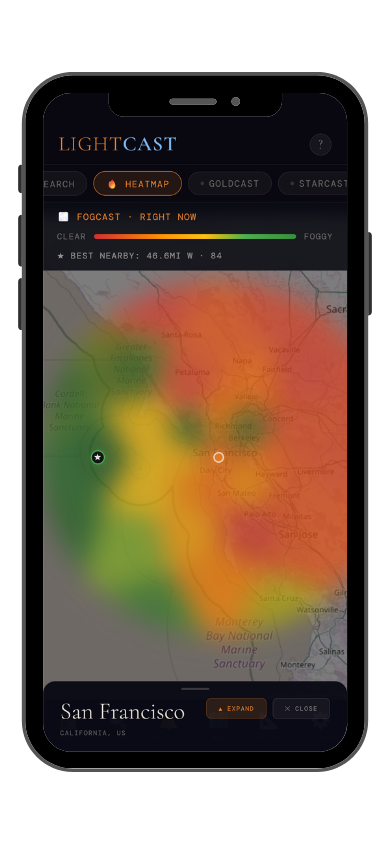
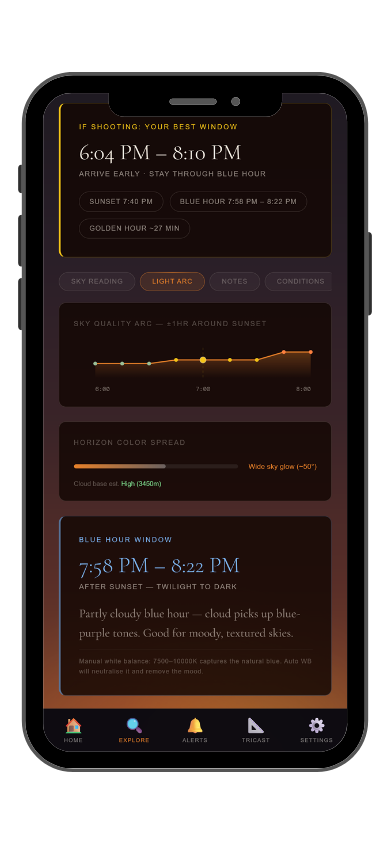
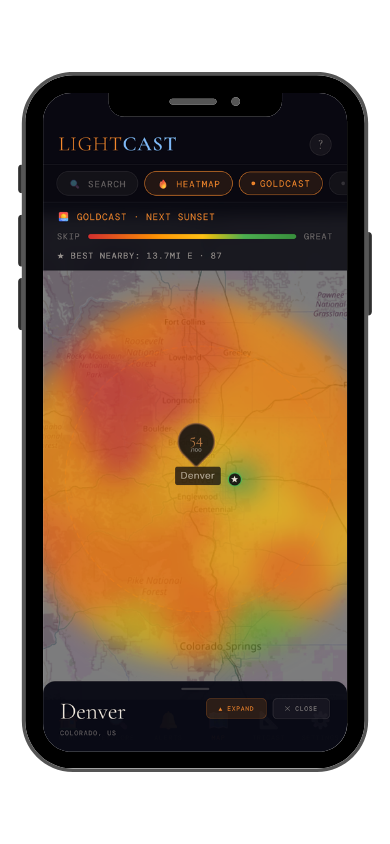
GoldCast golden hour forecast GoldCast conditions heatmap

GoldCast: golden hour score (left) · conditions heatmap (right)

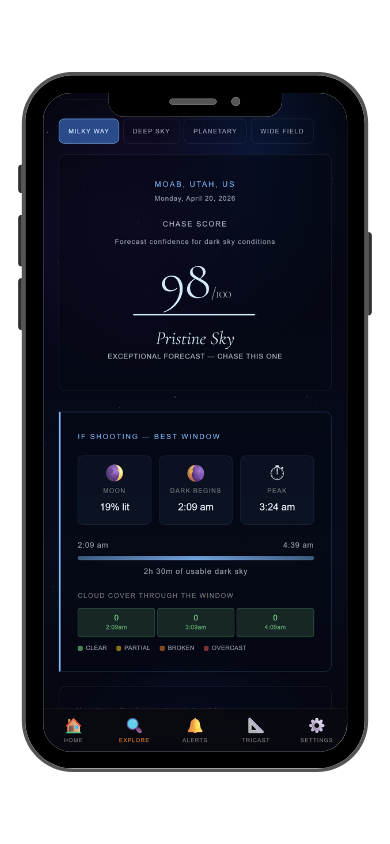
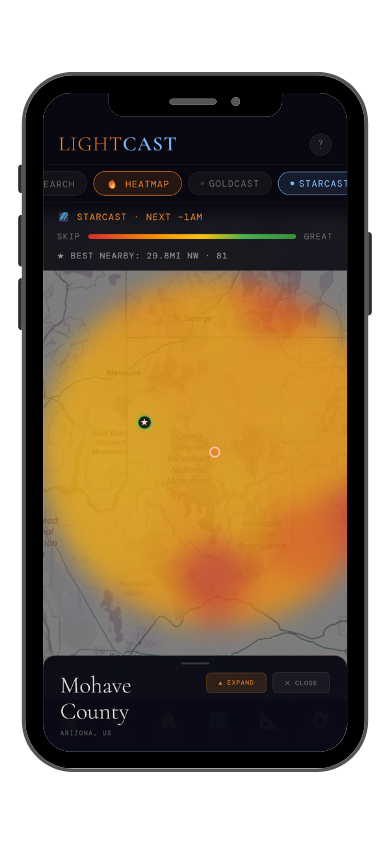
StarCast night sky forecast StarCast heatmap

StarCast: night sky score (left) · conditions heatmap (right)

LightCast Get a live forecast for your favorite spot


Frequently asked
What is the best time to photograph Glacier National Park?
Mid-July through early September when Going-to-the-Sun Road is fully open and wildflowers peak. Early September adds fall color at elevation with fewer crowds. Check GoldCast the night before — mountain weather changes fast and cloud cover at Logan Pass is hard to predict.
Can you see the Milky Way at Glacier?
Yes — Glacier has Bortle 2-3 skies and Two Medicine Lake offers exceptional foreground with the Milky Way reflecting in calm water. The galactic core is visible from May through September. Check StarCast for moon phase and sky conditions before heading out.
Are drones allowed at Glacier?
Drones are prohibited without a Special Use Permit. The airspace over the park is restricted. Check current NPS rules and FAA TFRs before any flight.
How do I get to Logan Pass for sunrise without parking issues?
The Logan Pass parking lot fills by 7 AM in peak summer. Options: arrive before 5:30 AM to secure a spot, use the free park shuttle from Avalanche Creek, or stay at one of the lodges inside the park. The shuttle runs from late June through mid-September and stops directly at Logan Pass.
What is LightCast?
LightCast is a suite of photography weather tools. GoldCast handles golden hour timing with cloud and fog forecasts. StarCast scores night sky conditions. DroneCast covers wind and visibility for drone pilots. All three are free on web; full features including 7-day forecasts and push alerts are in the LightCast iOS app — $2.99/month after a 7-day free trial.
LightCast
Plan your next shoot.

Search any city, park, or location worldwide

Get LightCast on iPhone
or
Learn More →

$2.99/mo after 7-day free trial