LightCast · Grand Teton National Park, WY

Grand Teton National Park Photography Guide

Reading today's conditions…

Photography viewpoints · Grand Teton

Where to Shoot

Grand Teton is one of the most photographed mountain ranges in the world for good reason — the Teton peaks rise 7,000 feet above the Jackson Hole valley floor with no foothills in between, giving an abruptness and drama that few mountain ranges anywhere can match. The Snake River winding through sage flats in the foreground, with the jagged peaks above and big sky between, is the archetypal American West landscape.

🌅
Snake River Overlook US 89 · Sunrise
Ansel Adams' most famous photograph was made here in 1942 — the Snake River curving through sage flats with the Teton Range rising directly behind. The view is essentially unchanged. At sunrise the peaks catch first light while the river valley remains in shadow, creating a layered landscape from dark foreground to lit mountains. A medium telephoto (70–135mm) works well to compress the layers. The pull-off is right on US-89; arrive 20 minutes before sunrise.
🦢
Oxbow Bend Snake River · Reflections
Oxbow Bend is one of the most photographed spots in Wyoming — the oxbow curve of the Snake River reflects Mount Moran and the Teton Range in perfect mirror on calm mornings. Trumpeter swans, great blue herons, and river otters frequent the area, adding wildlife to the landscape frame. The reflection fades quickly once wind picks up after sunrise. Position yourself on the north bank looking south; the light on the peaks is strongest in the first 20 minutes after sunrise.
🌌
Jackson Lake and Colter Bay Bortle 2-3 · Night Sky
Jackson Lake gives the largest reflective foreground in the park for Milky Way photography. The Teton Range silhouette to the west frames the galactic core rising to the south from May through September. Colter Bay on the north shore has easy parking access and a short walk to the lake. Signal Mountain Road climbs 800 feet above the valley floor for an elevated perspective on the lake and peaks under the stars. Both positions are excellent on new moon nights.
🍂
Mormon Row and Schwabacher Landing Antelope Flats · Fall Color
Mormon Row — a line of historic homestead barns on the sage flats of Antelope Flats — gives the classic Teton barn shot at sunrise, with the peaks rising directly behind the weathered structures. In fall, the cottonwoods along the Snake River at Schwabacher Landing turn gold against the mountains. Schwabacher Landing (2 miles south of the main turn-off) gives calm morning reflections of the peaks in the river bends — arrive early, the lot fills in fall color season.

Inside LightCast Suite
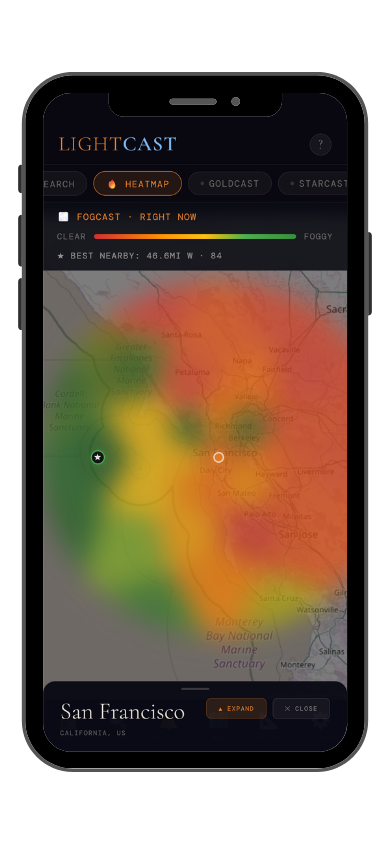
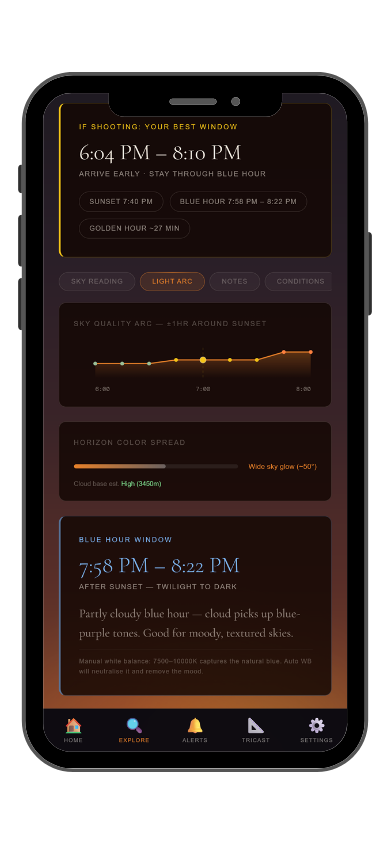
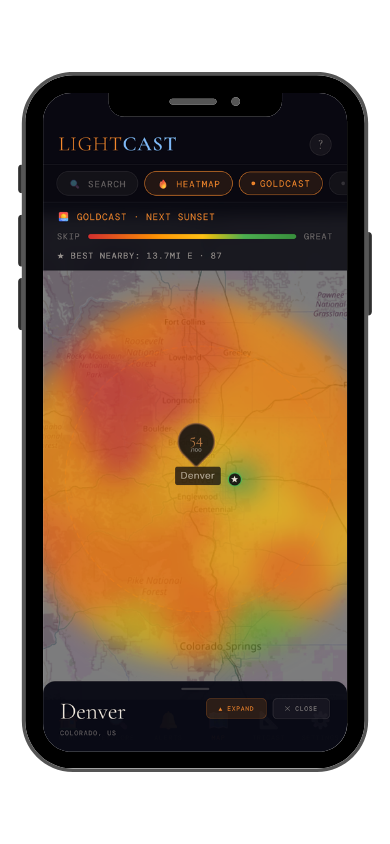
GoldCast golden hour forecast GoldCast conditions heatmap

GoldCast: golden hour score (left) · conditions heatmap (right)

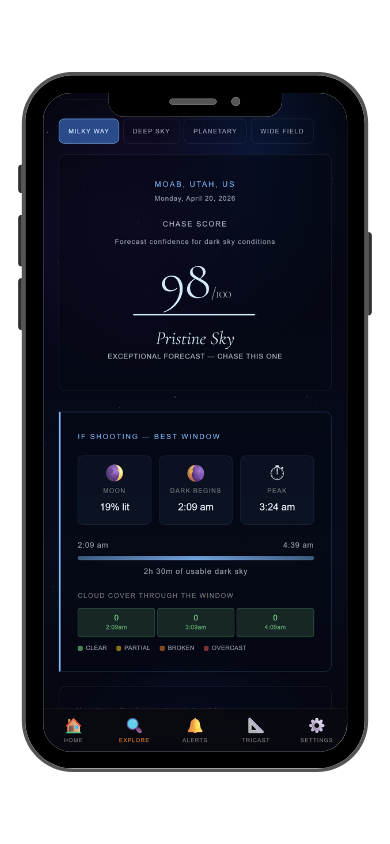
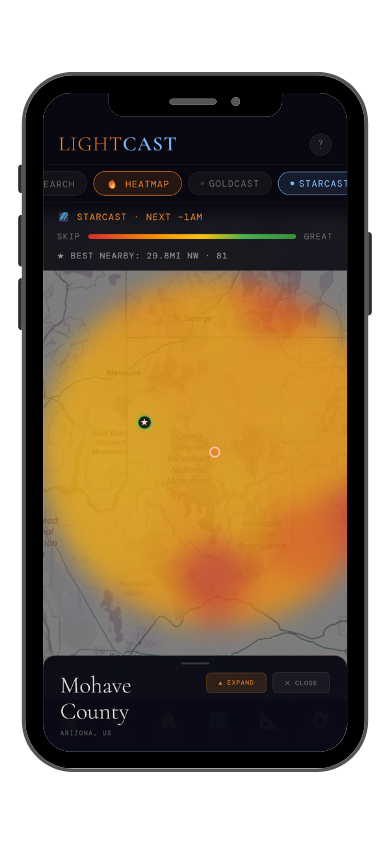
StarCast night sky forecast StarCast heatmap

StarCast: night sky score (left) · conditions heatmap (right)

LightCast Get a live forecast for your favorite spot


Frequently asked
What is the best time to photograph Grand Teton National Park?
June through October covers the full range — wildflowers in July, clear summer skies, and aspen gold from late September through mid-October. Fall is the strongest season for most photographers. Check GoldCast the night before for cloud cover at Oxbow Bend and Snake River Overlook.
Can you see the Milky Way at Grand Teton?
Yes — Grand Teton has Bortle 2-3 skies and Jackson Lake gives an enormous reflective foreground for the Teton silhouette under stars. The galactic core is visible from late April through September. Check StarCast before heading out.
Are drones allowed at Grand Teton?
Drones are prohibited without a Special Use Permit. Check current NPS rules and FAA TFRs before any flight near the park.
How do I get a calm reflection at Oxbow Bend?
Wind is the enemy of reflections. Oxbow Bend is calmest in the first 30 minutes after sunrise before thermal wind picks up. Check the forecast the night before — any wind above 5 mph will break the mirror. Arrive before civil twilight to set up on the north bank and watch the peaks light up in the reflection.
What is LightCast?
LightCast is a suite of photography weather tools. GoldCast handles golden hour timing with cloud and fog forecasts. StarCast scores night sky conditions. DroneCast covers wind and visibility for drone pilots. All three are free on web; full features including 7-day forecasts and push alerts are in the LightCast iOS app — $2.99/month after a 7-day free trial.
LightCast
Plan your next shoot.

Search any city, park, or location worldwide

Get LightCast on iPhone
or
Learn More →

$2.99/mo after 7-day free trial