LightCast · Great Sand Dunes National Park, CO

Great Sand Dunes National Park Photography Guide

Reading today's conditions…

Photography viewpoints · Great Sand Dunes

Where to Shoot

Great Sand Dunes is one of the most surreal landscapes in Colorado — the tallest dunes in North America (750 feet) sitting at the base of the 14,000-foot Sangre de Cristo Mountains, with a seasonal creek flowing across the dune field in spring. The combination of desert sand, alpine peaks, and — in spring — a sheet of water reflecting the scene is unlike anything else in the national park system. Wind shapes the dune ridgelines nightly, so every morning delivers a different set of shadow patterns.

🌅
High Dune and Star Dune Ridge Dune Field · Sunrise
High Dune (699 feet) is the most accessible summit in the dune field and gives a 360° view of the entire park — dune ridges falling away in every direction with the Sangre de Cristos behind. The walk across the sand flat from the parking area takes 30–45 minutes; begin in darkness to reach the top before sunrise. The sharp shadows on the dune faces last only 20–30 minutes after first light before the angle softens. Star Dune, the highest at 750 feet, is 1.5 miles further and worth the effort for the elevated perspective.
💧
Medano Creek Dune Base · Spring
Medano Creek flows across the base of the dune field from April through early July, creating a reflective sheet of water that mirrors the dunes and mountains above. The surge flow — waves of water rolling down the creek from shifting sand dams — is a phenomenon unique to this park. Sunrise from the creek looking northwest toward the dune faces catches warm color on both the sand and the reflection. Mid-May through early June is peak creek flow; conditions vary year to year.
🌌
Dune Field at Night Bortle 2-3 · Night Sky
Great Sand Dunes is one of the best night sky locations in Colorado. The Bortle class is 2-3 in the San Luis Valley, far from any significant city. The dune ridgelines make clean, graphic foreground for wide Milky Way arcs, and the galactic core rises above the Sangre de Cristos to the east from May through August. When Medano Creek is flowing, the reflection adds a second horizon to long exposure shots. The park allows overnight dune camping with a backcountry permit.
🏔️
Montville Nature Trail and Pinyon Flats Park Boundary · Forest Edge
The Montville Nature Trail on the park's eastern edge enters the piñon-juniper woodland at the base of the Sangre de Cristos and gives a forest-to-dune perspective unavailable from the main parking area. In late September, the aspens on the mountain slopes above the park turn gold — shooting from Pinyon Flats with aspen color in the middle distance and the dune field in the foreground is a fall combination unique to this park.

Inside LightCast Suite
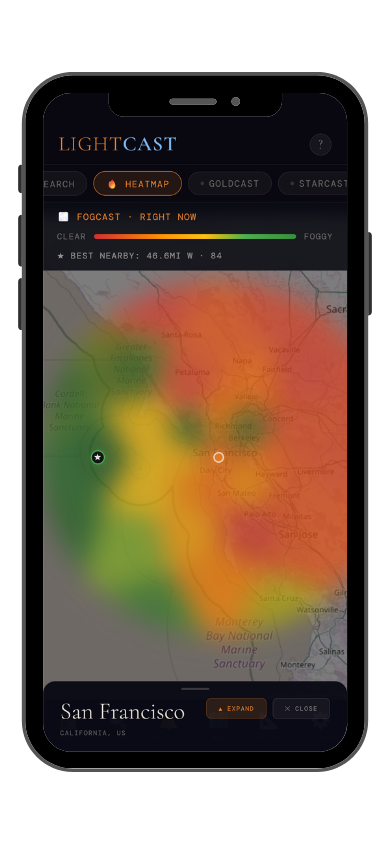
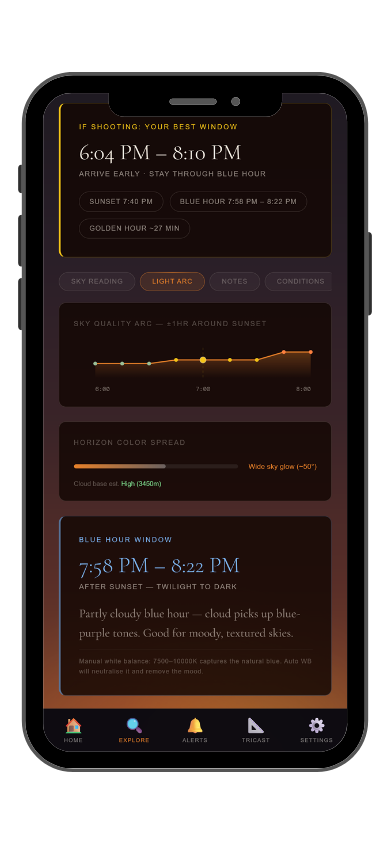
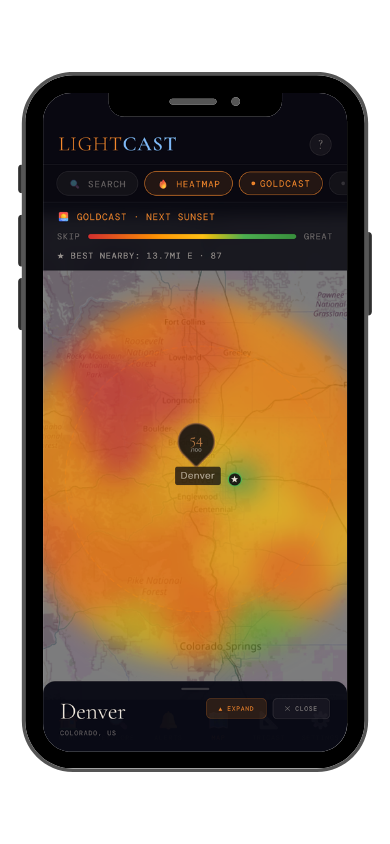
GoldCast golden hour forecast GoldCast conditions heatmap

GoldCast: golden hour score (left) · conditions heatmap (right)

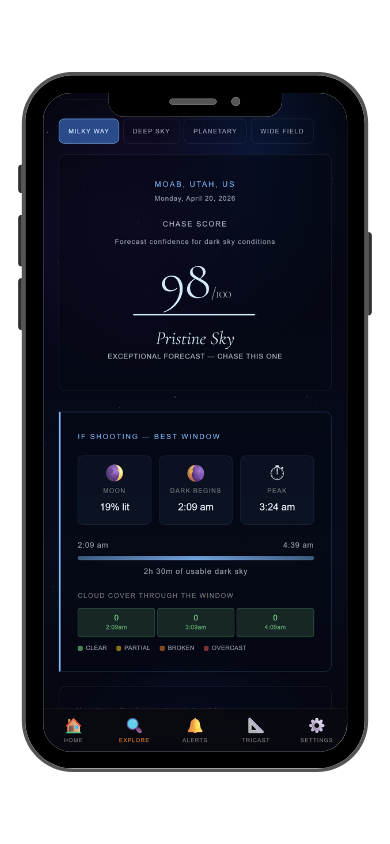
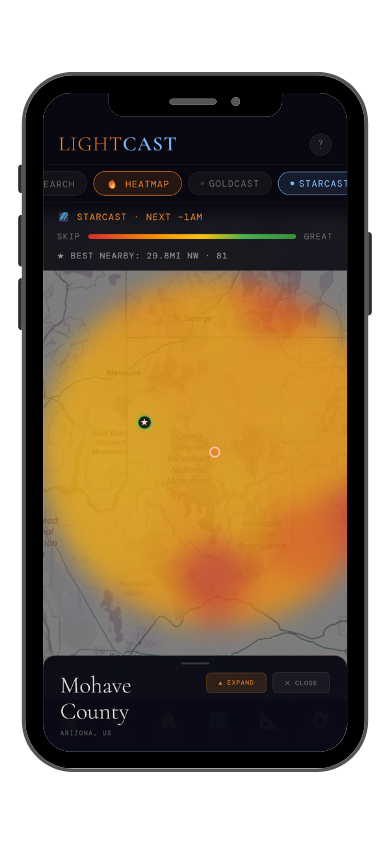
StarCast night sky forecast StarCast heatmap

StarCast: night sky score (left) · conditions heatmap (right)

LightCast Get a live forecast for your favorite spot


Frequently asked
What is the best time to photograph Great Sand Dunes National Park?
Spring (April–June) when Medano Creek is flowing across the dune base is the most unique window — the creek reflection adds a foreground no other dune park can match. Fall brings sharp shadows and cool hiking temperatures. Check GoldCast the night before for cloud cover and exact sunrise timing.
Can you see the Milky Way at Great Sand Dunes?
Yes — Great Sand Dunes has Bortle 2-3 skies in the remote San Luis Valley. The dune ridgelines make clean graphic foreground for Milky Way arcs. In spring, Medano Creek adds a reflective foreground. The galactic core is visible from late April through September. Check StarCast before heading out.
Are drones allowed at Great Sand Dunes?
Drones are prohibited without a Special Use Permit. Check current NPS rules and FAA TFRs before any flight near the park.
How do I hike to the dune tops for sunrise?
Begin the walk from the main parking area in full darkness — the sand flat crossing takes 30–45 minutes before you even start climbing. High Dune summit takes another 15–20 minutes. Start at least 75 minutes before sunrise. Sand conditions vary; wet sand after rain is much easier to hike than dry loose sand in summer.
What is LightCast?
LightCast is a suite of photography weather tools. GoldCast handles golden hour timing with cloud and fog forecasts. StarCast scores night sky conditions. DroneCast covers wind and visibility for drone pilots. All three are free on web; full features including 7-day forecasts and push alerts are in the LightCast iOS app — $2.99/month after a 7-day free trial.
LightCast
Plan your next shoot.

Search any city, park, or location worldwide

Get LightCast on iPhone
or
Learn More →

$2.99/mo after 7-day free trial