LightCast · Mount Rainier National Park, WA

Mount Rainier National Park Photography Guide

Reading today's conditions…

Photography viewpoints · Mount Rainier

Where to Shoot

Mount Rainier dominates the landscape for a hundred miles in every direction — a 14,410-foot stratovolcano carrying more glacial ice than any other peak in the contiguous US. The mountain creates its own weather, generating clouds and rain even on days when the surrounding lowlands are clear. Photography at Rainier is fundamentally about patience and flexibility: when the mountain appears above the clouds at sunrise, the wildflower meadows and glaciated peak together create some of the most dramatic mountain landscape in North America.

🌅
Reflection Lakes Stevens Canyon Road · Sunrise
Reflection Lakes on the south side of the park give the classic Rainier mirror shot — the mountain reflected in a chain of small alpine lakes at golden hour. The reflection is best on calm mornings before wind ripples the surface; arrive before sunrise to set up on the north shore. The mountain face visible from Reflection Lakes shows the Nisqually and Paradise glaciers, and in late July the surrounding meadows still hold wildflowers. This is the most-photographed position in the park.
🌸
Paradise Meadows and Skyline Trail South Slope · Wildflowers
Paradise at 5,400 feet is the heart of the park's wildflower season — lupine, paintbrush, bistort, and phlox blanket the meadows from mid-July through August. The Skyline Trail loop (5.5 miles, 1,700 feet) climbs above the wildflower zone to the edge of the Nisqually Glacier for elevated views back down to the meadows with the Tatoosh Range behind. Golden hour from the Skyline Trail looking north toward the summit is the elevated wildflower shot that distinguishes serious Rainier photography from the parking lot view.
🌌
Sunrise and Emmons Glacier Viewpoint Bortle 3-4 · Night Sky
Sunrise at 6,400 feet on the northeast side of the park is the highest point accessible by road and gives an unobstructed view of the Emmons Glacier — the largest glacier in the contiguous US by area. At night, the glaciated summit reflects moonlight visibly even without moon illumination. The galactic core rises to the south from May through September. The visitor center parking area gives easy after-dark access; the road typically opens in early July and closes in mid-October.
🌲
Carbon River Rainforest Northwest Corner · Old Growth
The Carbon River valley on the park's northwest corner receives 140 inches of rain annually and supports the only inland temperate rainforest in the continental US. Ancient Douglas fir, Sitka spruce, and western red cedar draped in moss and fern create a green cathedral environment that photographs beautifully on overcast days — the diffuse Pacific Northwest light is ideal for rainforest photography. The Carbon River Road is closed to vehicles; walk or bike the 5-mile route to the forest.

Inside LightCast Suite
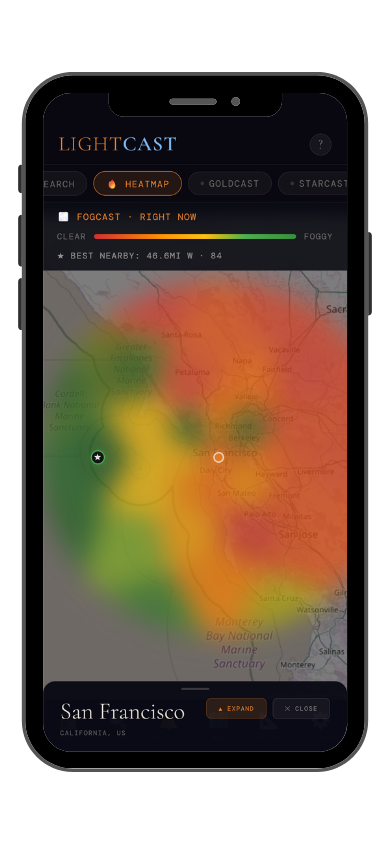
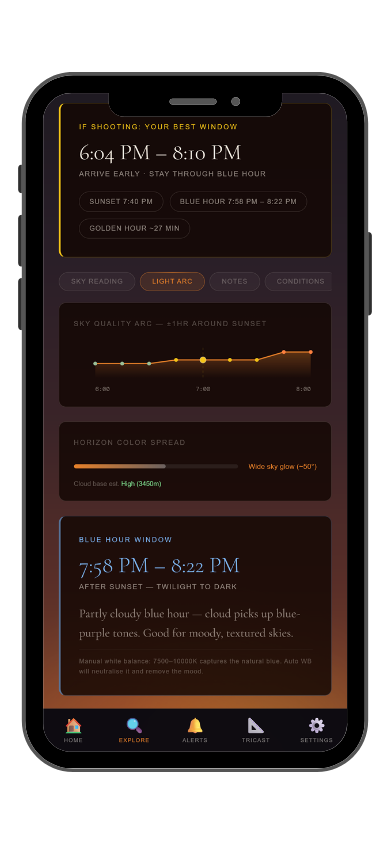
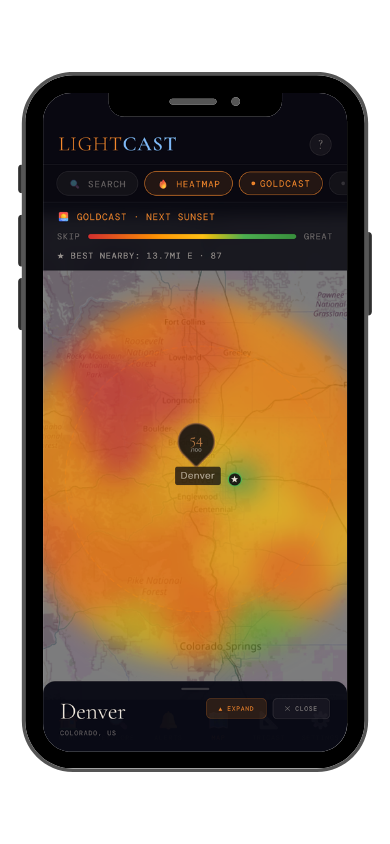
GoldCast golden hour forecast GoldCast conditions heatmap

GoldCast: golden hour score (left) · conditions heatmap (right)

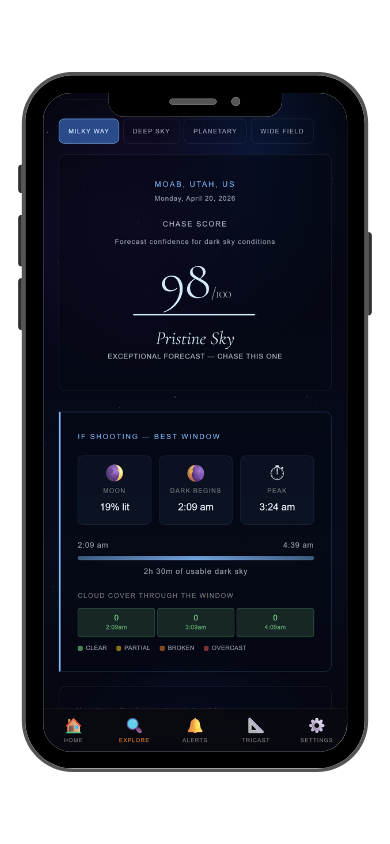
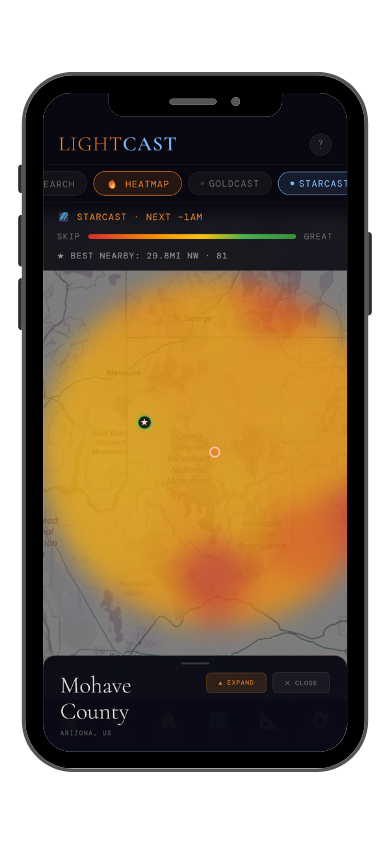
StarCast night sky forecast StarCast heatmap

StarCast: night sky score (left) · conditions heatmap (right)

LightCast Get a live forecast for your favorite spot


Frequently asked
What is the best time to photograph Mount Rainier National Park?
Mid-July through September for wildflowers and the best chance of clear mountain views. Rainier creates its own weather — check GoldCast the night before and again early morning. Clear dawn is your best window; clouds typically build by afternoon.
Can you see the Milky Way at Mount Rainier?
Yes, when skies cooperate — Rainier's weather is the main obstacle. The park has Bortle 3-4 skies and the mountain itself makes an extraordinary night sky subject. Reflection Lakes and the Sunrise area give the best positions. Check StarCast for sky conditions; clear nights are rarer here than in drier parks.
Are drones allowed at Mount Rainier?
Drones are prohibited without a Special Use Permit. Check current NPS rules and FAA TFRs before any flight near the park.
How do I get a clear shot of the mountain?
Watch the forecast obsessively. The mountain generates its own cloud cap by mid-morning most days — your window is typically the first 1–2 hours after sunrise on clear mornings. Check GoldCast the night before, set an alarm, and be at Reflection Lakes or Paradise before dawn. Don't wait for "better" conditions; they may not come for days.
What is LightCast?
LightCast is a suite of photography weather tools. GoldCast handles golden hour timing with cloud and fog forecasts. StarCast scores night sky conditions. DroneCast covers wind and visibility for drone pilots. All three are free on web; full features including 7-day forecasts and push alerts are in the LightCast iOS app — $2.99/month after a 7-day free trial.
LightCast
Plan your next shoot.

Search any city, park, or location worldwide

Get LightCast on iPhone
or
Learn More →

$2.99/mo after 7-day free trial