LightCast · Redwood National Park, CA

Redwood National Park Photography Guide

Reading today's conditions…

Photography viewpoints · Redwood

Where to Shoot

The coastal redwoods of northern California are the tallest living things on earth — Hyperion, the tallest known tree, stands 380 feet in a remote section of the park. Photographing trees this size requires accepting that most of the tree won't be in the frame. The forest floor environment is the real subject: sword ferns, sorrel, filtered light shafts, and the sheer scale of the trunks rising out of sight. The adjacent California coast adds sea stack beaches and bluff walks with the trees as backdrop.

🌲
Tall Trees Grove and Lady Bird Johnson Grove Redwood Creek · Forest Light
The Tall Trees Grove in the Redwood Creek floodplain contains some of the world's tallest measured trees and requires a free permit for vehicle access (limited daily). The long access road keeps crowds minimal and the grove delivers old-growth forest photography at its finest. Lady Bird Johnson Grove, accessible without a permit, is a loop through a ridgetop grove with excellent examples of the nurse log cycle — fallen ancient redwoods with a new generation of trees growing from the decomposing trunk. Both locations reward morning fog that filters through the canopy.
🌊
Gold Bluffs Beach and Fern Canyon Prairie Creek · Coastal / Canyon
Fern Canyon is one of the most distinctive environments in the park — a narrow slot canyon with walls completely covered in five-finger ferns, carved by Home Creek. The canyon floor requires wading through a shallow stream in spring; planks are sometimes laid in summer. The jurassic-looking fern walls photograph best on overcast days with a wide-angle lens. Gold Bluffs Beach outside Fern Canyon is a wild driftwood beach below 80-foot gold-colored bluffs — sunrise from the beach looking north is the coastal shot.
🌁
Stout Memorial Grove and Jedediah Smith Smith River · Old Growth
Jedediah Smith Redwoods State Park at the northern end of the complex contains some of the most pristine old-growth redwood groves in the entire preserve — Stout Memorial Grove is accessible via a short trail from the campground and gives large grove photography without the permit requirements of Tall Trees. The Howland Hill Road (unpaved) winds 10 miles through ancient forest accessible only to smaller vehicles. Morning light on the forest floor after overnight fog is the prime condition here.
🌌
Klamath River Overlook Bortle 3-4 · Night Sky / Coast
The Klamath River Overlook sits above the river mouth where fresh water meets the Pacific — a dramatic coastal bluff position that faces west for sunset and gives open sky views for astrophotography on clear nights. The galactic core is visible from May through September when coastal fog relents. The overlook is accessible by a short paved path from the parking area and gives one of the widest open-sky views near the park. Fog probability is high — check conditions the night before and be prepared to shift to forest photography if the coast is socked in.

Inside LightCast Suite
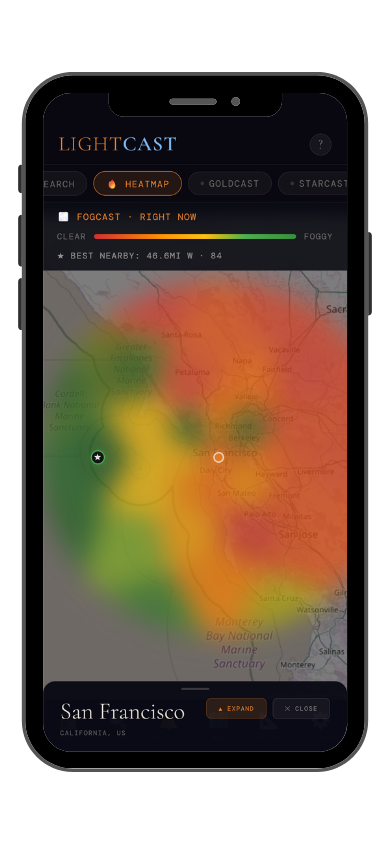
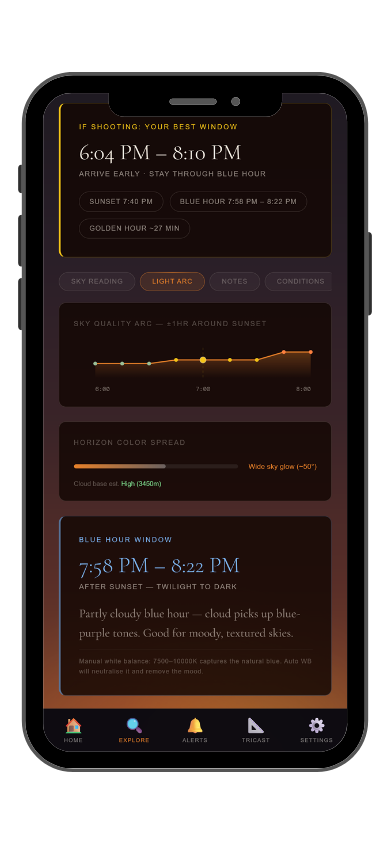
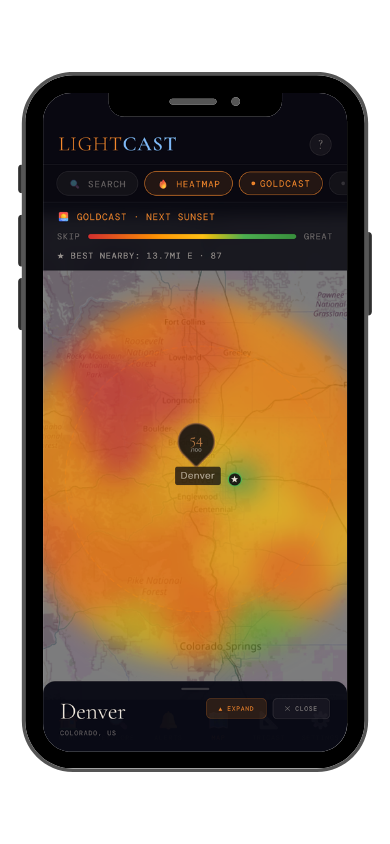
GoldCast golden hour forecast GoldCast conditions heatmap

GoldCast: golden hour score (left) · conditions heatmap (right)

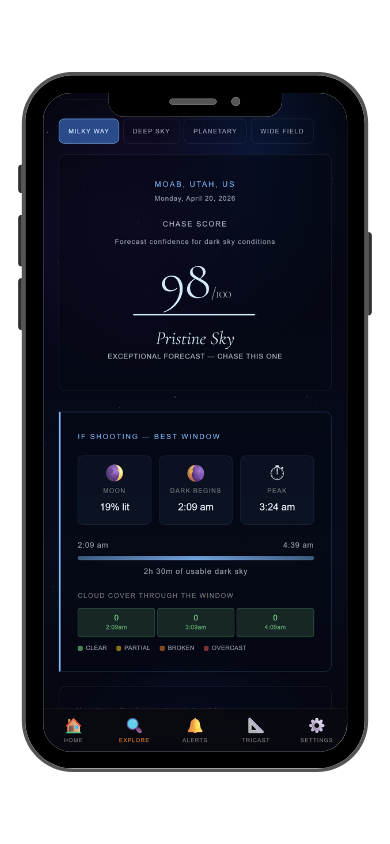
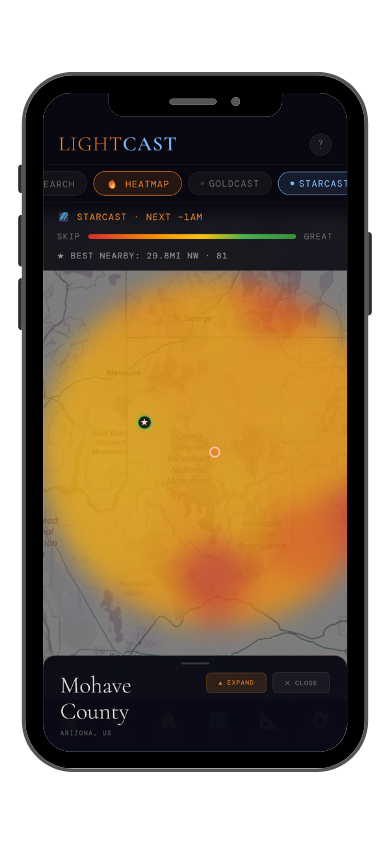
StarCast night sky forecast StarCast heatmap

StarCast: night sky score (left) · conditions heatmap (right)

LightCast Get a live forecast for your favorite spot


Frequently asked
What is the best time to photograph Redwood National Park?
The forests photograph well year-round — spring brings ferns and wildflowers, summer fog creates extraordinary canopy light shafts. April through October gives the most comfortable coastal access. Check GoldCast for fog probability; morning fog in the forest is a feature, not a bug.
Can you see the Milky Way at Redwood?
Coastal fog is the main obstacle — the park has Bortle 3-4 skies but clear nights in summer are relatively rare. The Klamath River Overlook and coastal bluffs give the best sky access. Check StarCast for transparency and cloud cover several days out, and have a forest photography backup plan.
Are drones allowed at Redwood?
Drones are prohibited without a Special Use Permit from both the NPS and California State Parks, which co-manage the area. Check current rules and FAA TFRs before any flight near the park.
How do I photograph the forest light shafts?
Light shafts occur when morning fog or mist in the canopy scatters direct sunlight into visible beams — typically 30–90 minutes after sunrise on partially foggy mornings. The best positions are clearings and forest roads where shafts can travel a long distance before hitting the ground. A slightly underexposed exposure brings out the rays without blowing the highlights. Jedediah Smith and the Tall Trees Grove floor are the strongest locations.
What is LightCast?
LightCast is a suite of photography weather tools. GoldCast handles golden hour timing with cloud and fog forecasts. StarCast scores night sky conditions. DroneCast covers wind and visibility for drone pilots. All three are free on web; full features including 7-day forecasts and push alerts are in the LightCast iOS app — $2.99/month after a 7-day free trial.
LightCast
Plan your next shoot.

Search any city, park, or location worldwide

Get LightCast on iPhone
or
Learn More →

$2.99/mo after 7-day free trial