LightCast · Rocky Mountain National Park, CO

Rocky Mountain National Park Photography Guide

Reading today's conditions…

Photography viewpoints · Rocky Mountain

Where to Shoot

Rocky Mountain National Park straddles the Continental Divide above Estes Park, with Trail Ridge Road — the highest continuous paved road in the US — climbing to 12,183 feet through open tundra. One-third of the park is above treeline. In September, the elk rut brings bugling bulls into the meadows at dawn, and the aspens in the montane zone turn gold against the dark green subalpine forest. It's one of the most accessible high-alpine environments in the country, which means both great photography opportunities and significant crowds in peak season.

🌅
Bear Lake and Sprague Lake Bear Lake Road · Reflections
Bear Lake is the most photographed location in the park — a small alpine lake at 9,475 feet with Hallett Peak and Flattop Mountain reflected in the water at sunrise. Arrive before 5 AM in peak season; the Bear Lake trailhead fills before sunrise and the shuttle is your best option. Sprague Lake nearby is flat, fully accessible, and gives a longer lake foreground with the Continental Divide rising above the treeline behind. Sprague's reflection is strongest on calm September mornings.
🦌
Moraine Park and Horseshoe Park Elk Meadows · September Rut
Moraine Park is a broad glacial valley meadow where elk congregate in September for the rut — bugling bulls, competing males, and herds of cows photographed against the montane forest make this one of the best wildlife photography scenes in the Rockies. Horseshoe Park at the west end of Deer Ridge connects to Sheep Lakes, where bighorn sheep come to lick the mineral deposits. Both areas are best at dawn; the elk activity peaks at first light before visitors arrive in numbers.
🌌
Trail Ridge Road Tundra Bortle 3-4 · Night Sky
Trail Ridge Road above 11,000 feet gives the widest open horizon in the park — above treeline in every direction, with no obstructions for night sky photography. The Many Parks Curve and Forest Canyon Overlook give parking access after dark (road closes at higher elevations seasonally). The galactic core rises to the south from May through September. Lightning is an active threat on the exposed tundra at elevation — check weather carefully and have an exit plan.
🍂
Kawuneeche Valley and Holzwarth Historic Site West Side · Aspen Gold
The west side of the park along the Colorado River headwaters receives far fewer visitors than the east. The Kawuneeche Valley is broad and open with aspen groves that turn brilliant gold in late September and early October. Holzwarth Historic Site — a preserved 1920s dude ranch — gives historic log structures against the aspen-covered Never Summer Mountains background. The west side is drier than the east in summer, which means more consistent afternoon light in the valley.

Inside LightCast Suite
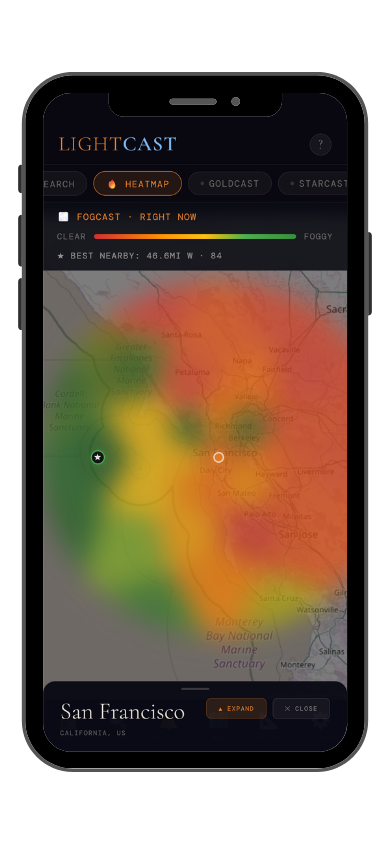
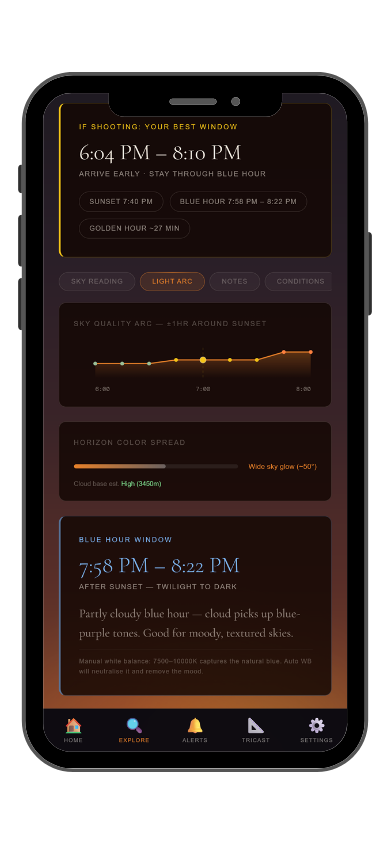
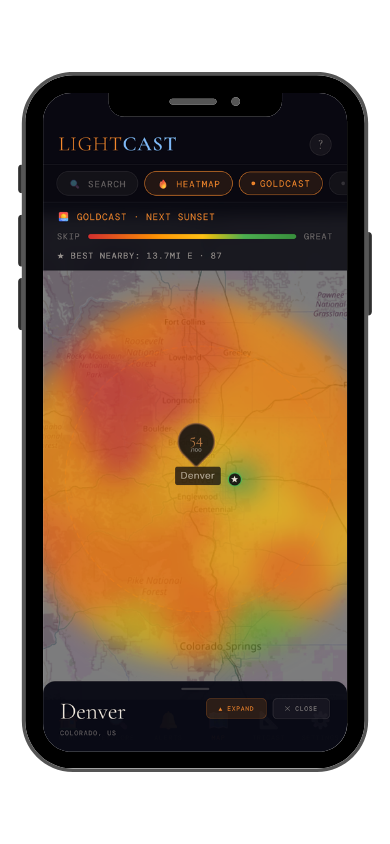
GoldCast golden hour forecast GoldCast conditions heatmap

GoldCast: golden hour score (left) · conditions heatmap (right)

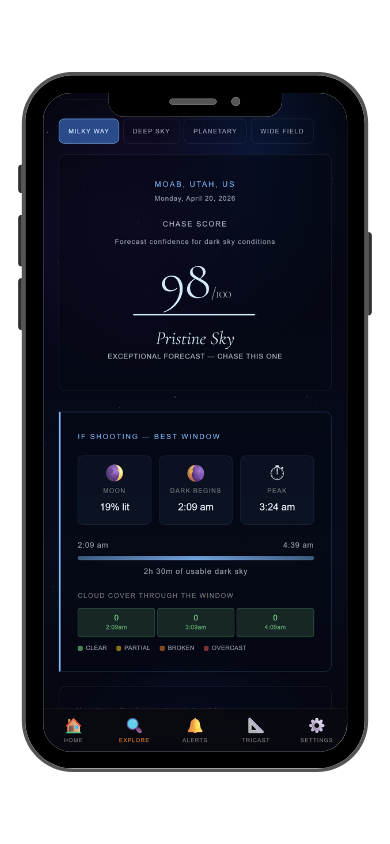
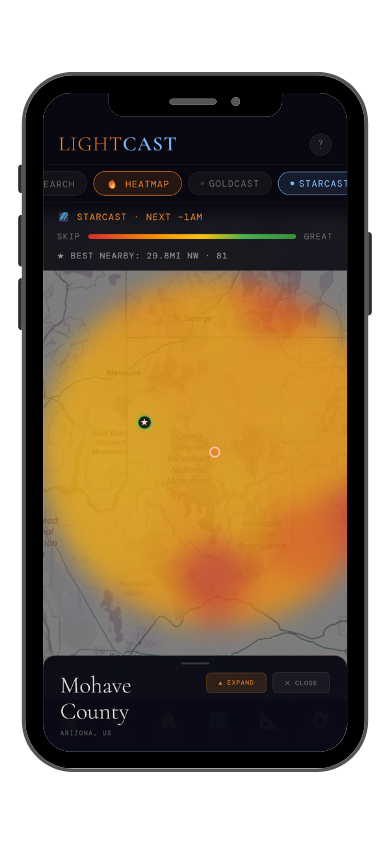
StarCast night sky forecast StarCast heatmap

StarCast: night sky score (left) · conditions heatmap (right)

LightCast Get a live forecast for your favorite spot


Frequently asked
What is the best time to photograph Rocky Mountain National Park?
September is the strongest month — elk rut in the meadows, aspen gold in the montane zone, and the crowds thin after Labor Day. Check GoldCast the night before for Bear Lake and Moraine Park; September mornings can be stunning or socked in with quick-moving fronts.
Can you see the Milky Way at Rocky Mountain?
Yes — Trail Ridge Road above treeline gives the widest open horizon in the park for night sky photography. The Bortle class is 3-4 due to regional light pollution, but the elevation helps. The galactic core is visible from late April through September. Check StarCast and watch lightning forecasts carefully at elevation.
Are drones allowed at Rocky Mountain?
Drones are prohibited without a Special Use Permit. Check current NPS rules and FAA TFRs before any flight near the park.
How do I photograph the elk rut?
Be in Moraine Park or Horseshoe Park before sunrise in September — the bulls are most active at dawn before visitor pressure builds. A 300–600mm telephoto is the right tool; the elk are not tame and you must stay 75 feet away. The NPS often has rangers managing the meadows at peak times to keep people at a safe distance.
What is LightCast?
LightCast is a suite of photography weather tools. GoldCast handles golden hour timing with cloud and fog forecasts. StarCast scores night sky conditions. DroneCast covers wind and visibility for drone pilots. All three are free on web; full features including 7-day forecasts and push alerts are in the LightCast iOS app — $2.99/month after a 7-day free trial.
LightCast
Plan your next shoot.

Search any city, park, or location worldwide

Get LightCast on iPhone
or
Learn More →

$2.99/mo after 7-day free trial