LightCast · Sequoia National Park, CA

Sequoia National Park Photography Guide

Reading today's conditions…

Photography viewpoints · Sequoia

Where to Shoot

Sequoia National Park protects the largest trees on earth by volume — General Sherman, the largest single living thing on the planet, stands 275 feet tall with a trunk 36 feet in diameter at the base. Photographing trees this size is a compositional challenge: the human eye can perceive the scale directly, but a camera loses it without a reference point. The light in the Giant Forest, filtered through a canopy hundreds of feet overhead, creates one of the most beautiful natural light environments in the country.

🌲
Giant Forest and General Sherman Tree Giant Forest · Forest Light
General Sherman is the required stop — the scale of the trunk at the base must be experienced to be understood. A wide-angle lens pointed straight up captures the full column rising out of sight; a human figure at the base establishes the scale that context alone cannot convey. The Giant Forest loop trail connects General Sherman with other massive sequoias in the most photogenic grove in the park. Morning light from the east filters horizontally through the grove for the first hour after sunrise, catching the reddish bark directly.
🌅
Moro Rock and Crescent Meadow Giant Forest · Elevated Views
Moro Rock is a granite dome that rises above the sequoia canopy — the 350-step staircase to the summit gives a 360° view of the Great Western Divide, the Kings Canyon peaks, and on clear days the San Joaquin Valley 7,000 feet below. Sunset from Moro Rock with the High Sierra in alpenglow is the dramatic landscape position in the park. Crescent Meadow nearby — called "the gem of the Sierra" by John Muir — gives an open meadow framed by the largest sequoias in the grove at golden hour.
🌌
Lodgepole and Alta Peak Trail Bortle 2-3 · Night Sky
Sequoia's Bortle 2-3 skies and High Sierra elevation give exceptional night sky conditions. The sequoias themselves are one of the most extraordinary Milky Way foreground subjects in the national park system — the column of trunk rising into the starfield creates a scale reference that transforms the photograph. Lodgepole Campground gives parking access after dark; Alta Peak Trail (14 miles round trip) reaches 11,204 feet for the most elevated night sky position in the park, above most atmospheric interference.
❄️
Congress Trail in Winter Giant Forest · Snow
The Congress Trail is a 2-mile paved loop through the densest part of the Giant Forest, connecting General Sherman with the President, Chief Sequoyah, and the House and Senate groups. In winter, snow accumulates on the lower branches of the sequoias (which, unlike most conifers, hold their branches horizontally) and the combination of snow-covered ground and the enormous reddish columns is one of the most visually striking forest scenes in any national park. Access requires chains or 4WD in winter; the trail is snowshoeable when drifts are deep.

Inside LightCast Suite
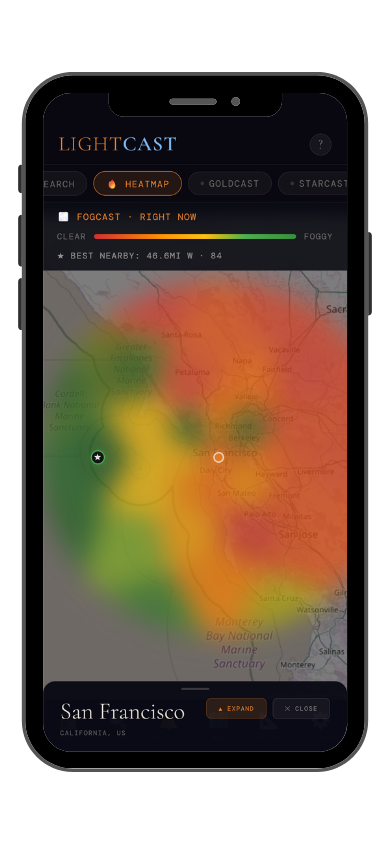
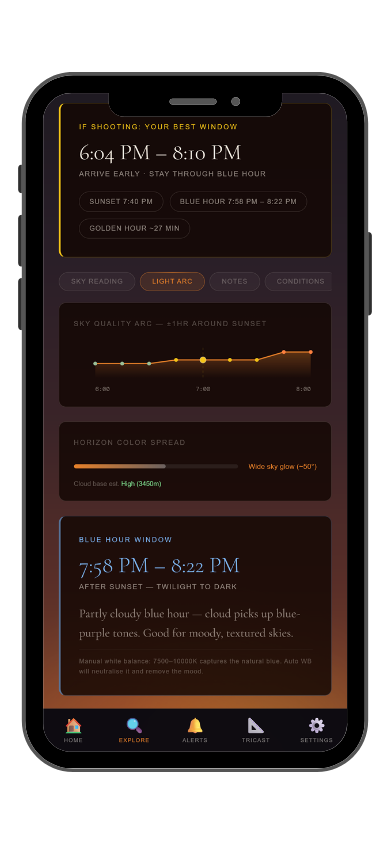
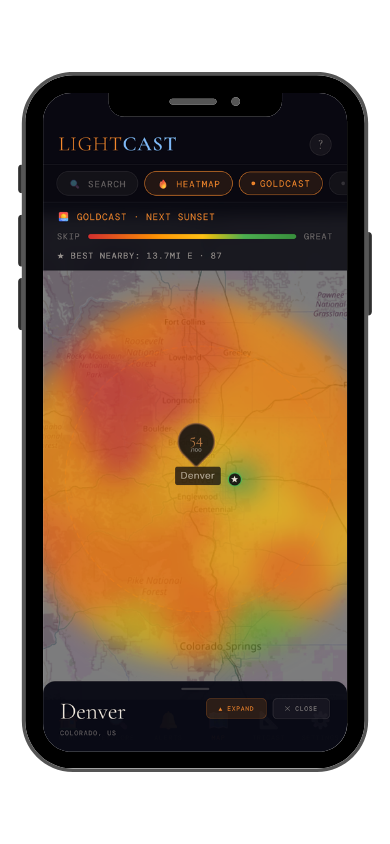
GoldCast golden hour forecast GoldCast conditions heatmap

GoldCast: golden hour score (left) · conditions heatmap (right)

StarCast night sky forecast StarCast heatmap

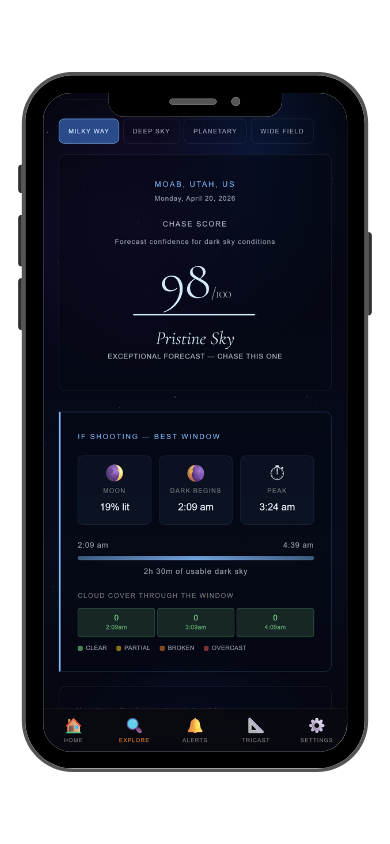
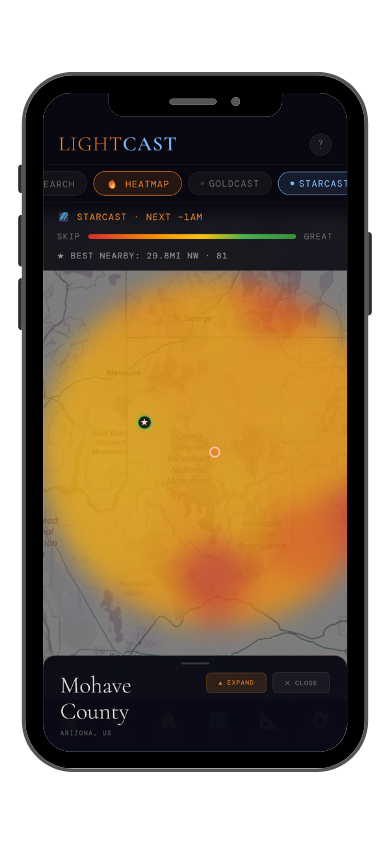
StarCast: night sky score (left) · conditions heatmap (right)

LightCast Get a live forecast for your favorite spot


Frequently asked
What is the best time to photograph Sequoia National Park?
May through October for full access; winter is extraordinary if you can handle chains and limited road access — snow on the sequoias is one of the most stunning forest scenes in any national park. Check GoldCast the night before for cloud cover and exact sunrise timing for the Giant Forest canopy light.
Can you see the Milky Way at Sequoia?
Yes — Sequoia has Bortle 2-3 skies and High Sierra elevation that improves transparency. The giant sequoias are among the most extraordinary Milky Way foreground subjects anywhere. The galactic core is visible from late April through September. Check StarCast for moon phase and sky conditions.
Are drones allowed at Sequoia?
Drones are prohibited without a Special Use Permit. Check current NPS rules and FAA TFRs before any flight near the park.
How do I convey the scale of the sequoias in photos?
Include a person in the frame — nothing else establishes the scale the way a human figure at the base of a 275-foot trunk does. A wide-angle lens pointed upward captures the full column. For Milky Way shots, the trunk rising into the starfield creates the most dramatic scale context possible in a single frame.
What is LightCast?
LightCast is a suite of photography weather tools. GoldCast handles golden hour timing with cloud and fog forecasts. StarCast scores night sky conditions. DroneCast covers wind and visibility for drone pilots. All three are free on web; full features including 7-day forecasts and push alerts are in the LightCast iOS app — $2.99/month after a 7-day free trial.
LightCast
Plan your next shoot.

Search any city, park, or location worldwide

Get LightCast on iPhone
or
Learn More →

$2.99/mo after 7-day free trial