LightCast · Yellowstone National Park, WY

Yellowstone National Park Photography Guide

Reading today's conditions…

Photography viewpoints · Yellowstone

Where to Shoot

Yellowstone spans 3,400 square miles of volcanic plateau in Wyoming, Montana, and Idaho. The photography here is defined by contrast — steam rising from thermal vents against snow-dusted peaks, bison silhouettes in golden valley light, and some of the darkest skies in the lower 48. The sheer scale of the park rewards planning: the best light comes at the edges of the day, and the best wildlife is in the Lamar Valley at dawn.

🌅
Grand Prismatic Spring Overlook Midway Geyser Basin · Sunrise/Sunset
The overlook trail above Midway Geyser Basin gives the aerial perspective of Grand Prismatic that defines Yellowstone photography — vivid rings of color (blue, green, yellow, orange) against rising steam. The thermal steam catches low-angle light beautifully in early morning and late afternoon. In cooler months, fog and steam density increases dramatically, making fall and spring the strongest seasons for this shot.
🦬
Lamar Valley Northeast Entrance · Wildlife Golden Hour
Known as North America's Serengeti, Lamar Valley is the highest-probability location in the park for bison herds, wolves, and grizzly bears in golden hour light. The valley faces east, making it exceptional for sunrise. Arrive well before first light and position along the road pullouts facing the open meadows — bison grazing in low warm light against the Absaroka Range is the definitive Yellowstone landscape image.
🌌
Shoshone Lake and Lewis Lake Bortle 2-3 · Night Sky
The southern backcountry lakes sit at Bortle 2-3, placing Yellowstone among the darkest accessible night sky locations in the continental US. Lewis Lake is reachable by car off the South Entrance Road; Shoshone Lake requires a short hike or canoe. Still water reflections and complete absence of artificial light make these the best Milky Way foreground options in the park. The galactic core is visible from late April through September.
💧
Upper and Lower Yellowstone Falls Grand Canyon of Yellowstone · Waterfall
The Grand Canyon of Yellowstone cuts through rhyolite eroded to yellow and orange hues that give the park its name. Lower Falls at 308 feet is the most photographed waterfall in the Rockies. Artist Point on the South Rim gives the classic head-on composition. The canyon walls glow warm in late afternoon light; early morning reduces crowds and catches mist from the falls catching the rising sun.

Inside LightCast Suite
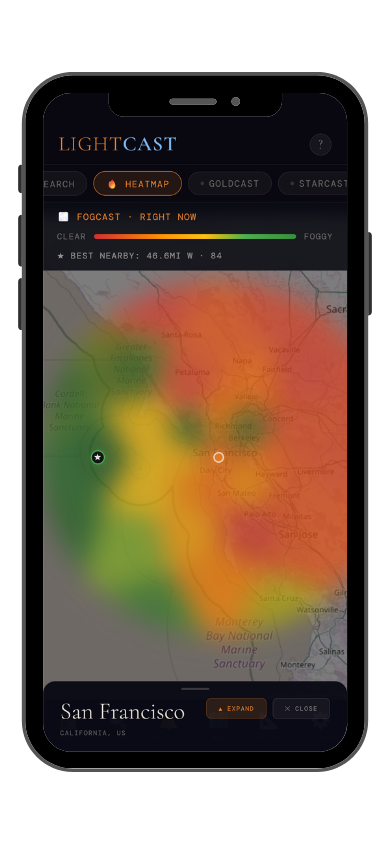
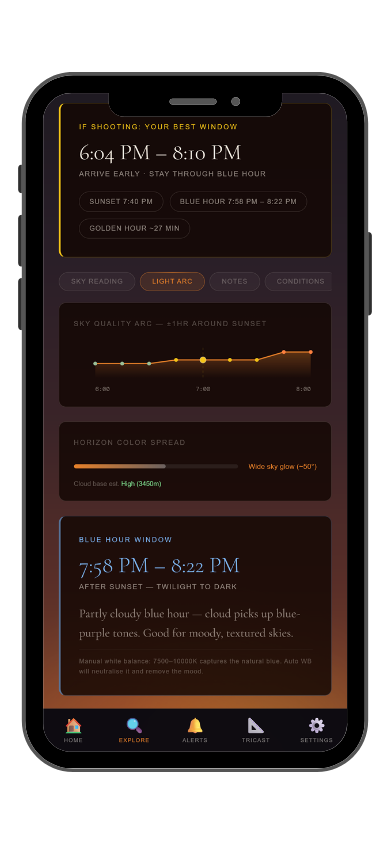
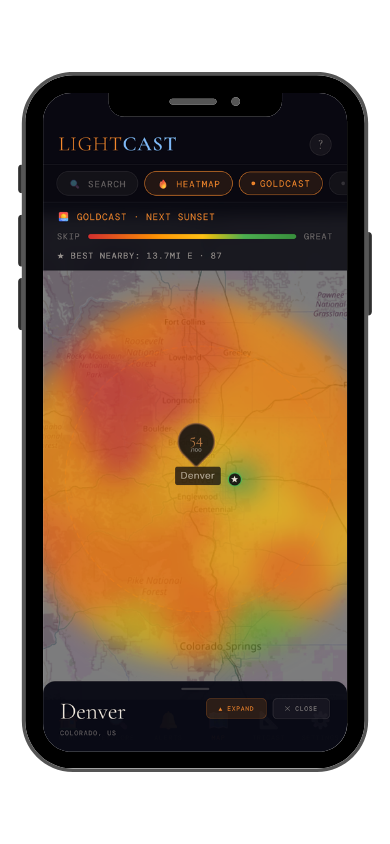
GoldCast golden hour forecast GoldCast conditions heatmap

GoldCast: golden hour score (left) · conditions heatmap (right)

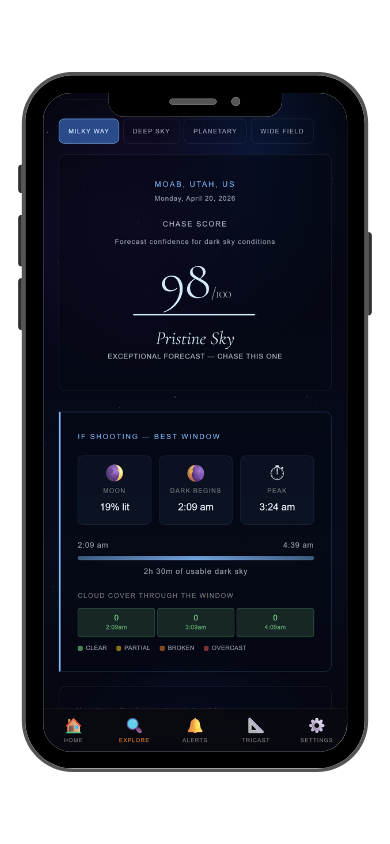
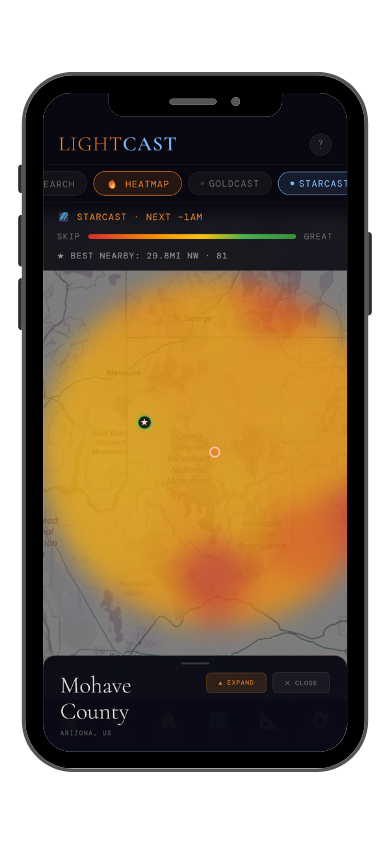
StarCast night sky forecast StarCast heatmap

StarCast: night sky score (left) · conditions heatmap (right)

LightCast Get a live forecast for your favorite spot


Frequently asked
What is the best time to photograph Yellowstone National Park?
Late spring (May–June) and fall (September–October) are the strongest seasons. Spring brings bison calves and thermal steam against snow-dusted peaks; fall adds golden aspen color and elk rut activity in the valleys. Golden hour in Lamar Valley and at the Grand Prismatic overlook are the signature shots. Check GoldCast for cloud cover the night before.
Can you see the Milky Way at Yellowstone?
Yes. Yellowstone sits at Bortle 2-3 — among the darkest skies in the lower 48. The southern backcountry lakes and Lamar Valley give wide-open horizons with minimal light pollution. The galactic core is visible from late April through September on new moon nights. Check StarCast for moon phase and cloud cover before heading out after dark.
Are drones allowed at Yellowstone?
Drones are prohibited throughout Yellowstone National Park. A Special Use Permit is required and is rarely granted recreationally. The ban covers all thermal basins, wildlife areas, and backcountry. Check current NPS rules and FAA TFRs before any flight near the park boundary.
How do I photograph the thermal features at Yellowstone?
Steam density and color saturation are highest in cool weather — fall mornings and spring after overnight temperatures drop below freezing produce the most dramatic steam columns. A long lens (200–400mm) lets you isolate features while staying on boardwalks. Backlight from a low sun angle makes steam glow; overcast flat light reveals color gradients in the bacterial mats most clearly.
What is LightCast?
LightCast is a suite of photography weather tools. GoldCast handles golden hour timing with cloud and fog forecasts. StarCast scores night sky conditions. Dronecast covers wind and visibility for drone pilots. All three are free on web; full features including 7-day forecasts and push alerts are in the LightCast iOS app — $2.99/month after a 7-day free trial.
LightCast
Plan your next shoot.

Search any city, park, or location worldwide

Get LightCast on iPhone
or
Learn More →

$2.99/mo after 7-day free trial