LightCast · Yosemite National Park, CA

Yosemite National Park Photography Guide

Reading today's conditions…

Photography viewpoints · Yosemite

Where to Shoot

Yosemite Valley is one of the most photographed places on Earth — and for good reason. Sheer granite walls, ribbon waterfalls, and valley fog at dawn create conditions that reward both the casual visitor and the dedicated landscape photographer. The challenge isn't finding a shot; it's finding your shot. The best images come from moving beyond the obvious overlooks, understanding the seasonal light, and being on location before the crowds arrive.

🌅
Tunnel View and Valley View Valley Entrance · Sunrise
Tunnel View at the east end of Wawona Tunnel frames El Capitan, Half Dome, and Bridalveil Fall in one composition — the defining Yosemite image. It faces east and catches the first light on the granite walls while the valley floor is still in shade. Arrive 45 minutes before sunrise to claim position. Valley View on the valley floor faces west and is exceptional at sunset, with the Merced River reflecting El Capitan when flow allows.
🔥
Horsetail Fall — Firefall El Capitan Meadow · Mid-February
For roughly two weeks in mid-February, the setting sun aligns to backlight Horsetail Fall on El Capitan, turning the waterfall into a column of glowing orange — nicknamed the "Firefall." The window is narrow (about 10 minutes at sunset) and weather-dependent: the fall must be flowing and the sky clear to the southwest. El Capitan Meadow is the primary shooting position. This is the most crowded single photographic event in the park; plan to arrive hours early.
🌌
Glacier Point and Tuolumne Meadows Bortle 3-4 · Night Sky
Glacier Point at 7,214 feet looks directly over Half Dome and the valley — a dramatic foreground for Milky Way compositions from late spring through summer. Tuolumne Meadows at 8,600 feet sits above the valley inversion layer and offers the clearest atmosphere in the park; on new moon nights the galactic core arcs over the Cathedral Range. Both locations require checking road opening dates in spring. The galactic core is visible from late April through September.
🌊
Valley Floor — Spring Waterfalls Cook's Meadow · Spring
Yosemite Falls, Bridalveil Fall, and Vernal Fall are all at peak flow from snowmelt in April and May. Cook's Meadow in the valley floor gives unobstructed views of Yosemite Falls with Half Dome visible behind it — a composition that works in both the golden hour light and in soft overcast. The Mist Trail to Vernal and Nevada Falls puts you close enough to photograph falling water with a wide angle; waterproof gear is essential.

Inside LightCast Suite
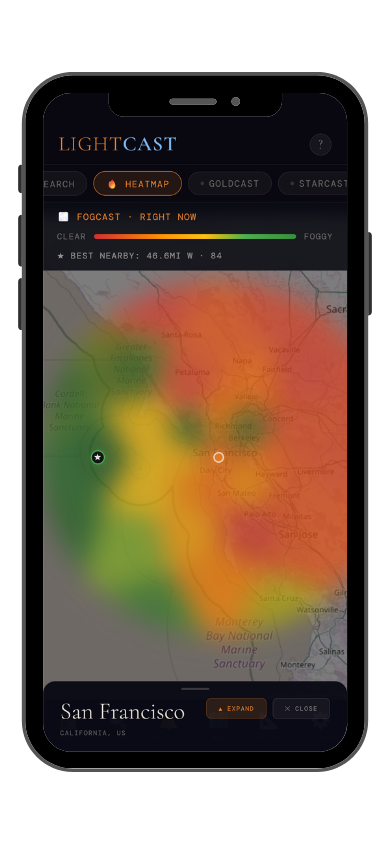
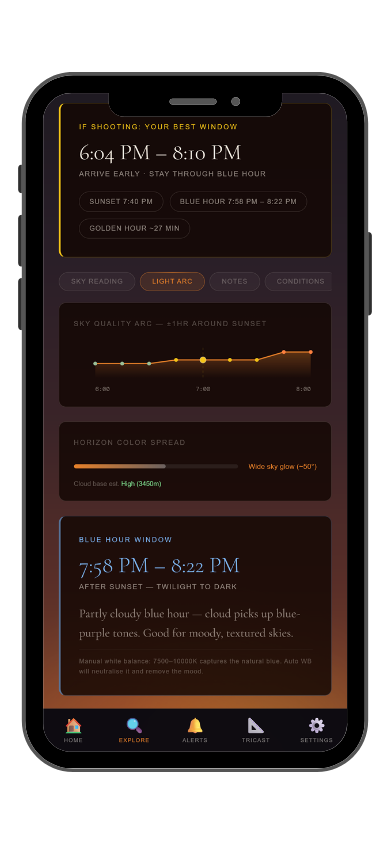
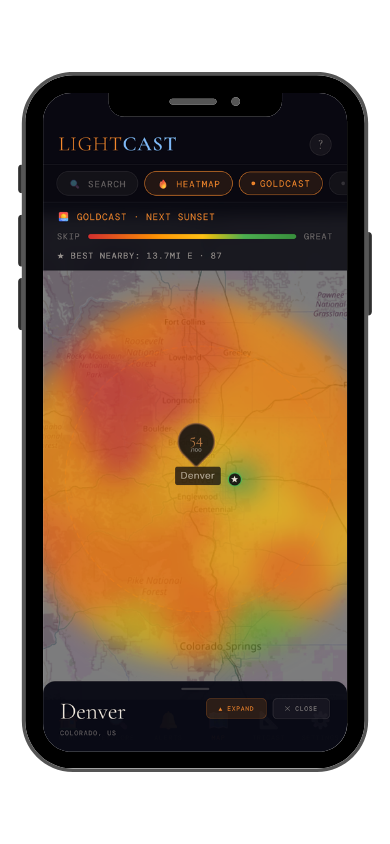
GoldCast golden hour forecast GoldCast conditions heatmap

GoldCast: golden hour score (left) · conditions heatmap (right)

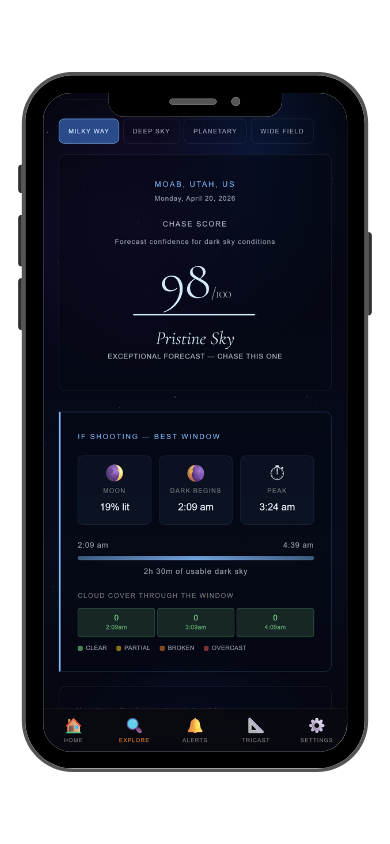
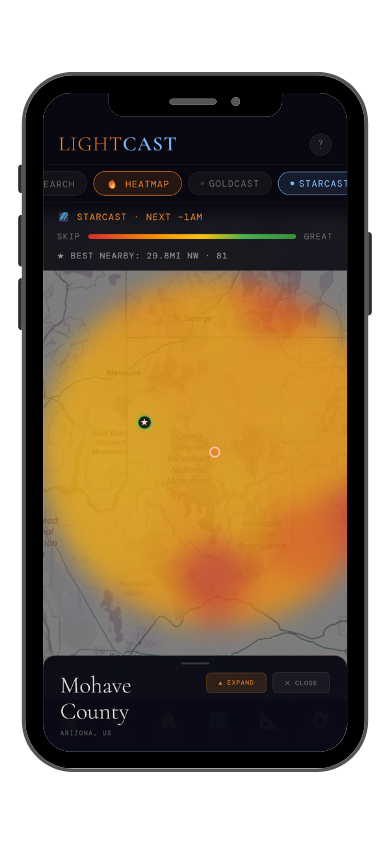
StarCast night sky forecast StarCast heatmap

StarCast: night sky score (left) · conditions heatmap (right)

LightCast Get a live forecast for your favorite spot


Frequently asked
What is the best time to photograph Yosemite National Park?
Spring (March–May) is the strongest season — waterfalls peak from snowmelt, wildflowers bloom in the valley, and morning fog creates layered compositions. Mid-February is the narrow window for the Firefall on El Capitan. Fall brings clear skies and golden valley light without summer haze. Check GoldCast for cloud cover the night before.
Can you see the Milky Way at Yosemite?
Yes, especially from the high country. The valley floor is Bortle 3-4, but Glacier Point and Tuolumne Meadows offer darker skies and clearer atmosphere above the valley inversion layer. The galactic core is visible from late April through September on new moon nights. Check StarCast for moon phase and cloud cover before making the drive up.
Are drones allowed at Yosemite?
Drones are prohibited throughout Yosemite National Park. No recreational Special Use Permits are issued. The ban covers the valley, high country, and all wilderness areas. Check current NPS rules and FAA TFRs before any flight near the park boundary.
How do I photograph the Yosemite valley fog?
Valley fog forms most reliably from October through March when cold air pools in the valley floor overnight. Glacier Point and Sentinel Dome give elevated positions above the fog layer, looking down on a sea of clouds with Half Dome and the granite walls emerging above it. Fog clears quickly after sunrise — the best window is the 30–60 minutes around first light. Check GoldCast for fog probability the night before.
What is LightCast?
LightCast is a suite of photography weather tools. GoldCast handles golden hour timing with cloud and fog forecasts. StarCast scores night sky conditions. Dronecast covers wind and visibility for drone pilots. All three are free on web; full features including 7-day forecasts and push alerts are in the LightCast iOS app — $2.99/month after a 7-day free trial.
LightCast
Plan your next shoot.

Search any city, park, or location worldwide

Get LightCast on iPhone
or
Learn More →

$2.99/mo after 7-day free trial