DroneCast ยท Flight Conditions Guide
LightCast

What Is Wind Shear and How Does It Affect Drones?

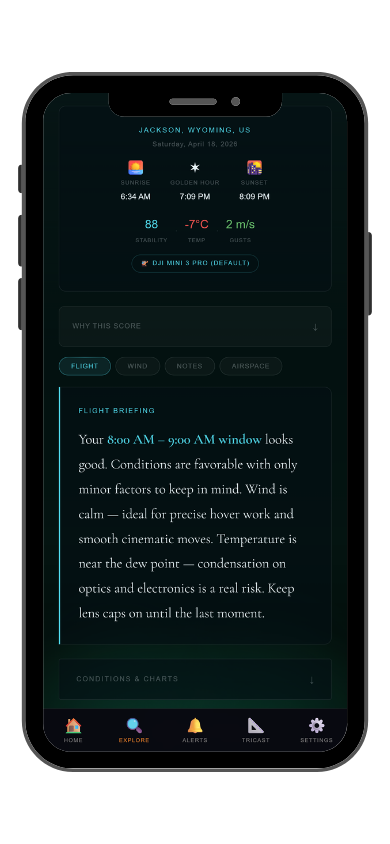
Sustained wind is predictable. Wind shear is sudden and unexpected. LightCast DroneCast scores wind conditions including gust intensity and shear risk for your location before you fly.

Check Flight Conditions โ€” iOS App Check Free on Web โ†’

iOS app: $2.99/mo ยท 7-day free trial ยท Cancel anytime

Why shear is more dangerous than speed

The Sudden Change Is the Problem

A drone flying in steady 15 mph wind is manageable โ€” the flight controller compensates continuously and the aircraft stabilizes. Wind shear is different. A sudden change in wind speed or direction gives the flight controller no time to anticipate the input. The drone lurches, motors spike, and in severe cases the correction can't keep up. Most drone incidents attributed to "wind" are actually shear or gust events, not sustained speed.

๐Ÿ”๏ธ
Terrain-Induced Shear
The most common source for landscape drone photographers. Flying on the lee side of a ridge, cliff, or building in strong wind creates mechanical turbulence with rapid, unpredictable speed and direction changes. The reported wind speed at a nearby weather station may understate conditions significantly โ€” terrain funneling and deflection can double effective wind speed in localized zones.
โ›ˆ๏ธ
Frontal and Thunderstorm Shear
Thunderstorm outflow boundaries create sharp wind direction reversals that can go from near-calm to 30+ mph in seconds. Never fly within visual range of a developing thunderstorm. The outflow can extend 10 to 20 miles from the cell and arrive with almost no warning at a site that looks calm.
๐Ÿ“น
What Shear Looks Like in Footage
Mild shear produces visible micro-lurches in otherwise smooth tracking shots. Moderate shear causes the gimbal to temporarily lose horizon and introduces horizon tilt in clips. Severe shear produces sharp, sudden frame jumps that are difficult or impossible to stabilize in post. Even events that don't risk the aircraft can ruin footage.
โš ๏ธ
High Gust-to-Sustained Ratio: The Warning Sign
When forecast gusts are significantly higher than sustained wind โ€” for example, 8 mph sustained with 22 mph gusts โ€” the large differential indicates a turbulent, shear-prone atmosphere even at low altitude. DroneCast shows both numbers so you can assess the risk before launch rather than discovering it 200 feet in the air.
LightCast DroneCast
What to check before flying near terrain

Speed, Gusts, and Direction Together

The three numbers that matter for shear assessment are sustained speed, gust intensity, and wind direction relative to terrain. A large gap between sustained and gust speed is the most direct shear indicator available from a standard forecast. DroneCast scores wind speed, gusts, and direction together as part of a single 0โ€“100 flight condition score so the risk is visible at a glance before you drive to the location.

๐Ÿ“
App Exclusive
DroneCast is only in the iOS app, alongside FogCast, CloudCast, StarCast, GoldCast, and TriCast. GoldCast and StarCast send push alerts when golden hour or night sky conditions hit your threshold โ€” useful if you're combining a drone flight with a photography session.
Common Questions
What is wind shear?
A sudden change in wind speed or direction over a short distance. For drones, it creates unexpected attitude changes the flight controller has no time to anticipate. Most drone incidents attributed to "wind" are actually shear or gust events. DroneCast flags gust intensity and speed differentials for your location โ€” available in the LightCast iOS app.
Where is wind shear most dangerous for drone pilots?
On the lee side of ridges, cliffs, and buildings in strong wind, and near developing thunderstorms. Terrain-induced turbulence can be far more intense than reported wind speeds suggest because local funneling and deflection amplify conditions in specific zones.
How do I know if wind shear is likely?
Look at the gap between sustained wind speed and gusts. A large differential โ€” for example, 8 mph sustained with 20+ mph gusts โ€” indicates a turbulent atmosphere prone to shear. DroneCast shows both numbers alongside the overall flight condition score.
Is wind shear worse than high sustained wind?
Often yes. A drone can compensate for sustained wind continuously. Shear gives no warning and no time to anticipate, making the correction more aggressive and the risk of overcorrection higher. Calm conditions with occasional severe gusts are frequently more dangerous than moderate steady wind.
What is LightCast DroneCast?
DroneCast scores flight conditions from 0 to 100 using wind speed, gusts, direction, precipitation, visibility, humidity, and temperature for any location. Free at lightcastsuite.com/dronecast, with saved locations in the LightCast iOS app. $2.99/month after a 7-day free trial.
LightCast
Know the full wind picture before you fly.

Sustained speed ยท Gust intensity ยท Wind direction ยท Flight score
Visibility ยท Precipitation ยท Saved locations

Download LightCast for iOS
or
Check today's conditions free on web โ†’

$2.99/mo after 7-day free trial ยท Cancel anytime in App Store