DroneCast · Flight Conditions Guide

LightCast

What Temperature Is Too Cold to Fly a Drone?

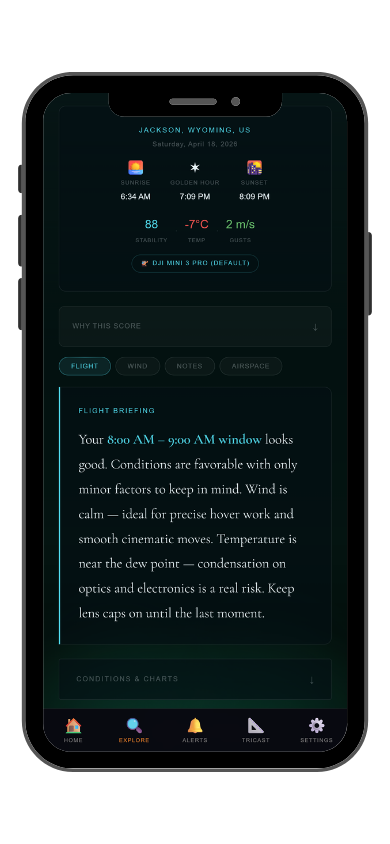
Cold kills battery capacity and makes percentage readings unreliable. LightCast DroneCast factors temperature into its flight condition score so cold-weather risk is visible before you launch.

Check Flight Conditions — iOS App Check Free on Web →

iOS app: $2.99/mo · 7-day free trial · Cancel anytime
Temperature thresholds

What the Numbers Actually Mean

Most consumer drones list a minimum operating temperature of 14°F (-10°C). That number describes the temperature at which the aircraft will still fly — not the temperature at which it will fly safely and reliably. Battery performance degrades steadily below freezing, and the most dangerous effect isn't reduced flight time. It's that the battery percentage display becomes unreliable under load.

🌡️
Above 32°F (0°C): Minimal Impact
Flight times may be slightly shorter than rated specs but performance is largely normal. Warm the battery before launch if it's been sitting outside — a battery that starts cold takes longer to reach optimal performance and never fully recovers mid-flight.
❄️
20–32°F (-7 to 0°C): Noticeable Reduction
Expect 15 to 25% reduction in flight time. Battery percentage readings begin to lag behind actual capacity. Return earlier than the low-battery warning suggests — at these temperatures the aircraft may land unexpectedly when the display still shows 15 to 20%. Keep the pre-flight hover warm-up period longer.
🧊
Below 20°F (-7°C): Significant Risk
Capacity loss of 30 to 40% or more. Voltage sag under high-load conditions — headwind return, aggressive corrections — can trigger automatic landing when the displayed percentage still appears safe. This is where drones come down unexpectedly in scenarios that would be routine in warm weather.
🔋
The Warm-Up Protocol
Keep batteries inside a warm car or jacket until just before launch. After takeoff, hover at low altitude for 60 to 90 seconds under gentle load before the main flight. This warms the cells under real operating conditions. A battery warmed this way performs significantly better than one flown cold from the first second.
LightCast DroneCast
Cold plus wind: the compound risk

Temperature and Wind Together Are Worse Than Either Alone

Cold reduces battery capacity. Wind increases the load on the battery as motors work harder to maintain position and fight headwind. Cold weather combined with moderate wind drains a battery significantly faster than either condition alone, and the percentage display becomes even less reliable under sustained high-load cold operation. DroneCast scores both temperature and wind as part of a single flight condition score so the compound risk is visible at a glance.

📍
App Exclusive
DroneCast is only in the iOS app, alongside FogCast, CloudCast, StarCast, GoldCast, and TriCast. GoldCast and StarCast send push alerts when golden hour or night sky conditions hit your threshold — winter photography often involves both a drone flight and a golden hour shoot at the same location.
Common Questions
What temperature is too cold to fly a drone?
Below 20°F (-7°C) carries significant battery risk. The real danger isn't the rated minimum — it's that cold batteries make percentage readings unreliable, so the drone can come down unexpectedly. DroneCast factors temperature into its flight score — available in the LightCast iOS app.
How does cold affect drone battery life?
Cold slows LiPo electrochemical reactions, reducing capacity and increasing voltage sag under load. At 20°F, expect 30 to 40% capacity loss and unreliable battery percentage readings. Return earlier than the warning suggests and always warm batteries before flight.
How do you warm a drone battery before flying in cold weather?
Keep batteries inside a warm car or jacket until just before launch. After takeoff, hover at low altitude for 60 to 90 seconds under gentle load before the main flight. Never store batteries in a cold vehicle overnight before a shoot.
Can you fly a drone in snow?
Brief flights in light snow are possible but not recommended. Most consumer drones are not waterproof. Snow adds moisture risk to electronics and motors, reduces visibility, and combines with cold to accelerate battery drain. DroneCast flags precipitation type alongside temperature so you can assess the combined risk.
What is LightCast DroneCast?
DroneCast scores flight conditions from 0 to 100 using wind speed, gusts, temperature, precipitation, humidity, and visibility for any location. Free at lightcastsuite.com/dronecast, with saved locations in the LightCast iOS app. $2.99/month after a 7-day free trial.
LightCast
Know the temperature risk before you drive out.

Temperature · Wind speed & gusts · Precipitation · Flight score
Visibility · Saved locations · All tools in one app

Download LightCast for iOS
or
Check today's conditions free on web →

$2.99/mo after 7-day free trial · Cancel anytime in App Store