FogCast ยท Fog Photography Guide
LightCast

How to Photograph Fog From Above

Shooting fog from above โ€” from a ridge, hilltop, or elevated road โ€” produces a completely different result from shooting inside it. Here's how to position yourself above the fog layer and what conditions to look for.

Try LightCast Free โ€” iOS App Check fog probability free on web โ†’

iOS app: $2.99/mo ยท 7-day free trial ยท Cancel anytime

Photography forecast

Above the Fog vs Inside It

Ground-level fog photography is moody and atmospheric. Above-the-fog photography is dramatic and expansive โ€” a sea of cloud beneath you with peaks, ridges, and structures emerging. The two experiences require the same fog event but completely different positioning.

๐Ÿ”๏ธ
Find the Fog Ceiling Height
Radiation fog sits in low-lying terrain โ€” valleys, river corridors, basins. The fog ceiling is typically 200โ€“500 feet above the valley floor. A ridge or hillside at that elevation above the fog puts you in the clear with the fog layer below. Check the dew point and overnight low to estimate fog thickness.
๐Ÿš—
Position Before Sunrise
Above-the-fog compositions require being in position before the fog fully forms or before sunrise starts burning it off. Arrive at your elevated vantage point in the dark โ€” set up composition in pre-dawn light and wait for the fog to appear below as the valley cools.
๐ŸŒ…
Combine With Golden Hour
Fog burn-off typically coincides with the golden hour window after sunrise. The sun illuminates the fog layer from above as it thins โ€” this 30โ€“60 minute window of fog plus golden light is the most dramatic condition in fog photography. GoldCast and FogCast together give you both forecasts.
๐ŸŒซ๏ธ
What FogCast Tells You
FogCast scores fog formation probability and estimates burn-off timing. A high formation score tells you fog is likely in the valleys below your target ridge. Cross-reference with local terrain โ€” the fog forms where cold air pools, and your vantage point needs to be above that pooling zone.
LightCast
๐Ÿ“
FogCast + GoldCast in One App
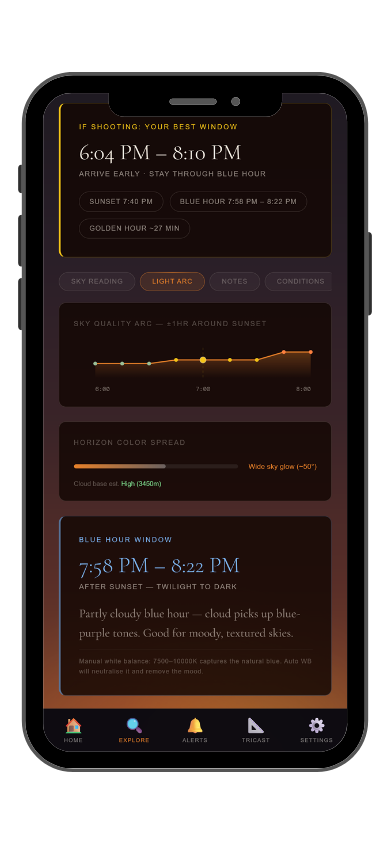
FogCast scores fog formation probability and burn-off timing. GoldCast scores golden hour quality. Both in the same LightCast iOS app โ€” the combination tells you whether fog will form in the valleys and whether the light above will be worth photographing it. App exclusive.
Common Questions
How do you photograph fog from above?
Find a ridge or hillside 200โ€“500 feet above a fog-prone valley. Arrive before sunrise. FogCast scores formation probability and burn-off timing โ€” free on web, full features in the iOS app. $2.99/month after a 7-day free trial.
How high above fog do you need to be?
It depends on fog thickness โ€” radiation fog typically sits 200โ€“600 feet above the valley floor. A ridge 300โ€“500 feet above the nearest valley is often enough to be above the ceiling. Check satellite imagery or ask locals about typical fog depth in your target area.
What conditions produce the best above-fog photography?
Dense fog in valley, clear sky above, calm wind, and sunrise golden hour coinciding with burn-off. FogCast + GoldCast together score both the fog formation and the golden hour quality for the same morning.
What time does fog burn off?
Radiation fog typically starts thinning 30โ€“90 minutes after sunrise as solar heating warms the surface. FogCast provides burn-off timing estimates so you know how long the above-fog window will last before the cloud dissipates.
What is LightCast FogCast?
FogCast scores fog formation probability using dew point, humidity, overnight wind, and sky coverage โ€” and provides burn-off timing estimates. App exclusive in the LightCast iOS app. $2.99/month after a 7-day free trial.
LightCast
Know when fog will fill the valley below your ridge.

Fog probability ยท Burn-off timing ยท Golden hour quality
FogCast + GoldCast ยท App exclusive ยท 7-day free trial

Download LightCast for iOS
or
Check fog probability free on web โ†’

$2.99/mo after 7-day free trial ยท Cancel anytime in App Store