What the app shows you
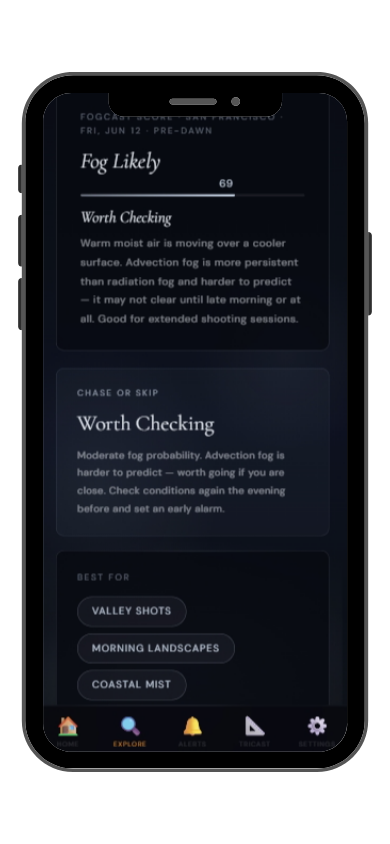
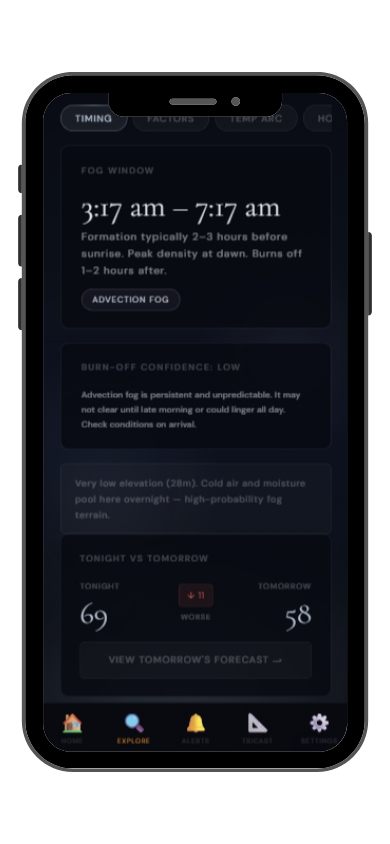
Full FogCast score, fog type, chase-or-skip verdict, and 10-day outlook — all in the app.
Get LightCast Suite on iOS
Know before you drive: FogCast checks the conditions that produce photogenic fog
Get more than a snapshot of current conditions. The LightCast app unlocks everything to plan ahead
Humidity alone isn't enough. Wind alone isn't enough. Cloud cover alone isn't enough. Photogenic valley fog requires several conditions to line up at once, and most weather apps don't read them together.
Set a FogCast threshold once. The app will alert you when conditions at your saved locations look promising, so you're not manually checking at 4am.

Don't waste a sunrise drive. Check FogCast before you leave.
Download on the App StoreAsheville sits in a wide basin at roughly 650 meters in the Blue Ridge Mountains of western North Carolina, surrounded by ridgelines that rise another 300 to 600 meters above the city. That bowl topography is ideal for radiation fog: cold air drains off the surrounding slopes overnight, pools in the valley, and produces dense low fog that the higher ridges rise above by pre-dawn. From the right vantage point on the surrounding parkway, the city and river valley disappear entirely into white.
The Blue Ridge Parkway overlooks above Asheville — particularly the pull-offs between mileposts 380 and 400 — are the best positions for shooting fog in the valley below. When conditions are right, the French Broad River corridor holds the densest fog, and the ridgeline light at golden hour can be exceptional with mist filling the valley. Fall is the strongest season, typically September through November, when temperature swings between day and night are largest.
Fog forms most reliably after clear nights with light winds and high relative humidity. Check dew point the evening before: if surface dew point depression is under 2°C by 10pm and winds are calm, the Swannanoa and French Broad valleys are likely to hold fog through sunrise.