What the app shows you
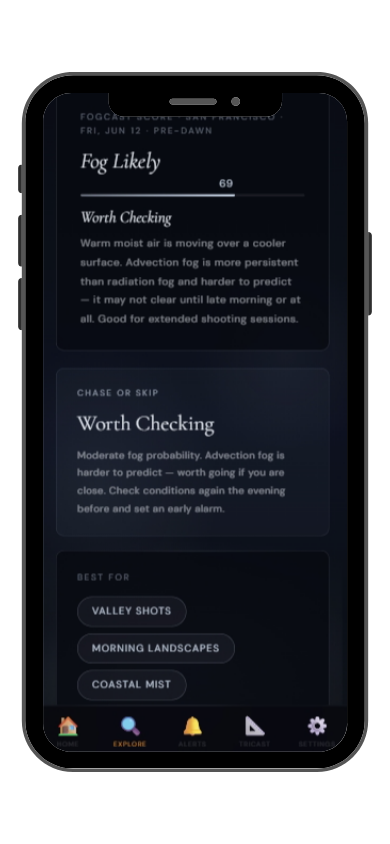
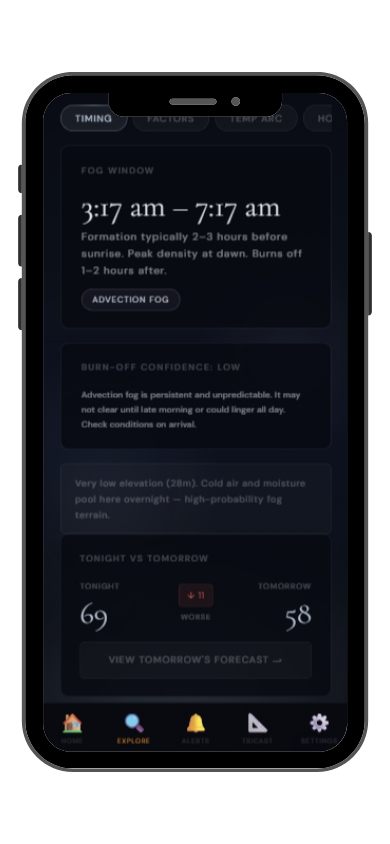
Full FogCast score, fog type, chase-or-skip verdict, and 10-day outlook — all in the app.
Get LightCast Suite on iOS
Know before you drive: FogCast checks the conditions that produce photogenic fog
Get more than a snapshot of current conditions. The LightCast app unlocks everything to plan ahead
Humidity alone isn't enough. Wind alone isn't enough. Cloud cover alone isn't enough. Photogenic valley fog requires several conditions to line up at once, and most weather apps don't read them together.
Set a FogCast threshold once. The app will alert you when conditions at your saved locations look promising, so you're not manually checking at 4am.

Don't waste a sunrise drive. Check FogCast before you leave.
Download on the App StoreCades Cove is a broad mountain valley surrounded by the ridges of the Great Smoky Mountains, and its open meadow geometry makes it one of the most reliable and most photographed fog photography locations in the eastern US. Cold air drains off the surrounding slopes overnight and pools in the flat cove floor, producing dense radiation fog that fills the valley while the ridges above remain clear.
The 18-kilometer loop road around the cove passes through open meadows, historic cabins and barns, and forest edges, all of which become dramatically atmospheric when fog fills the cove at dawn. The view from the loop road looking across the meadow toward the fog-shrouded tree line is one of the most classic Smoky Mountain compositions. White-tailed deer and occasionally black bears move through the fog in the early morning, adding wildlife to the scene.
Fall is peak season, from mid-October through November, combining foliage color with the most reliable fog. Spring also delivers consistent morning mist. The gate opens at sunrise and the loop road gets crowded quickly, so arriving at opening time is important for both fog and wildlife photography in calm conditions.