What the app shows you
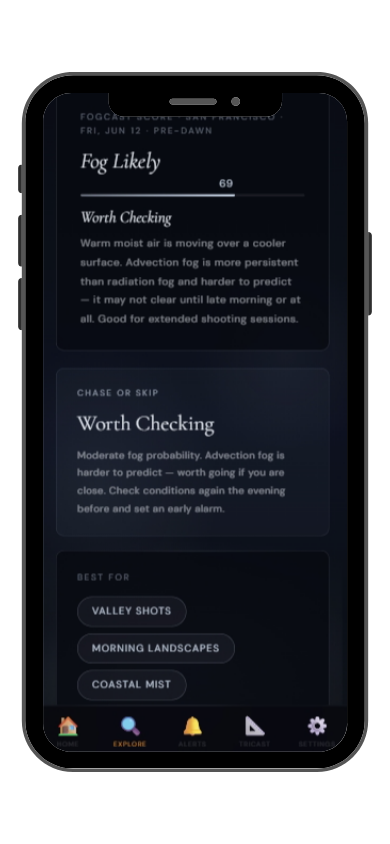
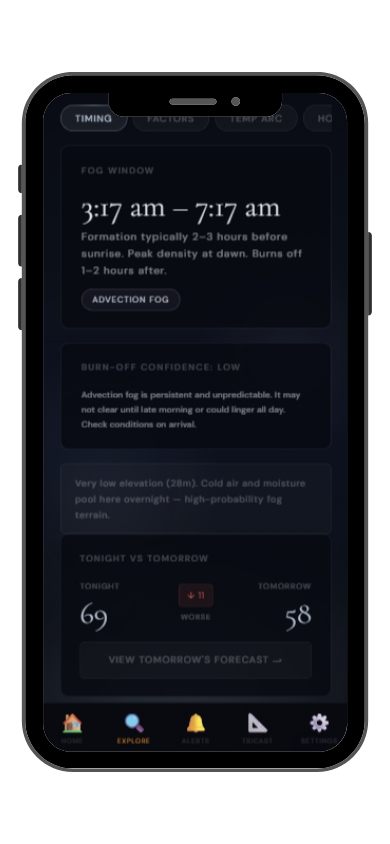
Full FogCast score, fog type, chase-or-skip verdict, and 10-day outlook — all in the app.
Get LightCast Suite on iOS
Know before you drive: FogCast checks the conditions that produce photogenic fog
Get more than a snapshot of current conditions. The LightCast app unlocks everything to plan ahead
Humidity alone isn't enough. Wind alone isn't enough. Cloud cover alone isn't enough. Photogenic valley fog requires several conditions to line up at once, and most weather apps don't read them together.
Set a FogCast threshold once. The app will alert you when conditions at your saved locations look promising, so you're not manually checking at 4am.

Don't waste a sunrise drive. Check FogCast before you leave.
Download on the App StoreThe Clingmans Dome Road rises 11 kilometers from Newfound Gap to the Clingmans Dome parking area, climbing through spruce-fir forest from 1,539 to 1,981 meters. This road is closed to vehicles from December through March but is one of the most scenic drives in the Smokies when open. The road crosses multiple inversion layers on fog mornings, passing through alternating clear and fogged zones as it rises — an experience that is genuinely disorienting and spectacular for photographers who drive it in the pre-dawn hours.
Roadside pullouts along the Clingmans Dome Road offer views into fog-filled coves and valleys below the ridgeline that are not accessible from the summit tower. The forested ridgeline at about 1,700 meters elevation is where fog most dramatically layers through the ancient fir trees — not quite above the main inversion and not below it, but sitting right at the fog top where tendrils of mist drift through the spruce canopy. October is the prime month for combined fog and fall color along the road.
Clingmans Dome Road fog is highly variable with elevation and changes rapidly as you drive. The base of the road at Newfound Gap may be clear while the upper reaches are in orographic cloud, or vice versa. The most photogenic condition is a shallow inversion with fog below 1,600 meters and clear sky above — driving up through the fog top and emerging into clear, cold air at the parking area, with a cloud sea extending in every direction below, is one of the signature Smoky Mountain experiences. Monitor Newfound Gap hourly weather for temperature inversions.