What the app shows you
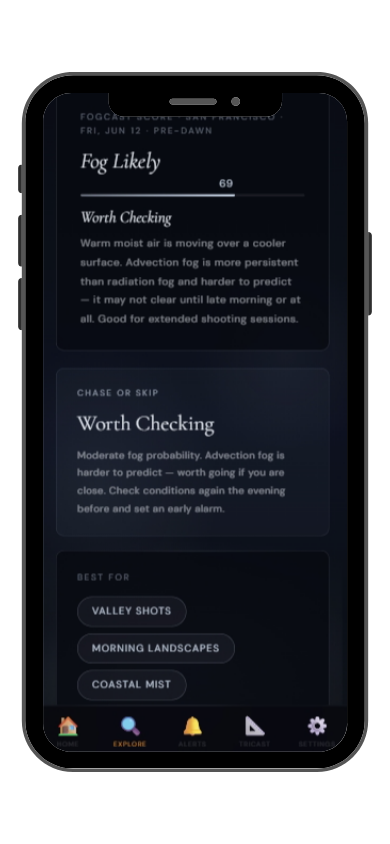
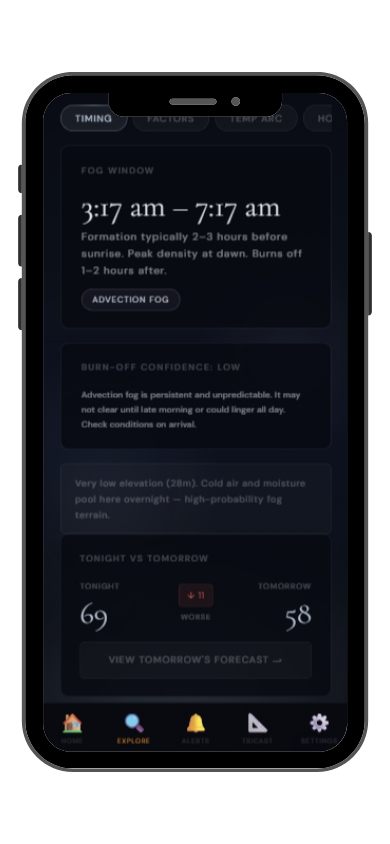
Full FogCast score, fog type, chase-or-skip verdict, and 10-day outlook — all in the app.
Get LightCast Suite on iOS
Know before you drive: FogCast checks the conditions that produce photogenic fog
Get more than a snapshot of current conditions. The LightCast app unlocks everything to plan ahead
Humidity alone isn't enough. Wind alone isn't enough. Cloud cover alone isn't enough. Photogenic valley fog requires several conditions to line up at once, and most weather apps don't read them together.
Set a FogCast threshold once. The app will alert you when conditions at your saved locations look promising, so you're not manually checking at 4am.

Don't waste a sunrise drive. Check FogCast before you leave.
Download on the App StoreGatlinburg sits at the northern gateway to Great Smoky Mountains National Park in the valley of the West Prong of the Little Pigeon River. The town is surrounded by the park's ridges, and the valley corridor sees consistent morning fog year-round as the Smokies' famous mist drains down from the mountain forests and pools in the lower terrain. The confluence of moisture from the forest, the river, and overnight cooling makes Gatlinburg one of the foggiest small towns in the Southeast.
The roads leading south into the park from Gatlinburg are the best photography access points for local fog, particularly the Roaring Fork Motor Nature Trail which winds through old-growth forest and historic structures that become atmospheric in morning mist. Chimney Tops overlook offers views up the fog-filled valley. The Sugarlands Visitor Center area at the park entrance sees particularly dense fog on calm, humid mornings.
Fall and spring are the most reliable fog seasons, but the Smokies produce mist year-round. October through November combines fog with peak foliage. The hour before and after sunrise is the most productive window before the valley fog rises and disperses into the forest canopy.