What the app shows you
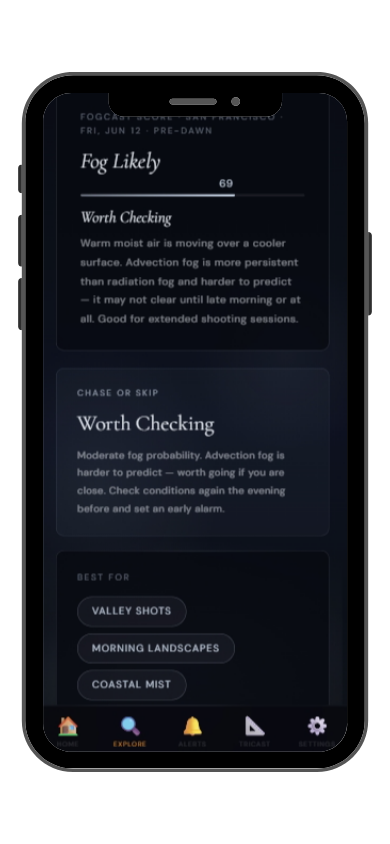

Full FogCast score, fog type, chase-or-skip verdict, and 10-day outlook — all in the app.
Get LightCast Suite on iOS
Know before you drive: FogCast checks the conditions that produce photogenic fog
Get more than a snapshot of current conditions. The LightCast app unlocks everything to plan ahead
Humidity alone isn't enough. Wind alone isn't enough. Cloud cover alone isn't enough. Photogenic valley fog requires several conditions to line up at once, and most weather apps don't read them together.
Set a FogCast threshold once. The app will alert you when conditions at your saved locations look promising, so you're not manually checking at 4am.

Don't waste a sunrise drive. Check FogCast before you leave.
Download on the App StoreHallstatt is a small Austrian village perched on the western shore of the Hallstätter See in the Salzkammergut lake district of the Alps. The combination of the lake, steep surrounding mountainsides rising to over 2,000 meters, and a historic village of pastel buildings stacked against the cliff face makes it one of the most photographed villages in Austria. When morning fog sits on the lake and partially obscures the village and its church spire, the effect is serene and otherworldly.
The viewpoint on the eastern shore of the lake — accessible by ferry or road — is the primary fog photography position, offering the full view of the village reflected in the lake with fog drifting across the water. Early morning is essential: the fog typically forms overnight, peaks at dawn, and burns off within an hour of full sunrise. Late autumn and winter, from October through February, are the most reliable seasons for lake fog. Snow on the surrounding peaks combined with fog on the lake is among the most dramatic conditions.
Hallstatt lake fog forms when cold mountain air drains into the enclosed valley overnight and chills the air above the relatively warm lake surface. Calm winds are essential — any breeze pushes the fog to one end of the lake and disperses the reflection. Check the forecast for the calmest nights following cold, clear days for the highest probability of still-water fog at dawn.