What the app shows you
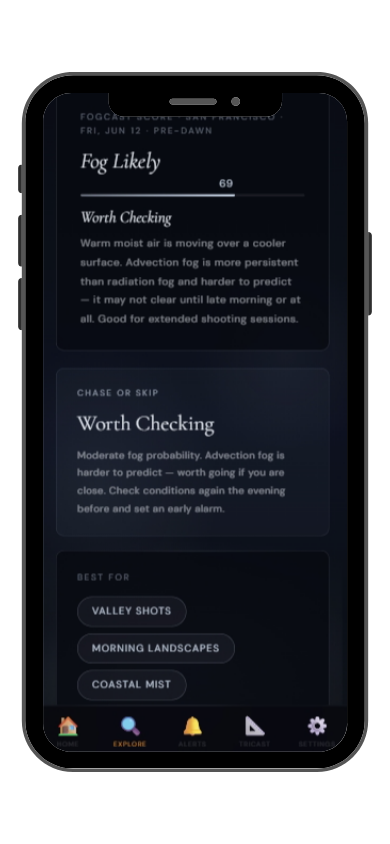

Full FogCast score, fog type, chase-or-skip verdict, and 10-day outlook — all in the app.
Get LightCast Suite on iOS
Know before you drive: FogCast checks the conditions that produce photogenic fog
Get more than a snapshot of current conditions. The LightCast app unlocks everything to plan ahead
Humidity alone isn't enough. Wind alone isn't enough. Cloud cover alone isn't enough. Photogenic valley fog requires several conditions to line up at once, and most weather apps don't read them together.
Set a FogCast threshold once. The app will alert you when conditions at your saved locations look promising, so you're not manually checking at 4am.

Don't waste a sunrise drive. Check FogCast before you leave.
Download on the App StoreKings Canyon National Park contains one of the deepest river canyons in North America, with Kings River gorge dropping over 2,400 meters from summit to canyon floor. That extreme vertical relief creates powerful local fog dynamics — cold air drains into the canyon bottom overnight, and when moisture is sufficient, a thick river fog fills the gorge while the rim walls and peaks above remain clear. The result is one of the most dramatic inversion fog landscapes in California.
Cedar Grove, the main valley floor destination at around 1,400 meters, is completely enveloped during strong fog events. Viewing from Grizzly Falls or the canyon rim overlooks at Junction View gives a stunning perspective on the fog filling the canyon below. The Grant Grove area at higher elevation occasionally sits above a separate inversion layer in winter. November through January produces the deepest canyon fog episodes, often lasting until mid-morning before the sun burns through.
Kings Canyon fog requires cold air pooling in the canyon bottom, calm winds, and sufficient moisture. The canyon's north-south orientation traps cold drainage air exceptionally well. If overnight temperatures in Cedar Grove drop below 2°C with relative humidity above 85% and no wind, the canyon floor will almost certainly be fogged in by sunrise.