What the app shows you
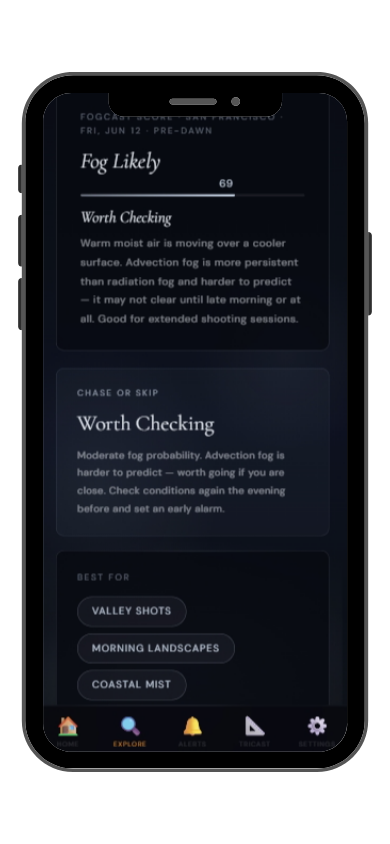
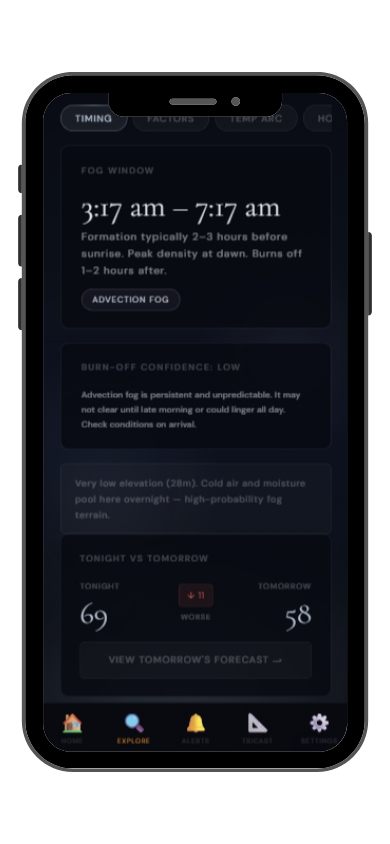
Full FogCast score, fog type, chase-or-skip verdict, and 10-day outlook — all in the app.
Get LightCast Suite on iOS
Know before you drive: FogCast checks the conditions that produce photogenic fog
Get more than a snapshot of current conditions. The LightCast app unlocks everything to plan ahead
Humidity alone isn't enough. Wind alone isn't enough. Cloud cover alone isn't enough. Photogenic valley fog requires several conditions to line up at once, and most weather apps don't read them together.
Set a FogCast threshold once. The app will alert you when conditions at your saved locations look promising, so you're not manually checking at 4am.

Don't waste a sunrise drive. Check FogCast before you leave.
Download on the App StoreLassen Volcanic National Park sits at the southern end of the Cascade Range in Northern California, where Lassen Peak rises to 3,187 meters above a landscape of hydrothermal features, alpine lakes, and dense conifer forest. The park straddles the boundary between the maritime-influenced north and the drier Great Basin to the east, giving it a climate that produces fog from multiple mechanisms — advection fog from the Sacramento Valley, radiation fog in the lower valleys, and orographic cloud wrapping the summit.
Manzanita Lake near the park entrance is the premier fog photography location. The lake sits at 1,756 meters and reflects Lassen Peak when fog layers settle below the summit, creating iconic composite images of the volcano and its reflection through mist. Reflection Lake and Summit Lake are secondary options. The hydrothermal areas at Bumpass Hell and Sulphur Works produce their own steam that visually blends with morning fog in cool conditions. October through December is the strongest fog season before winter snow closes the main road.
Lassen fog is most reliable when Sacramento Valley air masses move upslope overnight and stall below the volcanic rim. Watch for calm northwesterly flow and strong overnight cooling at the valley stations below the park. If the dew point gap at Manzanita Lake is less than 2°C at midnight, lake fog and valley-edge mist are highly likely by 5am.