What the app shows you
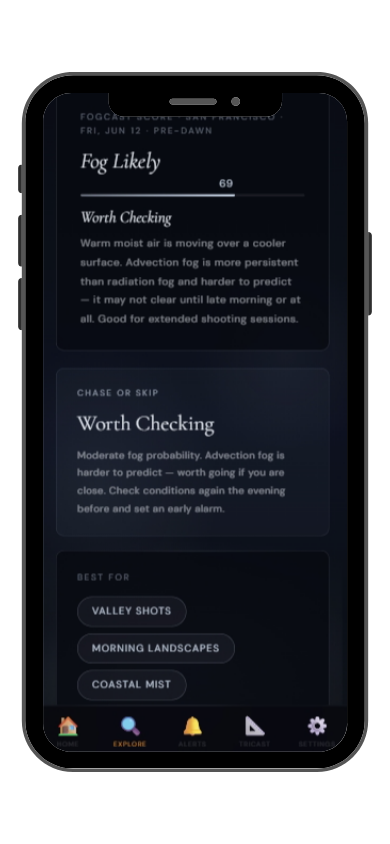
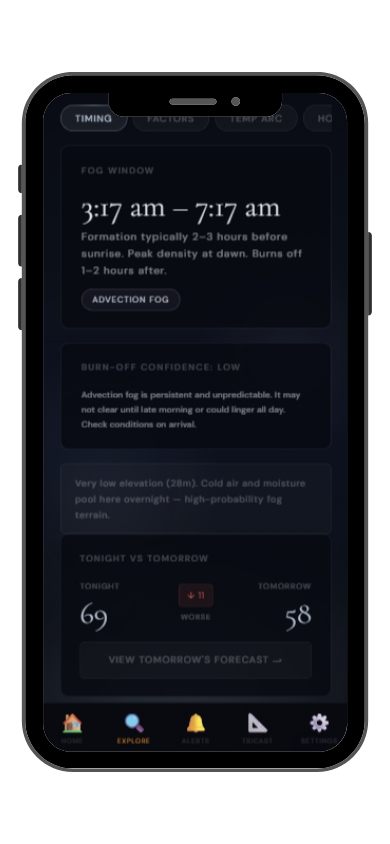
Full FogCast score, fog type, chase-or-skip verdict, and 10-day outlook — all in the app.
Get LightCast Suite on iOS
Know before you drive: FogCast checks the conditions that produce photogenic fog
Get more than a snapshot of current conditions. The LightCast app unlocks everything to plan ahead
Humidity alone isn't enough. Wind alone isn't enough. Cloud cover alone isn't enough. Photogenic valley fog requires several conditions to line up at once, and most weather apps don't read them together.
Set a FogCast threshold once. The app will alert you when conditions at your saved locations look promising, so you're not manually checking at 4am.

Don't waste a sunrise drive. Check FogCast before you leave.
Download on the App StoreLeavenworth sits at roughly 370 meters in the Icicle Creek valley on the eastern slopes of the Washington Cascades, where the Wenatchee River drains a wide, flat-bottomed valley surrounded by steep forested ridges. The valley geometry is nearly ideal for cold air pooling: cold dense air drains off the Cascades overnight and settles into the river corridor, producing radiation fog that can be thick enough to completely obscure the valley floor while the ridges and peaks above remain clear.
The best fog photography positions are on the higher ground at the valley edges, particularly the slopes above town looking west toward the Cascades. When fog fills the valley to treetop level, the river corridor becomes a white river of mist below the surrounding ridgelines. Late October through December is the most consistent fog season, often coinciding with the first snow on the surrounding peaks.
East-side Cascade valleys like Leavenworth are in a rain shadow and experience more temperature-inversion fog than the wetter western slopes. Clear, cold nights following dry stretches are the most reliable fog trigger — if overnight lows are forecast below 5°C with calm winds and high humidity, the Wenatchee valley is a strong candidate for pre-dawn fog.