What the app shows you
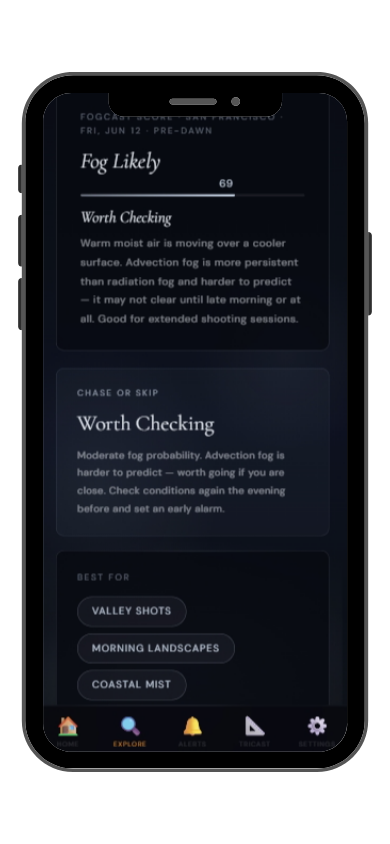
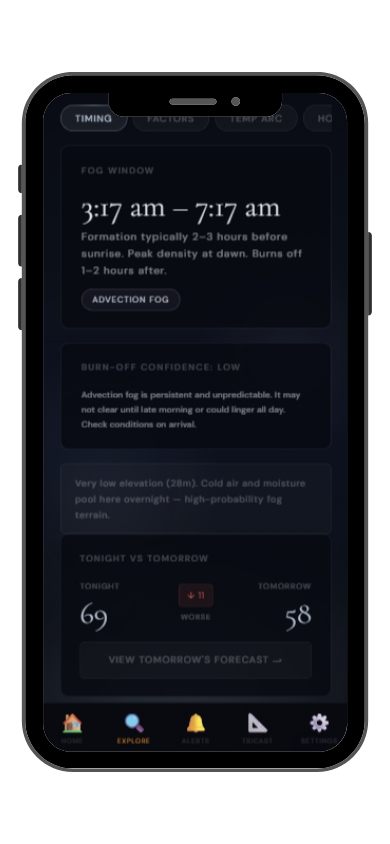
Full FogCast score, fog type, chase-or-skip verdict, and 10-day outlook — all in the app.
Get LightCast Suite on iOS
Know before you drive: FogCast checks the conditions that produce photogenic fog
Get more than a snapshot of current conditions. The LightCast app unlocks everything to plan ahead
Humidity alone isn't enough. Wind alone isn't enough. Cloud cover alone isn't enough. Photogenic valley fog requires several conditions to line up at once, and most weather apps don't read them together.
Set a FogCast threshold once. The app will alert you when conditions at your saved locations look promising, so you're not manually checking at 4am.

Don't waste a sunrise drive. Check FogCast before you leave.
Download on the App StoreMount Spokane rises to 1,654 meters northeast of Spokane, making it the highest peak in the immediate region and a natural above-fog viewpoint when Spokane Valley and the surrounding Palouse fill with cold-air pooling fog in autumn and winter. Eastern Washington's continental climate produces some of the most persistent radiation fog events in the state, and Mount Spokane's summit sits cleanly above the inversion on many mornings, offering a panorama over a white valley floor that stretches for miles.
The summit of Mount Spokane and the Vista House near the top provide the primary above-fog photography vantage points. On the clearest inversion mornings, the Spokane city lights below the fog layer are visible at pre-dawn, transitioning to a golden fog sea at sunrise. The lower flanks of the mountain through the ski area and state park forest are excellent for fog weaving through ponderosa pine — a different aesthetic than the summit panorama. November through January is peak fog season in the Spokane Valley below, which translates to above-fog opportunities on the summit.
Mount Spokane fog photography depends on the Spokane Valley being fogged in while the summit stays clear. This requires a strong surface temperature inversion with cold, dense air pooling in the valley below about 700 meters. Check Spokane Airport visibility reports — if it drops below 400 meters with calm winds and a clear sky reported at nearby higher stations, the summit will be above the fog. This pattern is most common after two or more days of high pressure in autumn.