What the app shows you
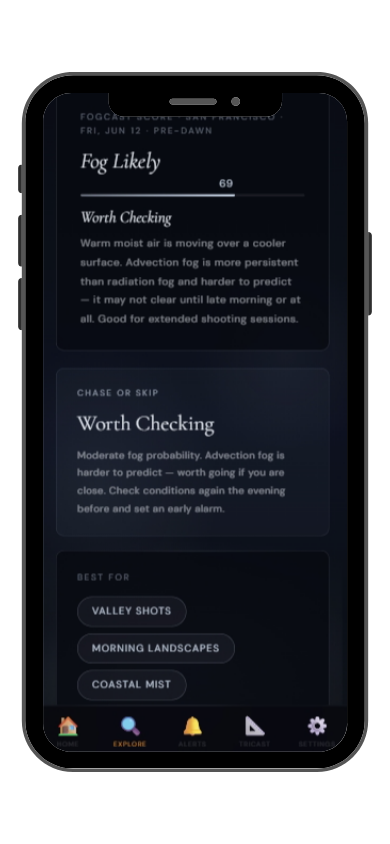

Full FogCast score, fog type, chase-or-skip verdict, and 10-day outlook — all in the app.
Get LightCast Suite on iOS
Know before you drive: FogCast checks the conditions that produce photogenic fog
Get more than a snapshot of current conditions. The LightCast app unlocks everything to plan ahead
Humidity alone isn't enough. Wind alone isn't enough. Cloud cover alone isn't enough. Photogenic valley fog requires several conditions to line up at once, and most weather apps don't read them together.
Set a FogCast threshold once. The app will alert you when conditions at your saved locations look promising, so you're not manually checking at 4am.

Don't waste a sunrise drive. Check FogCast before you leave.
Download on the App StoreMultnomah Falls drops 189 meters in two tiers from the basalt cliffs of the Columbia River Gorge, making it the tallest waterfall in Oregon and one of the most-visited natural sites in the Pacific Northwest. The gorge's unique east-west orientation creates powerful wind and fog dynamics — cold air from the east meets marine moisture from the west, and fog events in the gorge can be dramatic and fast-moving. When fog fills the gorge at the level of the upper falls, the waterfall seems to emerge from nowhere, cascading out of white mist.
The iconic view from the footbridge between the upper and lower falls is the most photographed composition, and fog at that level turns it from a standard waterfall shot into something transcendent. The Larch Mountain Trail above the falls gives above-fog views when the gorge is filled below. Vista House at Crown Point, about 8 kilometers west along the Historic Columbia River Highway, provides the best gorge fog panoramas. October through December is peak fog season in the gorge, when temperature inversions trap cold, moist air in the canyon and morning fog is thick and reliable.
Columbia Gorge fog is formed by cold air pooling in the canyon under a strong temperature inversion. When the gorge floor is below 3°C with calm easterly winds and high humidity, radiation fog fills the canyon from the river level up to about 200 meters. The waterfall's constant spray raises local humidity near the falls by 10 to 15%, making fog formation at the falls likely even when the broader gorge conditions are only marginally foggy.