What the app shows you
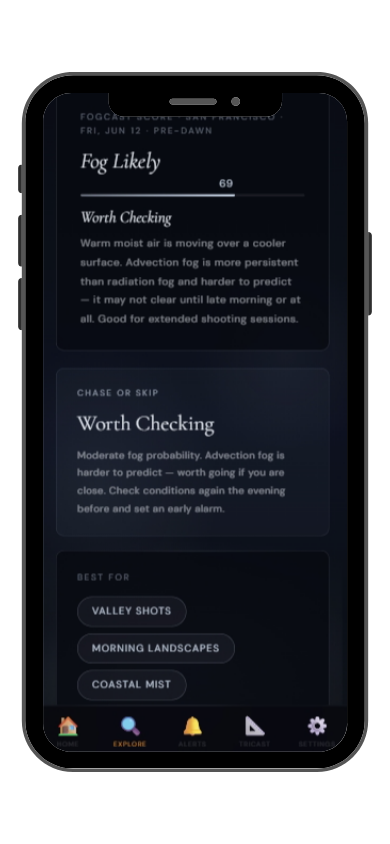
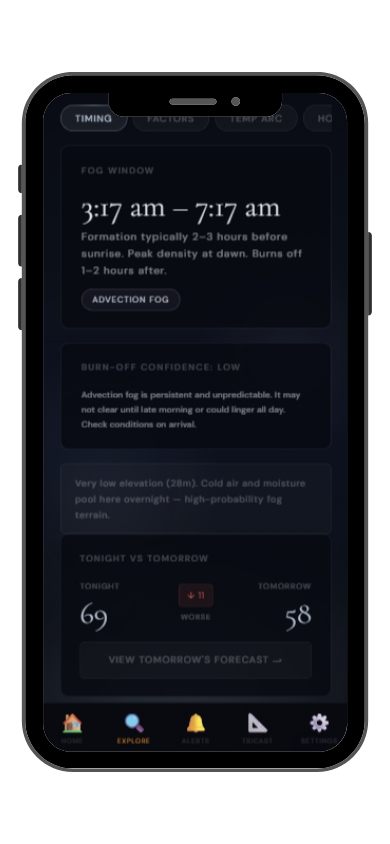
Full FogCast score, fog type, chase-or-skip verdict, and 10-day outlook — all in the app.
Get LightCast Suite on iOS
Know before you drive: FogCast checks the conditions that produce photogenic fog
Get more than a snapshot of current conditions. The LightCast app unlocks everything to plan ahead
Humidity alone isn't enough. Wind alone isn't enough. Cloud cover alone isn't enough. Photogenic valley fog requires several conditions to line up at once, and most weather apps don't read them together.
Set a FogCast threshold once. The app will alert you when conditions at your saved locations look promising, so you're not manually checking at 4am.

Don't waste a sunrise drive. Check FogCast before you leave.
Download on the App StorePoint Lobos State Natural Reserve sits directly on the Monterey Peninsula where cold California Current upwelling meets the warmer coastal air, making it one of the foggiest coastlines in the United States. Marine layer fog is a near-daily feature from May through August, and the jagged granite headlands, sea stacks, and cypress trees at Point Lobos become extraordinary photographic subjects when the fog rolls in low and fast off the Pacific.
The Allan Memorial Grove, with its wind-sculpted Monterey cypress standing against the foggy sea, is one of the most iconic fog photography compositions on the California coast. Bird Island overlook, China Cove, and Whalers Cove all provide layered foreground and background elements that fog transforms from scenic to cinematic. The Sea Lion Point trail puts you at ocean level when fog streaks between the rocks. May through August delivers the most reliable and dramatic marine fog; the window between sunrise and 10am before the fog burns back is the prime shooting time.
Point Lobos fog is classic California advection fog: cold, moist air from the Pacific moves onshore driven by the pressure gradient between the cool coast and the hot inland valleys. When the inland valleys heat above 30°C, the marine layer is pulled aggressively onshore. A northwest swell and afternoon onshore flow that stalls overnight sets up a dense fog bank by pre-dawn.