What the app shows you
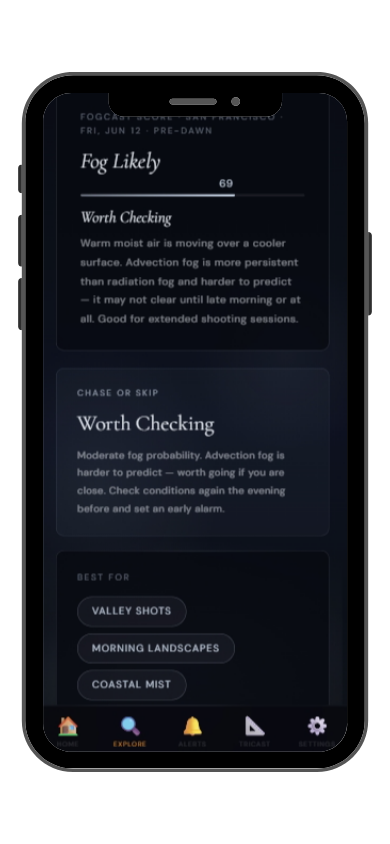
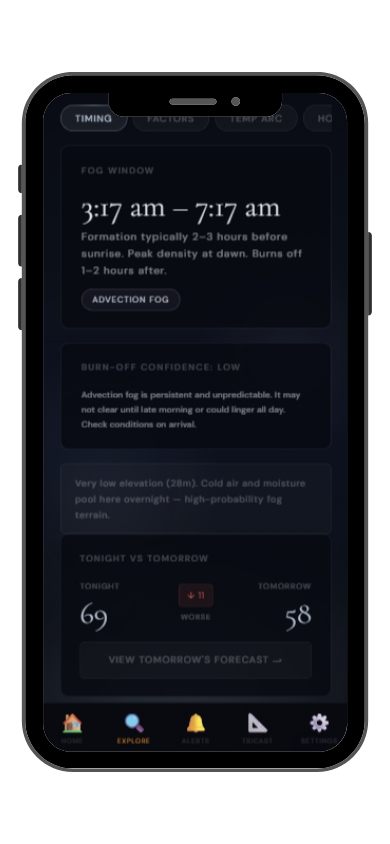
Full FogCast score, fog type, chase-or-skip verdict, and 10-day outlook — all in the app.
Get LightCast Suite on iOS
Know before you drive: FogCast checks the conditions that produce photogenic fog
Get more than a snapshot of current conditions. The LightCast app unlocks everything to plan ahead
Humidity alone isn't enough. Wind alone isn't enough. Cloud cover alone isn't enough. Photogenic valley fog requires several conditions to line up at once, and most weather apps don't read them together.
Set a FogCast threshold once. The app will alert you when conditions at your saved locations look promising, so you're not manually checking at 4am.

Don't waste a sunrise drive. Check FogCast before you leave.
Download on the App StoreRedwood National and State Parks on the far northern California coast sit in one of the foggiest zones in the country, and that fog is integral to the ecosystem: the coast redwoods here depend on summer marine layer for a significant portion of their water. The result is towering old-growth forests that exist in a perpetual state of atmospheric mist, with shafts of filtered light and trailing wisps of fog moving through the canopy.
Fern Canyon, Lady Bird Johnson Grove, and the Tall Trees Grove are the most photogenic fog locations in the park. When marine layer sits at canopy height, the light inside the forest becomes extraordinarily diffused, with the fog scattering sunlight evenly and eliminating harsh shadows. The Prairie Creek section has large clearings where fog drifts across open meadows with the forest edge behind.
Summer is peak fog season, from June through September, when Pacific marine layer is most consistent. Fog typically builds overnight and is densest in the early morning hours. The old-growth forest holds mist longer than open terrain, extending the useful photography window past 10am on heavy fog days.