What the app shows you
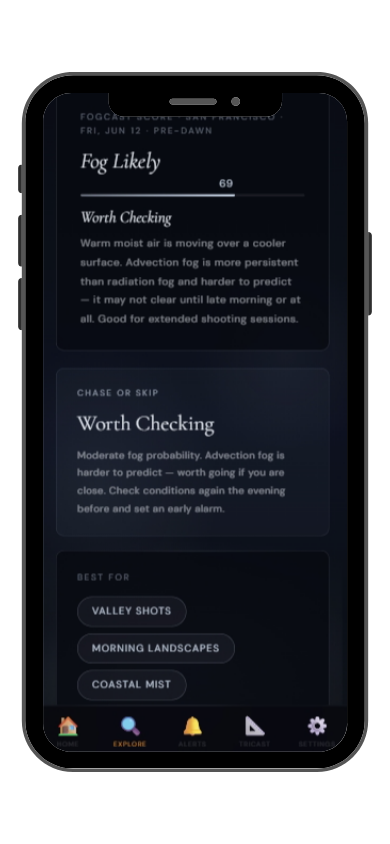
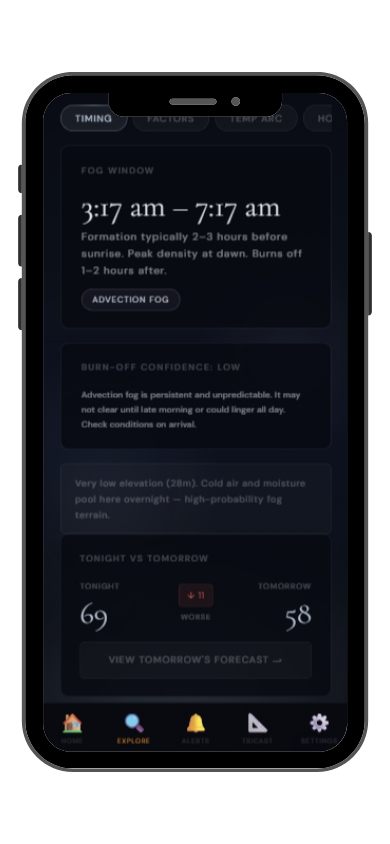
Full FogCast score, fog type, chase-or-skip verdict, and 10-day outlook — all in the app.
Get LightCast Suite on iOS
Know before you drive: FogCast checks the conditions that produce photogenic fog
Get more than a snapshot of current conditions. The LightCast app unlocks everything to plan ahead
Humidity alone isn't enough. Wind alone isn't enough. Cloud cover alone isn't enough. Photogenic valley fog requires several conditions to line up at once, and most weather apps don't read them together.
Set a FogCast threshold once. The app will alert you when conditions at your saved locations look promising, so you're not manually checking at 4am.

Don't waste a sunrise drive. Check FogCast before you leave.
Download on the App StoreZion Canyon is a narrow sandstone gorge in southwestern Utah, and while fog is relatively rare in the desert Southwest, when it does occur it transforms Zion completely. The canyon walls rise up to 800 meters above the Virgin River floor, and on the rare mornings when cold, humid air pools in the canyon, low cloud and mist fill the lower gorge while the upper canyon walls glow in early light above.
Court of the Patriarchs and the Canyon Junction Bridge are the best fog photography vantage points in the main canyon, with wide views of the Watchman and the Towers of the Virgin rising from the mist. The Zion-Mount Carmel Highway switchbacks above the canyon offer elevated positions to look down into fog-filled sections. After rain, mist rises from the canyon walls and waterfalls appear temporarily throughout the canyon.
Winter is the most likely fog season at Zion, from November through February, when overnight temperatures drop sharply and humidity rises. Fog here is uncommon enough that when it occurs it is worth prioritizing over other destinations. Conditions typically last only a few hours in the morning before the canyon heats up and the mist clears.