Astrophotography locations · Idaho
Where to Shoot and What to Know Before You Drive
Idaho has some of the lowest light pollution density of any state outside the Great Basin and northern Plains — Boise is the only significant urban light source, and even it sits in a valley that limits its dome spread. The Snake River Plain, central highlands, and Owyhee Canyonlands to the southwest hold Bortle 2–3 skies across enormous stretches of accessible public land. Idaho's dark sky access is exceptional for a western state — BLM land dominates the landscape and most of it is open for overnight use. Seasonal road closures are the primary planning constraint in mountain locations; verify access for Sawtooth and Frank Church Wilderness areas in shoulder seasons. Wildfire smoke in August can significantly degrade transparency even on clear nights.
🌋
Craters of the Moon National Monument, Arco Bortle 2
An International Dark Sky Park with certified Bortle 2 skies over a surreal lava landscape — cinder cones, lava tubes, and spatter cones provide otherworldly foreground for Milky Way compositions. The monument sits on the Snake River Plain well away from any city; even Boise's dome is not visible from within the park. The Craters Visitor Center area gives road access to multiple composition points. Open year-round but some facilities close in winter; the road through the monument stays accessible. One of the most compositionally distinctive dark-sky sites in the West.
🏔️
Sawtooth National Recreation Area, Stanley Bortle 2–3
The jagged Sawtooth Range rising over the valley near Stanley — one of the coldest towns in the lower 48 — gives among the most dramatic mountain-sky compositions in the Rocky Mountain West. Redfish Lake at ~6,500 ft with the Sawtooths reflected in still water and the Milky Way overhead is a signature Idaho astrophotography shot. The valley sees exceptional transparency on summer nights. Stanley sits at 6,250 ft; be prepared for near-freezing temperatures even in July. Accessible May through October; the Galena Summit road closes in winter.
🌵
City of Rocks National Reserve, Almo Bortle 2
A remote granite rock formation in southern Idaho on the Nevada border — one of the darkest and most compositionally rich astrophotography sites in the state. The towering granite spires and balanced rocks create striking silhouette foregrounds. The reserve sees very little tourist traffic after sunset, and the surrounding basin has almost no light pollution. The access road from Almo is unpaved but suitable for most vehicles in dry conditions. Year-round access is possible though winter nights are extremely cold at 5,500–6,000 ft elevation.
🏜️
Owyhee Canyonlands, Marsing & Murphy Area Bortle 2–3
The Owyhee River canyon system in southwestern Idaho cuts through an enormous BLM wilderness study area that receives almost no recreational use after dark. The deep canyon walls and sagebrush plateau above give both protected and wide-open compositions. Bruneau Dunes State Park on the edge of the Owyhee region has an on-site observatory and hosts public star parties. The Snake River Birds of Prey National Conservation Area nearby adds to the dark-sky buffer. A solid alternative to the more trafficked mountain sites.
🌌
Frank Church–River of No Return Wilderness Bortle 1–2
At over 2.3 million acres, the Frank Church is the largest contiguous wilderness area in the lower 48 — and its interior holds some of the darkest skies anywhere in the United States. The Middle Fork of the Salmon River corridor is accessible by small plane into backcountry airstrips or multi-day raft trip. No roads penetrate the wilderness interior. For those willing to backpack or fly in, the sky quality is comparable to the best desert sites in the Southwest — Bortle 1 in the deepest interior.
Conditions matter as much as location
Check Before You Make the Drive
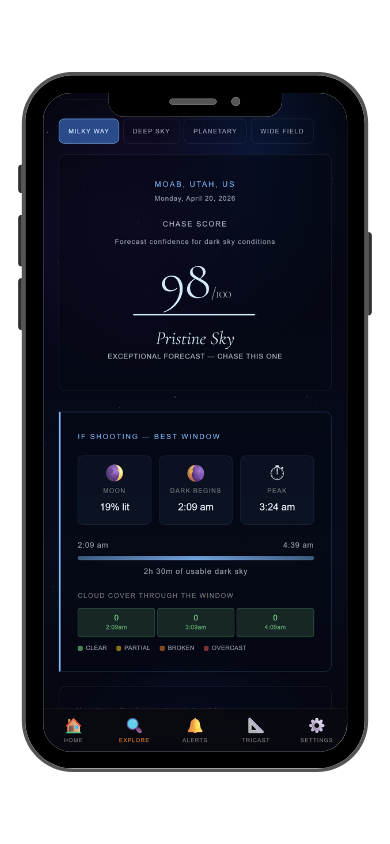
Driving two hours to Craters of the Moon only to hit wildfire smoke haze or a near-full moon is a familiar Idaho mistake. StarCast scores cloud cover, moon phase, atmospheric transparency, and seeing into a single night-sky verdict — updated daily for any location.
StarCast + More
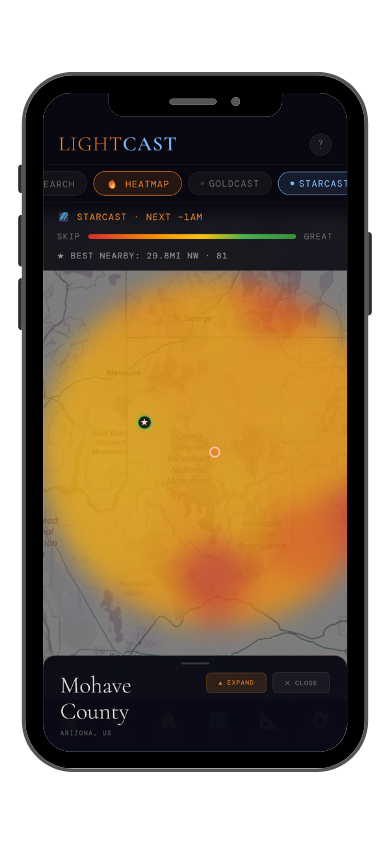
See the sky and the light on one map
Night sky · Nearby Conditions
StarCast scores cloud cover, moon phase, atmospheric transparency, and astronomical seeing. See on a map where skies are clearest before committing to the drive out to Craters of the Moon or the Sawtooths.
Get Tonight's Forecast on iPhone
$2.99/mo · 7-day free trial
Learn More →
Frequently asked
Where can I see the Milky Way in Idaho?
Craters of the Moon, City of Rocks, and Redfish Lake in the Sawtooths are the most accessible and compositionally rewarding options. The entire Snake River Plain away from Boise offers usable dark sky. Check StarCast for tonight's conditions free on
web, full features in the
iOS app.
What is the darkest sky in Idaho?
The Frank Church–River of No Return Wilderness interior reaches Bortle 1 — among the darkest in the lower 48 — but requires fly-in or multi-day backpack access. Craters of the Moon National Monument and City of Rocks are the darkest easily driveable sites at Bortle 2.
When is the best time for astrophotography in Idaho?
The Milky Way core is visible from Idaho from approximately late February through October. The peak window for galactic center shots is June–August. Mountain sites like Sawtooth open fully in July after snowmelt. August brings the highest wildfire smoke risk which can degrade transparency significantly even on clear nights — check atmospheric transparency, not just cloud cover, before making the drive. Spring and early fall offer the best combination of access and clear, smoke-free sky.
Does cloud cover matter for astrophotography?
Completely — even thin high cirrus kills deep-sky exposures. Atmospheric transparency matters too, not just cloud-free skies. StarCast scores both cloud cover and transparency separately, so you know whether you're looking at a genuinely good night or just a technically clear one.
What is LightCast StarCast?
StarCast scores night sky conditions using cloud cover, moon phase, atmospheric transparency, and astronomical seeing. GoldCast (same app) handles golden hour timing. Free on web at
lightcastsuite.com/starcast, full features in the
LightCast iOS app — $2.99/month after a 7-day free trial.