StarCast · Acadia, ME

Night Sky Tonight in Acadia

Reading tonight's sky conditions…
/ 100
Moon
Dark window
Galactic core
Conditions
Tonight
Bortle class · Acadia
LightCast
Now on iOS
LightCast Suite
Push alerts · 3-day forecast · nearby dark skies

Get notified before clear nights. Set your threshold once and never miss a prime shooting window again.

Download on the App Store
7-day free trial · $2.99/mo · Cancel anytime in App Store
Learn more →

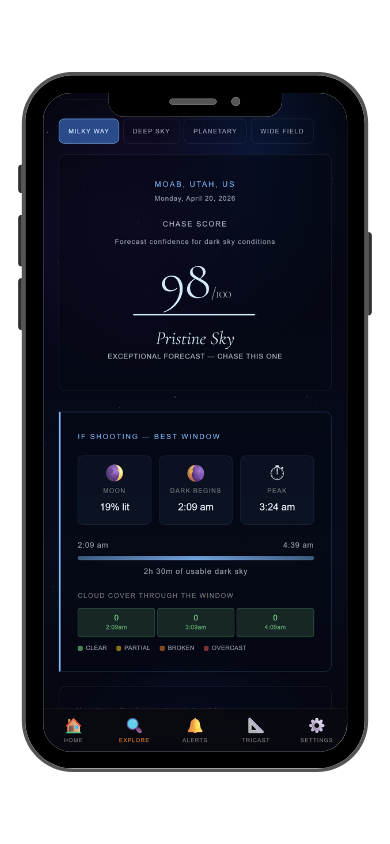
What's in the score
Cloud cover
Moon illumination
Bortle class
Transparency
Humidity

What the app shows you
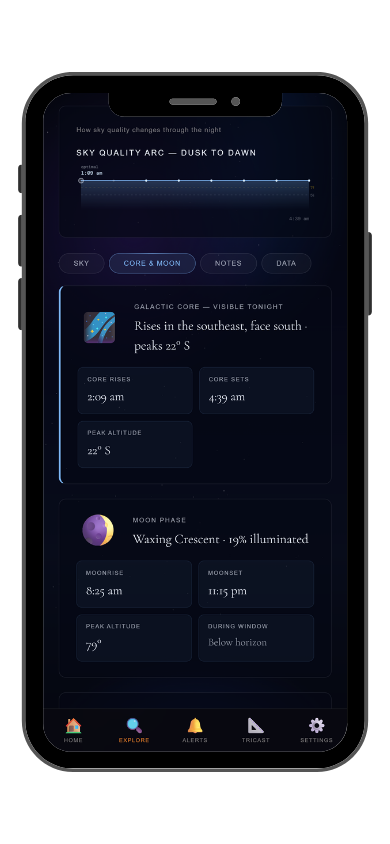
StarCast galactic core forecast
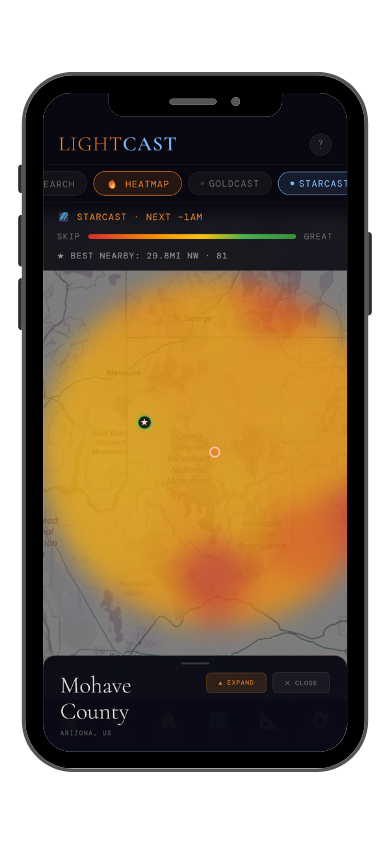
Nearby dark sky locations

Live scores for the night sky, Milky Way Core windows, darker skies nearby, & more
Get LightCast Suite on iOS


Also for Acadia
GoldCast
Sunset conditions tonight in Bar Harbor
Check sunset →

Frequently asked
Is tonight good for stargazing at Acadia?
The live score above pulls today's forecast and runs it through StarCast's scoring model, which factors in cloud cover, moon illumination, Bortle class, humidity, and atmospheric transparency. Above 70 is an excellent night. Below 40, conditions are poor. The score updates daily.
What makes Acadia good for astrophotography?
Acadia National Park on Mount Desert Island is the darkest accessible location on the US East Coast north of Florida. The Atlantic Ocean to the south and east provides a completely dark horizon in those directions, and the pink granite coastline creates distinctive foreground for night sky photography. Bass Harbor Head Lighthouse is one of the most photographed night sky foregrounds in New England. The summit of Cadillac Mountain gives you a 360-degree view above the treeline with the ocean on multiple sides. Fall is the premier season: longer nights, stable air after summer humidity breaks, and clear views before winter weather arrives.
When is the Milky Way visible at Acadia?
The galactic core is visible at Acadia from April through September. September and October offer the best combination of dark skies and comfortable temperatures. The core sets earlier from this northern latitude than from southern parks, so plan to shoot in the first half of the night in late summer and fall.