StarCast · Cherry Springs, PA

Night Sky Tonight in Cherry Springs

Reading tonight's sky conditions…
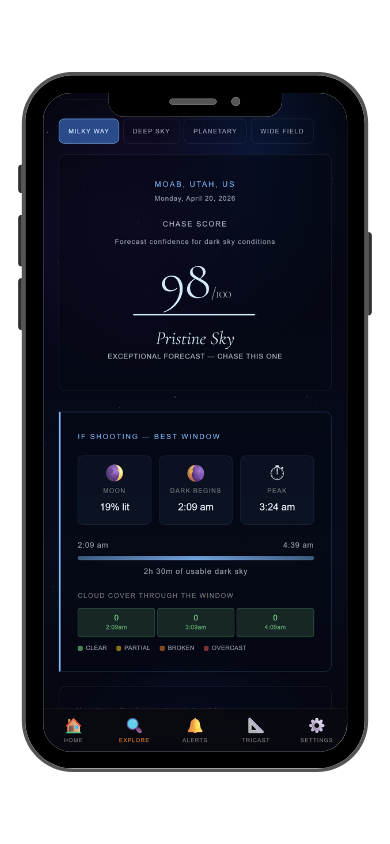
/ 100
Moon
Dark window
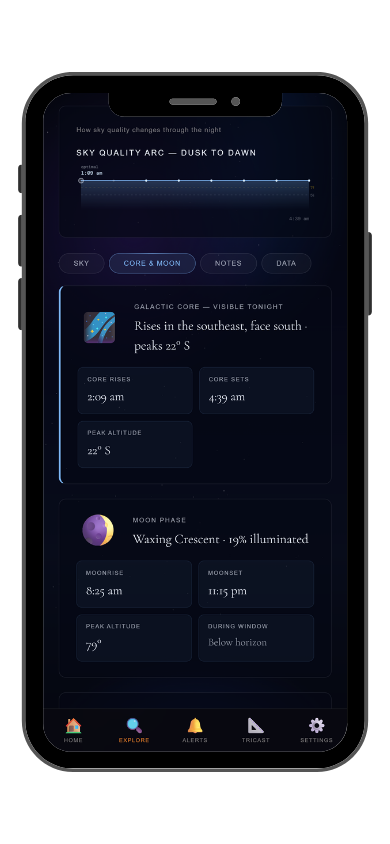
Galactic core
Conditions
Tonight
Bortle class · Cherry Springs
LightCast
Now on iOS
LightCast Suite
Push alerts · 3-day forecast · nearby dark skies

Get notified before clear nights. Set your threshold once and never miss a prime shooting window again.

Download on the App Store
7-day free trial · $2.99/mo · Cancel anytime in App Store
Learn more →

What's in the score
Cloud cover
Moon illumination
Bortle class
Transparency
Humidity

What the app shows you
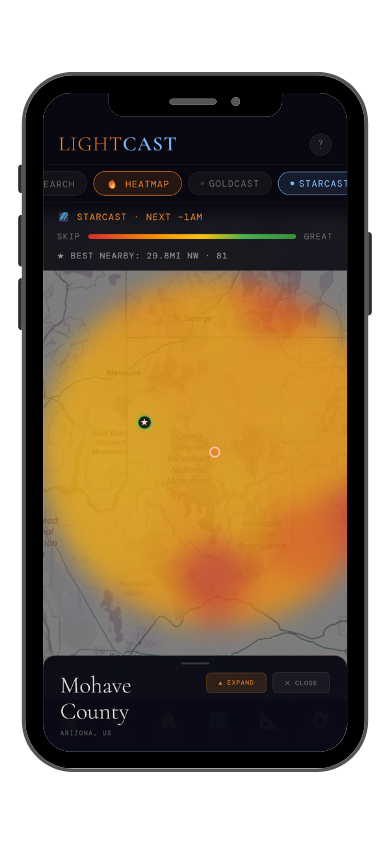
StarCast galactic core forecast
Nearby dark sky locations

Live scores for the night sky, Milky Way Core windows, darker skies nearby, & more
Get LightCast Suite on iOS


Frequently asked
Is tonight good for stargazing at Cherry Springs?
The live score above pulls today's forecast and runs it through StarCast's scoring model, which factors in cloud cover, moon illumination, Bortle class, humidity, and atmospheric transparency. Above 70 is an excellent night. Below 40, conditions are poor. The score updates daily.
What makes Cherry Springs good for astrophotography?
Cherry Springs State Park in north-central Pennsylvania is widely considered the best dark sky site east of the Mississippi River. The park sits on a 2,300-foot plateau in a natural bowl that blocks horizon glow from surrounding towns, and the surrounding Susquehannock State Forest adds miles of dark buffer. The park has a dedicated astronomy field with strict light ordinances — red lights only, no white light permitted after dark. For East Coast photographers who can't make it to Utah or Nevada, Cherry Springs is the closest equivalent to a genuine dark sky experience. The Milky Way is visible here on clear new moon nights in a way that's simply not possible at most eastern locations.
When is the Milky Way visible at Cherry Springs?
The galactic core is visible at Cherry Springs from April through October. The park hosts several star parties throughout the year that draw hundreds of astronomers and astrophotographers. Weekends book up months in advance during peak season — if you're planning a trip specifically for astrophotography, reserve a camping spot well ahead. May through August are the best months for the galactic core to clear the treeline at a useful height.