Astrophotography locations · Oklahoma
Where to Shoot and What to Know Before You Drive
Oklahoma City and Tulsa create the state's main light domes, but Oklahoma's geography gives plenty of room to escape them. Black Mesa in the far panhandle is an International Dark Sky Sanctuary, among the darkest certified sites in the country. Wind and rapidly changing weather are the dominant variables here, more than humidity, so check conditions close to your shoot time rather than relying on a multi-day forecast.
⛰️
Black Mesa State Park, Panhandle Bortle 1–2
An International Dark Sky Sanctuary in Oklahoma's far northwestern panhandle, near the state's highest point. The site sits hours from any meaningful population center, delivering some of the darkest sky in the lower 48. The mesa's flat-topped terrain gives a dramatic, wide horizon for Milky Way panoramas. Remote enough that a full day trip or overnight stay is necessary.
🦬
Wichita Mountains Wildlife Refuge, Lawton area Bortle 3–4
A granite mountain refuge in southwest Oklahoma with rolling hills, free-ranging bison, and minimal nearby development. Mount Scott's summit road gives elevated, open sky access without a hike. Closer to the Oklahoma City and Texas population centers than Black Mesa, making it a more practical regular option.
🌲
Beavers Bend State Park, southeast Oklahoma Bortle 3
Pine forest terrain in the Ouachita Mountains near the Arkansas border, with Broken Bow Lake offering open water foreground. The forested hills and low regional population keep light pollution well controlled. A solid option for shooters in eastern Oklahoma or western Arkansas.
🏔️
Quartz Mountain State Park Bortle 3–4
Granite outcrops rising from the southwestern plains, with Lake Altus-Lugert providing reflective foreground. The park's isolation from major cities gives reasonably dark sky, and the distinctive rock formations add visual interest beyond a flat horizon shot.
🌾
Roman Nose State Park Bortle 4
Closer to Oklahoma City than the other sites listed, this canyon park in the gypsum hills near Watonga is a workable compromise for central Oklahoma residents who don't want the full drive to Black Mesa or the Wichitas. Best used for moon and planet work, or wider Milky Way shots during new moon.
Conditions matter as much as location
Check Before You Make the Drive
Driving five hours to Black Mesa only to hit a fast-moving front is the worst kind of wasted trip.
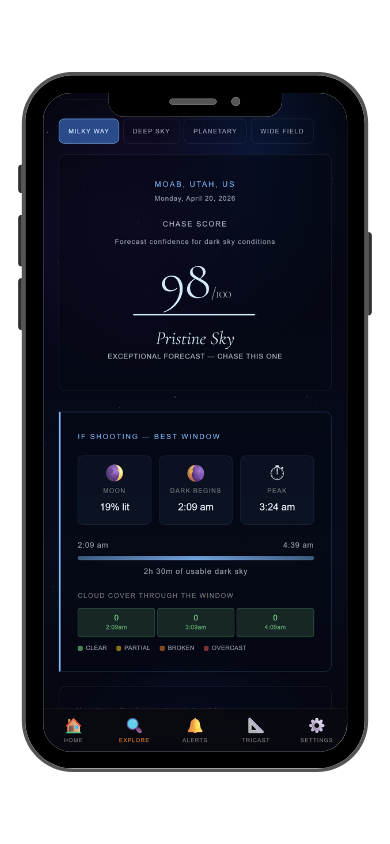
StarCast scores cloud cover, moon phase, atmospheric transparency, and seeing into a single night-sky verdict, updated daily for any location.
StarCast + More
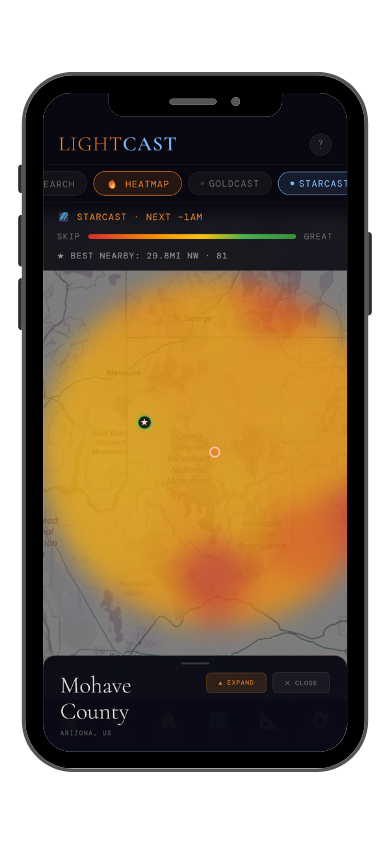
See the sky and the light on one map
Night sky · Nearby Conditions
StarCast scores cloud cover, moon phase, atmospheric transparency, and astronomical seeing. See on a map where skies are clearest before committing to the drive out to Black Mesa or the Wichita Mountains.
Get Tonight's Forecast on iPhone
$2.99/mo · 7-day free trial
Learn More →
Frequently asked
Where can I see the Milky Way in Oklahoma?
Black Mesa State Park in the panhandle is a certified Dark Sky Sanctuary and the darkest site in the state. The Wichita Mountains Wildlife Refuge is a closer, still dark option for southwest Oklahoma. Check StarCast for tonight's conditions free on
web, full features in the
iOS app.
What is the darkest sky in Oklahoma?
Black Mesa State Park holds International Dark Sky Sanctuary certification and reads Bortle 1 to 2, among the darkest sky in the central United States. It's far from any major population center, which is exactly why it qualifies.
When is the best time for astrophotography in Oklahoma?
The Milky Way core is visible from late March through October, peaking June through August. Spring brings severe weather risk across the state, so check forecasts carefully during that window. Summer nights tend to offer the most stable, predictable conditions for planning ahead.
Does cloud cover matter for astrophotography?
Yes, and Oklahoma's weather can shift quickly due to its position in Tornado Alley. A clear forecast in the afternoon doesn't guarantee a clear sky by midnight. StarCast scores both cloud cover and transparency separately, so you know whether a night is genuinely good or just technically clear.
What is LightCast StarCast?
StarCast scores night sky conditions using cloud cover, moon phase, atmospheric transparency, and astronomical seeing. GoldCast (same app) handles golden hour timing. Free on web at
lightcastsuite.com/starcast, full features in the
LightCast iOS app — $2.99/month after a 7-day free trial.