Astrophotography locations · Oregon
Where to Shoot and What to Know Before You Drive
Oregon's coast and Willamette Valley deal with persistent cloud cover much of the year, which matters as much as light pollution here. East of the Cascades, skies clear up dramatically and light pollution drops fast — the Oregon Outback in Lake County is the largest certified Dark Sky Sanctuary on Earth. Elevation and high desert air give exceptional transparency in the southeast corner of the state, worth the long drive for anyone serious about deep-sky work.
🌌
Oregon Outback International Dark Sky Sanctuary, Lake County Bortle 1
The largest certified Dark Sky Sanctuary in the world, covering over a million acres of high desert in south-central Oregon. Population density here is among the lowest in the lower 48, giving near-pristine sky free of any meaningful light dome. Hart Mountain National Antelope Refuge sits within the sanctuary boundary and offers elevated overlooks. Remote enough to require real trip planning: fuel, water, and offline maps.
🏞️
Prineville Reservoir State Park Bortle 2
An International Dark Sky Park certified site in central Oregon's high desert, east of Bend. The reservoir gives open water foreground with a true horizon, and the park's certification means dedicated dark-sky-friendly facilities and minimal nearby development. More accessible than the Outback sanctuary while still delivering excellent darkness.
🌋
Crater Lake National Park Bortle 2
High elevation and remote location in the southern Cascades give Crater Lake exceptional sky quality, with the caldera rim offering dramatic foreground over the lake itself. Summer ranger-led astronomy programs run at Rim Village. Winter access is limited by snow, so plan around the park's seasonal road closures.
🏔️
Steens Mountain, Harney County Bortle 1–2
A massive fault-block mountain rising from the high desert in Oregon's far southeast, inside the broader Outback sanctuary region. The summit road, when open, gives some of the highest accessible elevation in the state with correspondingly excellent transparency. Gravel roads and limited services mean this is a trip for well-prepared shooters only.
🌲
Newberry National Volcanic Monument Bortle 2–3
Closer to Bend than the Outback sites, this volcanic landscape offers obsidian flows and crater lakes as striking Milky Way foreground. Still well clear of Bend's modest light dome, and far easier to reach in an evening trip than the deeper Outback locations.
Conditions matter as much as location
Check Before You Make the Drive
Driving four hours into the Outback only to find a Cascade cloud bank pushed east overnight is a real risk.
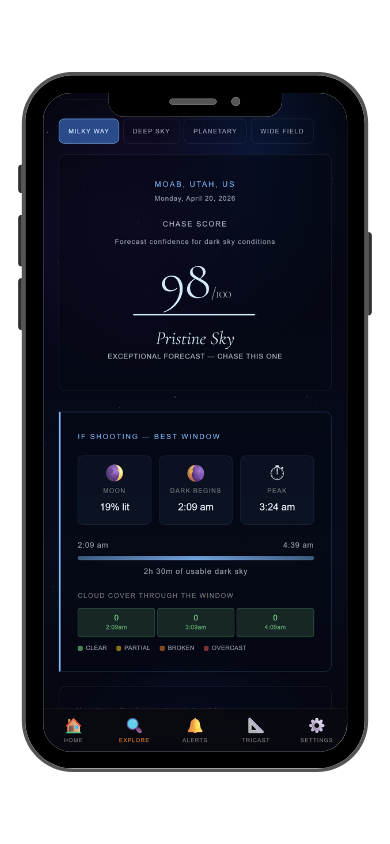
StarCast scores cloud cover, moon phase, atmospheric transparency, and seeing into a single night-sky verdict, updated daily for any location.
StarCast + More
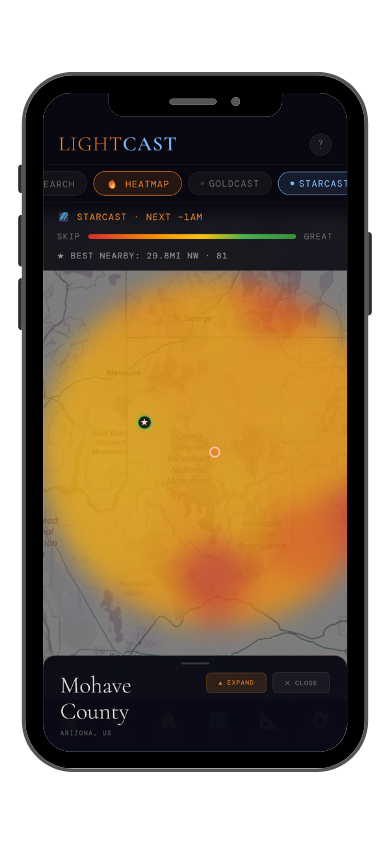
See the sky and the light on one map
Night sky · Nearby Conditions
StarCast scores cloud cover, moon phase, atmospheric transparency, and astronomical seeing. See on a map where skies are clearest before committing to the drive out to the Oregon Outback or Prineville Reservoir.
Get Tonight's Forecast on iPhone
$2.99/mo · 7-day free trial
Learn More →
Frequently asked
Where can I see the Milky Way in Oregon?
The Oregon Outback International Dark Sky Sanctuary in Lake County is the largest certified dark sky area in the world. Prineville Reservoir State Park offers similar darkness with easier access from Bend. Check StarCast for tonight's conditions free on
web, full features in the
iOS app.
What is the darkest sky in Oregon?
The Oregon Outback Dark Sky Sanctuary reads Bortle 1 across most of its footprint, among the darkest certified sky anywhere in the world. Steens Mountain, within the broader sanctuary region, offers similarly excellent conditions at elevation.
When is the best time for astrophotography in Oregon?
The Milky Way core is visible from late March through October, peaking June through August. East of the Cascades, summer also brings the driest, clearest air of the year. West of the Cascades, persistent marine cloud layers make summer evenings the most reliable window for clear sky.
Does cloud cover matter for astrophotography?
Yes, and in Oregon the split between the cloudy western half and the dry eastern high desert is dramatic. A clear Portland forecast says nothing about conditions in the Outback. StarCast scores both cloud cover and transparency separately, so you know whether a night is genuinely good or just technically clear.
What is LightCast StarCast?
StarCast scores night sky conditions using cloud cover, moon phase, atmospheric transparency, and astronomical seeing. GoldCast (same app) handles golden hour timing. Free on web at
lightcastsuite.com/starcast, full features in the
LightCast iOS app — $2.99/month after a 7-day free trial.