Astrophotography locations · Pennsylvania
Where to Shoot and What to Know Before You Drive
Philadelphia and Pittsburgh anchor Pennsylvania's two main light domes, with the I-78/I-81 corridor adding a secondary band of light pollution through the middle of the state. The Pennsylvania Wilds region in the north-central counties is the real prize — Cherry Springs State Park holds Gold-tier International Dark Sky Park certification, the highest rating available. Elevation and forest cover both help here, and the region's low population density keeps skies dark across a wide area, not just at the certified site itself.
🔭
Cherry Springs State Park, Potter County Bortle 2
A Gold-tier International Dark Sky Park, the highest certification level, and one of the most celebrated astrophotography destinations on the East Coast. The park's Night Sky Public Viewing Area is purpose-built with telescope pads and minimal ground light. Astronomy Field reservations are recommended during new moon weekends when the site draws crowds. Genuinely one of the best places to shoot the Milky Way east of the Mississippi.
🌲
Susquehannock State Forest, surrounding Cherry Springs Bortle 2–3
The vast forest surrounding Cherry Springs extends the dark sky well beyond the park boundary itself. Quieter overlooks and forest roads in the surrounding area give similar darkness without the crowds at the main viewing field. A good option for those who want Cherry Springs-level sky with more solitude.
🌊
Black Moshannon State Park, Centre County Bortle 3–4
A boreal bog ecosystem at elevation in central Pennsylvania, with the lake providing open water foreground and a true horizon view. Closer to State College than Cherry Springs, making it a practical option for central PA residents. The unusual bog terrain adds visual interest beyond a typical forest shot.
🏞️
Hickory Run State Park, Poconos Bortle 4
The best option in the Poconos region for those in the Philadelphia or northern New Jersey area looking for a shorter drive than Cherry Springs. Boulder Field and the park's forested interior provide foreground variety. Not as dark as the Wilds region but a reasonable compromise for the eastern part of the state.
🌲
French Creek State Park, Berks County Bortle 5
Closer still to Philadelphia, this park won't deliver dark-sky-tier conditions but works for moon, planet, and brighter Milky Way core shots during new moon in summer. A practical fallback for southeastern PA residents who can't make the trip north.
Conditions matter as much as location
Check Before You Make the Drive
Driving four hours to Cherry Springs only to hit a humid haze layer rolling up the valley is the classic Pennsylvania disappointment.
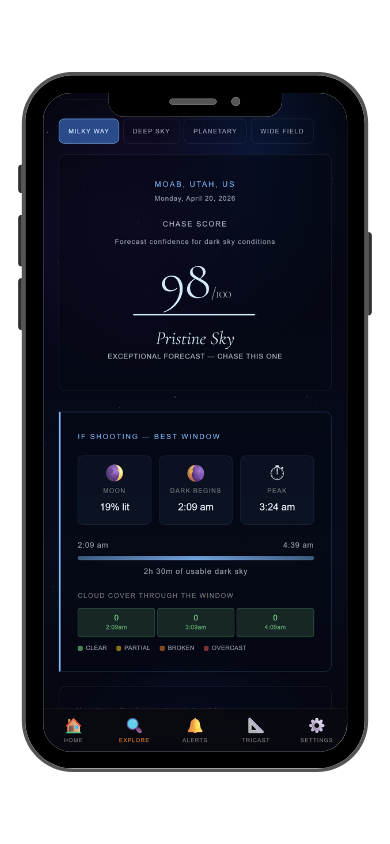
StarCast scores cloud cover, moon phase, atmospheric transparency, and seeing into a single night-sky verdict, updated daily for any location.
StarCast + More
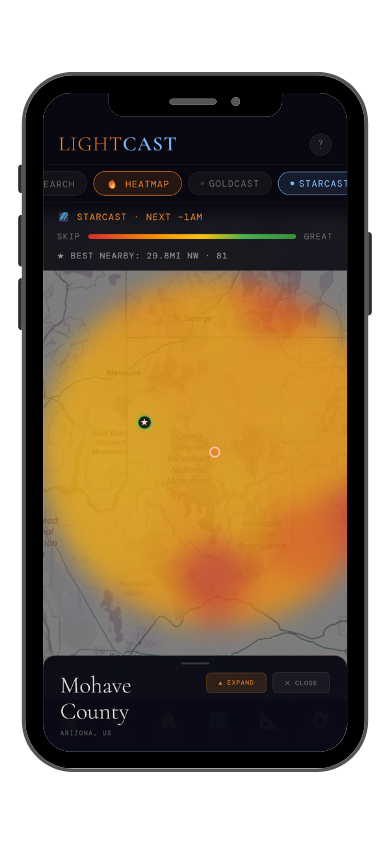
See the sky and the light on one map
Night sky · Nearby Conditions
StarCast scores cloud cover, moon phase, atmospheric transparency, and astronomical seeing. See on a map where skies are clearest before committing to the drive out to Cherry Springs or Black Moshannon.
Get Tonight's Forecast on iPhone
$2.99/mo · 7-day free trial
Learn More →
Frequently asked
Where can I see the Milky Way in Pennsylvania?
Cherry Springs State Park in Potter County is Gold-tier International Dark Sky certified and one of the best Milky Way locations on the East Coast. The surrounding Susquehannock State Forest offers similar darkness with fewer crowds. Check StarCast for tonight's conditions free on
web, full features in the
iOS app.
What is the darkest sky in Pennsylvania?
Cherry Springs State Park holds Gold-tier International Dark Sky Park status, the highest certification level, with readings around Bortle 2. The surrounding Pennsylvania Wilds region maintains similar darkness across a wide rural footprint.
When is the best time for astrophotography in Pennsylvania?
The Milky Way core is visible from late March through October, peaking June through August. Cherry Springs hosts organized star parties during peak new moon weekends, which can mean crowds. Weeknight visits during new moon often give a quieter, equally dark experience.
Does cloud cover matter for astrophotography?
Yes, even thin cirrus kills contrast in deep-sky exposures. Pennsylvania's humid summers can produce haze that looks clear but isn't optically transparent. StarCast scores both cloud cover and transparency separately, so you know whether a night is genuinely good or just technically clear.
What is LightCast StarCast?
StarCast scores night sky conditions using cloud cover, moon phase, atmospheric transparency, and astronomical seeing. GoldCast (same app) handles golden hour timing. Free on web at
lightcastsuite.com/starcast, full features in the
LightCast iOS app — $2.99/month after a 7-day free trial.