Astrophotography locations · Utah
Where to Shoot and What to Know Before You Drive
Utah leads the country in International Dark Sky certifications, with most of the state's national parks and monuments holding some level of dark sky status. The southern Utah parks combine exceptional darkness with iconic foreground — arches, hoodoos, and slot canyons that don't exist anywhere else. Wasatch Front light pollution from Salt Lake City and Provo affects only the northern part of the state, leaving the entire south largely untouched.
🌉
Natural Bridges National Monument Bortle 1–2
The first International Dark Sky Park ever certified, anywhere in the world, named for that reason. Three massive natural stone bridges provide unmistakable Milky Way foreground. Remote enough to virtually guarantee uninterrupted darkness on any clear night.
🏜️
Capitol Reef National Park Bortle 1–2
A long, narrow park following the Waterpocket Fold, with sandstone cliffs and orchards giving varied foreground options. Less visited than Utah's other major parks, which translates to less ambient light and quieter shooting locations even at popular overlooks.
🪨
Arches National Park Bortle 2
Iconic stone arches make for some of the most photographed Milky Way foregrounds in the world. Delicate Arch and the Windows section require a hike for night access; permits and timed entry may apply depending on season, so check current park rules before a visit.
🏞️
Canyonlands National Park Bortle 1–2
Vast, sparsely visited canyon country with overlooks at Island in the Sky and Needles districts giving dramatic depth and scale. One of the least light-polluted national parks in the lower 48, with sky quality on par with the most remote desert locations anywhere.
🌌
Goblin Valley State Park Bortle 2
Thousands of eroded hoodoo formations scattered across an open valley floor, an International Dark Sky Park with unusual, alien-looking foreground unlike anywhere else on this list. Open terrain makes it easy to compose wide panoramas of the full Milky Way arch.
Conditions matter as much as location
Check Before You Make the Drive
Driving five hours to Canyonlands only to hit a dust haze blown in from the basin is a real southern Utah risk.
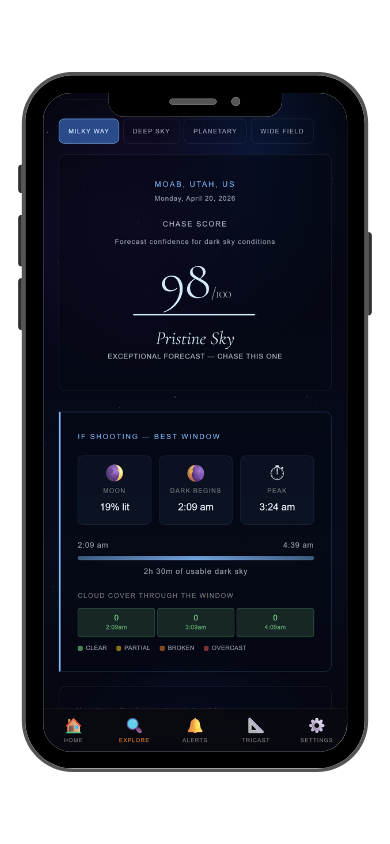
StarCast scores cloud cover, moon phase, atmospheric transparency, and seeing into a single night-sky verdict, updated daily for any location.
StarCast + More
See the sky and the light on one map
Night sky · Nearby Conditions
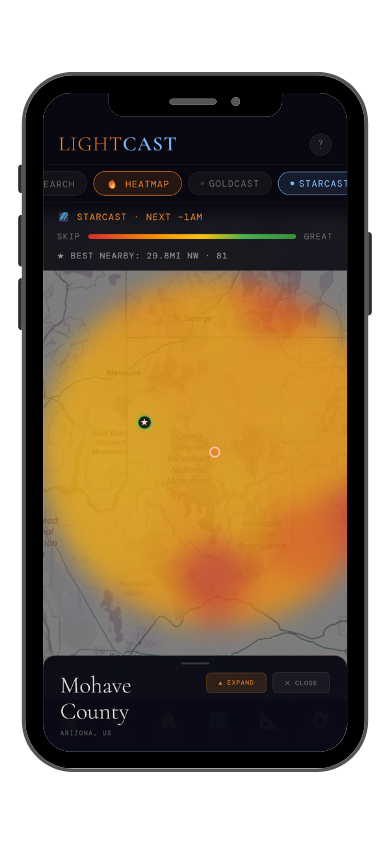
StarCast scores cloud cover, moon phase, atmospheric transparency, and astronomical seeing. See on a map where skies are clearest before committing to the drive out to Arches or Capitol Reef.
Get Tonight's Forecast on iPhone
$2.99/mo · 7-day free trial
Learn More →
Frequently asked
Where can I see the Milky Way in Utah?
Natural Bridges National Monument, the world's first certified Dark Sky Park, and Canyonlands National Park both offer exceptional sky with dramatic foreground. Check StarCast for tonight's conditions free on
web, full features in the
iOS app.
What is the darkest sky in Utah?
Natural Bridges National Monument and Canyonlands National Park both read Bortle 1 to 2, among the darkest certified sky in the country. Utah holds more International Dark Sky certifications than any other state.
When is the best time for astrophotography in Utah?
The Milky Way core is visible from late March through October, peaking June through August. Southern Utah's desert climate offers exceptionally dry, stable air much of the year, though monsoon season in July and August brings afternoon thunderstorms that can linger into the evening.
Does cloud cover matter for astrophotography?
Yes, particularly during monsoon season when storm cells build quickly over the desert. Outside that window, southern Utah sees some of the most reliably clear sky in the country. StarCast scores both cloud cover and transparency separately, so you know whether a night is genuinely good or just technically clear.
What is LightCast StarCast?
StarCast scores night sky conditions using cloud cover, moon phase, atmospheric transparency, and astronomical seeing. GoldCast (same app) handles golden hour timing. Free on web at
lightcastsuite.com/starcast, full features in the
LightCast iOS app — $2.99/month after a 7-day free trial.