Astrophotography locations · Wyoming
Where to Shoot and What to Know Before You Drive
Wyoming's small population spread across a huge area means light pollution is barely a factor almost anywhere in the state. Grand Teton and Yellowstone combine iconic mountain and geothermal foreground with near-pristine sky, a rare pairing. The Red Desert in the south-central part of the state is even darker still, vast and largely uninhabited, though it lacks the dramatic peaks of the northwest.
🏔️
Grand Teton National Park Bortle 1–2
The jagged Teton Range rising sharply from the valley floor gives some of the most dramatic Milky Way foreground anywhere in the country. Oxbow Bend and Schwabacher Landing offer reflective water foreground with the peaks behind. Minimal nearby development keeps the sky exceptionally dark despite the park's popularity.
🌋
Yellowstone National Park Bortle 1–2
America's first national park, with geyser basins, hot springs, and wide-open valleys all serving as unusual, otherworldly foreground options. The park's massive size means most interior locations sit far from any meaningful light source. Bison and wildlife activity at night requires extra caution when shooting in open meadows.
🏜️
Red Desert, south-central Wyoming Bortle 1
One of the largest unfenced areas in the country, a high desert basin with almost no population and correspondingly pristine sky. Less visually dramatic than the mountain parks but among the darkest measurable sky anywhere in the lower 48. Remote enough to require real trip planning.
⛰️
Wind River Range, Pinedale area Bortle 1–2
A rugged, less-visited mountain range south of the Tetons, with numerous alpine lakes and minimal nearby development. Backcountry access requires more effort than the national parks, but the reward is comparable darkness with far fewer visitors.
🌾
Devils Tower National Monument Bortle 2
An isolated igneous monolith rising from the plains of northeastern Wyoming, offering a singular, unmistakable foreground subject. The surrounding Black Hills region keeps population low and skies dark, making this a strong standalone destination even without the mountain scenery of the northwest.
Conditions matter as much as location
Check Before You Make the Drive
Driving out to the Tetons only to hit a band of wildfire smoke drifting in from the west is an increasingly common Wyoming risk.
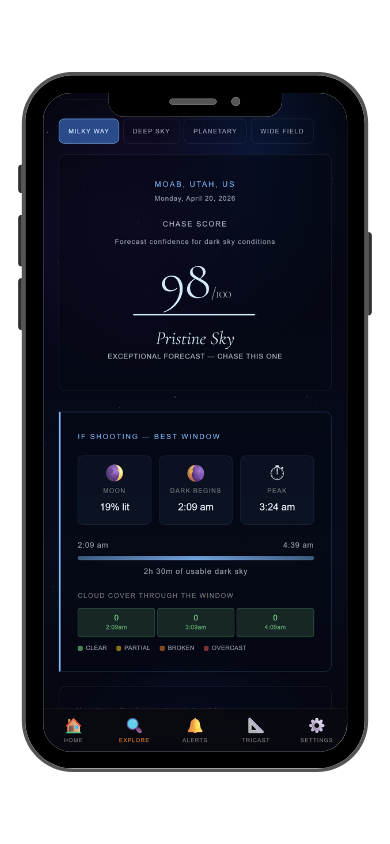
StarCast scores cloud cover, moon phase, atmospheric transparency, and seeing into a single night-sky verdict, updated daily for any location.
StarCast + More
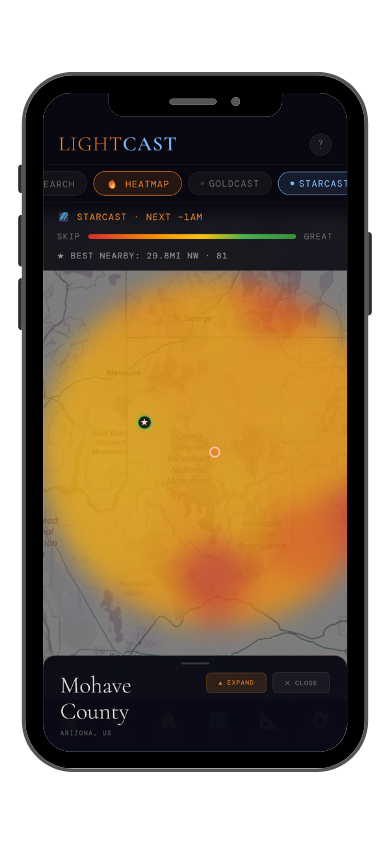
See the sky and the light on one map
Night sky · Nearby Conditions
StarCast scores cloud cover, moon phase, atmospheric transparency, and astronomical seeing. See on a map where skies are clearest before committing to the drive out to Grand Teton or the Red Desert.
Get Tonight's Forecast on iPhone
$2.99/mo · 7-day free trial
Learn More →
Frequently asked
Where can I see the Milky Way in Wyoming?
Grand Teton and Yellowstone National Parks both combine near-pristine sky with dramatic mountain and geothermal foreground. The Red Desert offers even darker conditions for those willing to skip the scenery. Check StarCast for tonight's conditions free on
web, full features in the
iOS app.
What is the darkest sky in Wyoming?
The Red Desert in south-central Wyoming reads Bortle 1 across much of its footprint, among the darkest measured sky anywhere in the continental US, thanks to its size and near-total lack of population.
When is the best time for astrophotography in Wyoming?
The Milky Way core is visible from late March through October, peaking June through August. Late summer wildfire smoke has become an increasingly common factor across the West, so check atmospheric transparency separately from cloud cover before a shoot.
Does cloud cover matter for astrophotography?
Yes, and in recent years wildfire smoke has become just as important to check as cloud cover, since it can degrade transparency on an otherwise cloud-free night. StarCast scores both cloud cover and transparency separately, so you know whether a night is genuinely good or just technically clear.
What is LightCast StarCast?
StarCast scores night sky conditions using cloud cover, moon phase, atmospheric transparency, and astronomical seeing. GoldCast (same app) handles golden hour timing. Free on web at
lightcastsuite.com/starcast, full features in the
LightCast iOS app — $2.99/month after a 7-day free trial.