🌅 Sunset & Golden Hour · Rhode Island
Best Sunset Locations
Rhode Island is tiny but has a disproportionate amount of coastline for its size, which is the whole story for landscape photography here. The southern shore faces southwest, which means west-facing beaches get a true ocean horizon at sunset from late spring through early fall as the sun tracks south. Newport's rocky coast adds a different texture: rough stone and crashing surf instead of barrier beach sand. Marine layer and coastal cloud buildup are common in summer, which can kill the light just as it gets interesting. GoldCast's fog and cloud forecast is worth checking every time.
🌊
Beavertail State Park, Jamestown Conanicut Island · Washington County
Beavertail sits at the southern tip of Conanicut Island with open Atlantic views on three sides. The rocky shoreline is the main draw: layered schist and granite worn into ledges and tide pools that work as foreground at any tide. The lighthouse at the point is a strong compositional anchor for longer exposures. Southwest-facing exposure means the light is on the water from mid-afternoon through golden hour. Arrive at least an hour before sunset to scout compositions; the rocks are uneven and worth walking before the light changes fast.
🏖️
Misquamicut State Beach, Westerly Washington County · South Shore
Rhode Island's longest public beach faces almost due south, so the sun sets over the western end of the barrier beach in late summer and fall. The wide, flat shoreline gives clean water-and-sky compositions without obstructions. Misquamicut is best in the shoulder seasons: summer crowds thin after Labor Day and the light angles get more interesting as the sun tracks south toward the equinox. Low tide exposes a wide sand flat that reflects sky color well in late golden hour.
GoldCast
Golden hour timing + fog & cloud forecast
Sunset · Sunrise · Marine Layer · Cloud Cover
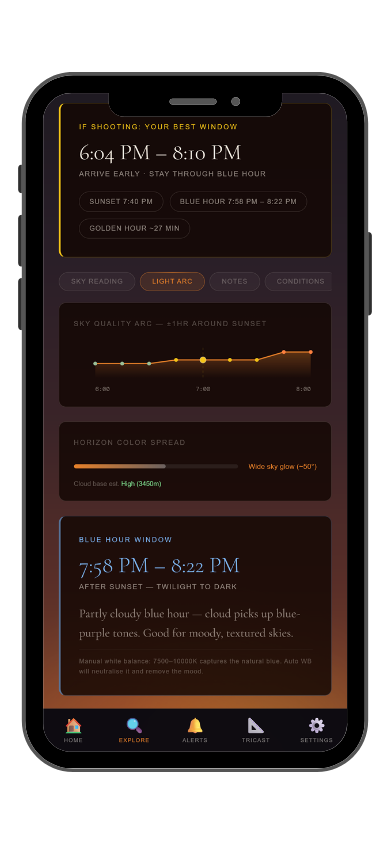
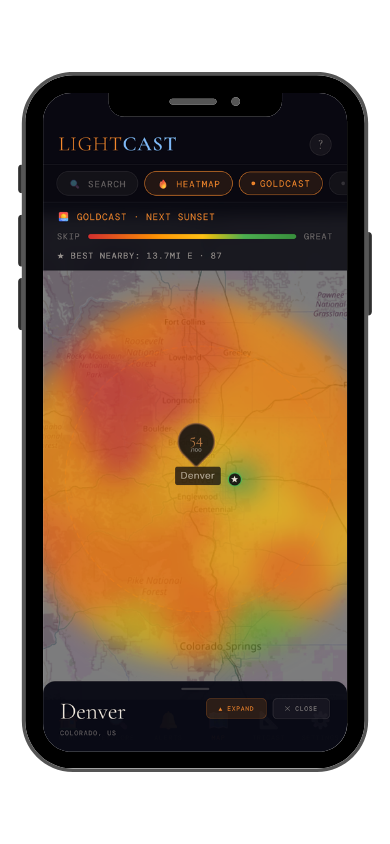
GoldCast shows exact golden hour and blue hour windows, plus cloud cover so you know whether the light will actually reach your subject. Check conditions for any Rhode Island location before you leave.
Get LightCast on iPhone
$2.99/mo · 7-day free trial
Check GoldCast on web →
GoldCast: golden hour forecast (left) · conditions heatmap (right)
🌌 Astrophotography · Rhode Island
Best Astrophotography Locations
Rhode Island is the most densely developed state in New England and light pollution is significant throughout most of the state. Providence and the suburban ring generate a persistent glow, and there is no true escape from it within Rhode Island's borders. The best strategy here is the southwest corner of the state, as far from Providence as possible, and shooting seaward: the ocean horizon to the south is inherently dark, which helps when the Milky Way core is up. Moon phase is critical — work within two or three days of new moon, and check atmospheric transparency carefully. Clear nights with low humidity make a material difference.
🌊
Napatree Point, Watch Hill Bortle 4–5
Napatree Point is a long barrier spit at the southwest tip of Rhode Island with water on both sides and no development beyond the trailhead. Shooting south from the point gives you a dark ocean horizon that dramatically improves on the surrounding light dome. The Milky Way core clears the southeastern horizon from late spring through early fall. It's a 20-minute walk from the parking area, which keeps casual visitors away after dark. Bring a red headlamp and check the tide before walking the beach in darkness.
🌲
Arcadia Management Area, Richmond Bortle 4
Rhode Island's largest public land parcel sits in the southwestern corner of the state and offers the most interior darkness available within the state. The forest buffers some of the Providence light dome, and the interior ponds give reflective foregrounds for wide-angle sky shots. It won't compete with a Vermont or Maine dark sky site, but for a Rhode Island location it's the best available. The Frosty Hollow Pond area is a reliable composition spot with open southern exposure.
StarCast
Night sky score · moon · transparency · seeing
Cloud Cover · Moon Phase · Atmospheric Transparency · Seeing
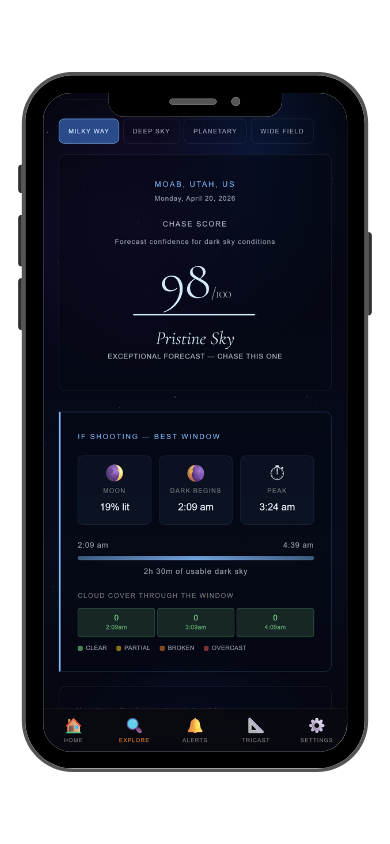
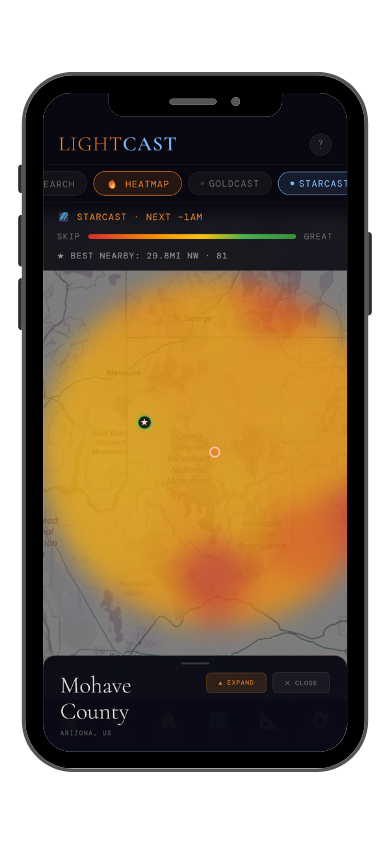
StarCast scores cloud cover, moon phase, atmospheric transparency, and astronomical seeing into a single verdict — updated daily for any location. See on a map where skies are clearest before committing to the drive.
Get LightCast on iPhone
$2.99/mo · 7-day free trial
Check StarCast on web →
StarCast: night sky score (left) · conditions heatmap (right)
🚁 Drone Photography · Rhode Island
Best Drone Locations
Rhode Island's coastline and Narragansett Bay make for strong aerial photography, but airspace is denser than the state's small size might suggest. T.F. Green Airport in Warwick and Newport State Airport both generate controlled airspace that covers significant portions of the state. Block Island has its own airspace considerations. Check the FAA B4UFLY map for every flight. Rhode Island state beaches generally prohibit drone use; state management areas may allow it, but confirm with the specific area before launching. Coastal winds can be unpredictable; Dronecast is worth checking before every launch.
🏰
Claiborne Pell Newport Bridge Area Narragansett Bay · Newport County
Narragansett Bay from altitude is one of the more compelling aerial subjects in New England. The bay's irregular coastline, numerous islands, and the Newport Bridge give strong structural elements to anchor wide aerials. Shooting from the east side of Aquidneck Island in approved airspace gives views across the bay toward the Providence skyline in the distance. Morning light from the east catches the water surface clean; late afternoon produces warm sidelight on the bridge cables. Verify airspace carefully given proximity to Newport State Airport.
🌾
Worden Pond Area, South Kingstown Washington County
Worden Pond is Rhode Island's largest natural lake and sits inside the Arcadia Management Area in Class G airspace. The open water surrounded by mixed forest and marsh gives clean overhead and oblique aerials without built infrastructure competing for attention. The broad, flat water reads well in early morning when it's glassy. This area is far enough from the metro that wind gusts are less influenced by urban heat, but coastal pressure systems still move through; check Dronecast before launching.
Dronecast
Wind, gusts, visibility & flight score
Wind Speed · Gusts · Visibility · Cloud Base
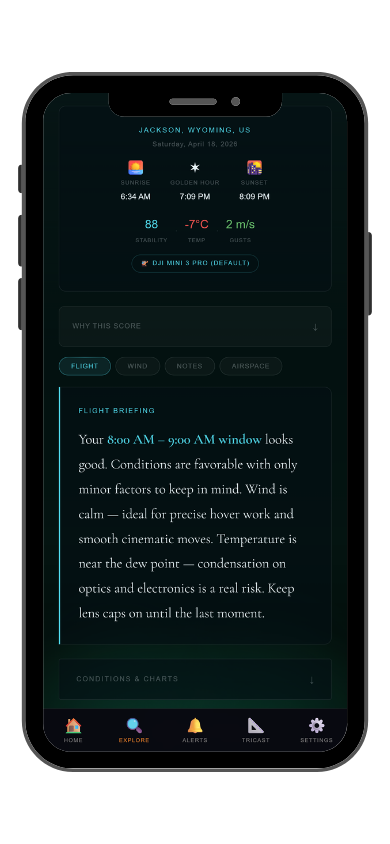
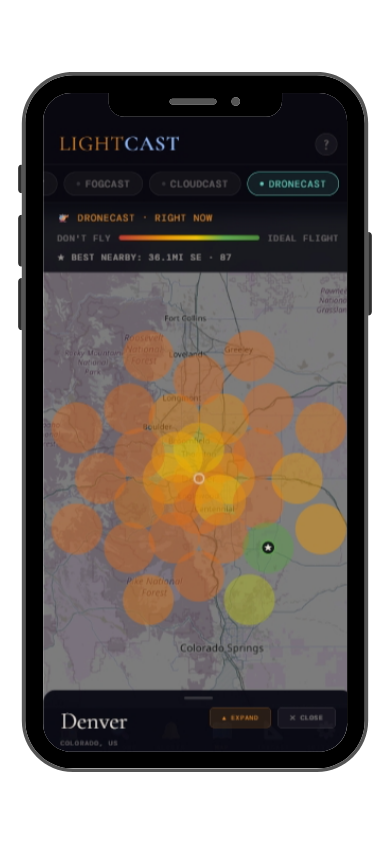
Dronecast scores wind speed, gusts, visibility, and cloud base into a single flight verdict — updated hourly. See window-by-window when conditions are safe and stable for your launch.
Get LightCast on iPhone
$2.99/mo · 7-day free trial
Check Dronecast on web →
Dronecast: flight score (left) · conditions heatmap (right)
Frequently asked
Where is the best place to photograph sunset in Rhode Island?
Beavertail State Park on Conanicut Island gives you rocky coastline with open Atlantic exposure and a lighthouse at the point. For beach compositions, Misquamicut's south-facing shoreline gets a clean horizon sunset in late summer and fall. Check
GoldCast for cloud cover and marine layer before heading out.
Can you see the Milky Way in Rhode Island?
With effort, yes. Rhode Island is heavily light-polluted, so you need to be strategic: go to the far southwest corner of the state (Napatree Point, Watch Hill, or Arcadia Management Area), shoot during a new moon window, and face south over the ocean horizon. The Milky Way core rises from the south May through September. Check
StarCast for conditions and moon phase before making the drive.
Can you fly a drone at Rhode Island state beaches?
Rhode Island state beaches generally prohibit drone use. State management areas like Arcadia may be more permissive, but check with the specific area before launching. The FAA B4UFLY app is required reading given the airspace around T.F. Green Airport and Newport State Airport, which affects large portions of the state.
When is the best time of year for coastal photography in Rhode Island?
The shoulder seasons: May through June and September through October. Summer delivers the longest days and Milky Way visibility, but marine fog and haze are common. Fall gives the best light quality, less humidity, and Atlantic storm swells that add drama to rocky coast compositions. GoldCast's cloud and fog forecast helps you pick the clearest windows in any season.
What is LightCast?
LightCast is a suite of sky and weather tools built specifically for photographers.
GoldCast handles sunset and sunrise timing with cloud and fog forecasts.
StarCast scores night sky conditions for astrophotography.
Dronecast gives wind and visibility forecasts for drone pilots. All three are free on web; full features are available in the
LightCast iOS app — $2.99/month after a 7-day free trial.