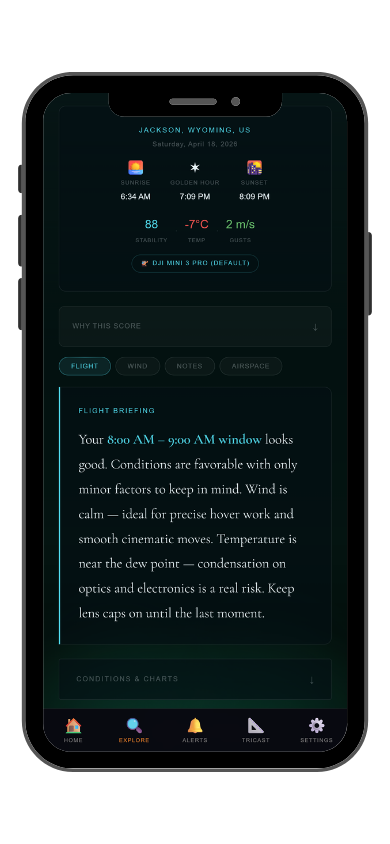
DroneCast · Flight Conditions

Drone Wind Limit MPH:
When Is It Too Windy?
Most drones max out at 20–25 mph — but gusts matter more than the average. DroneCast checks both so you're not guessing.
iOS app · $2.99/mo · 7-day free trial
Wind speed guide
What the Numbers Actually Mean for Your Drone
Your drone's wind resistance rating is for sustained wind, not gusts. A day averaging 12 mph with gusts to 22 mph is riskier than a steady 16 mph. Standard weather apps show you the average. DroneCast shows you both.
| Sustained Wind | Conditions | Verdict |
|---|
| Under 10 mph | Stable. Smooth footage. | Ideal |
| 10–15 mph | Light drift. Compensation needed. | Good |
| 15–20 mph | Challenging. Experience required. | Caution |
| 20–25 mph | Near rated limit for most drones. | Risk |
| 25+ mph | Exceeds most consumer drone specs. | Don't fly |
Common Questions
What wind speed is the limit for flying a drone?
Most consumer drones are rated to
20–25 mph sustained wind. But gusts are the real limit — a gust 10 mph above average can cause sudden drift or altitude loss. Check your specific drone's spec sheet and always factor gust speed, not just average wind.
DroneCast shows both.
Can I fly in 15 mph winds?
15 mph sustained is manageable for most drones. The question is what the gusts are doing. If gusts are reaching 20–22 mph, you're near the limit for most consumer models. DroneCast shows gust speed alongside sustained wind so you can judge both.
Why are gusts more dangerous than sustained wind?
Gusts are sudden — the drone's stabilisation system needs a moment to respond, and in that window the drone can drift significantly or lose altitude. A gust 10 mph above average is riskier than steady wind 5 mph higher. Always check peak gust speed, not just average.
What app checks drone flying conditions?
LightCast DroneCast scores flight conditions 0–100 using wind speed, gust speed, precipitation, visibility, and temperature. Free at
lightcastsuite.com/dronecast, with push notifications in the
iOS app.