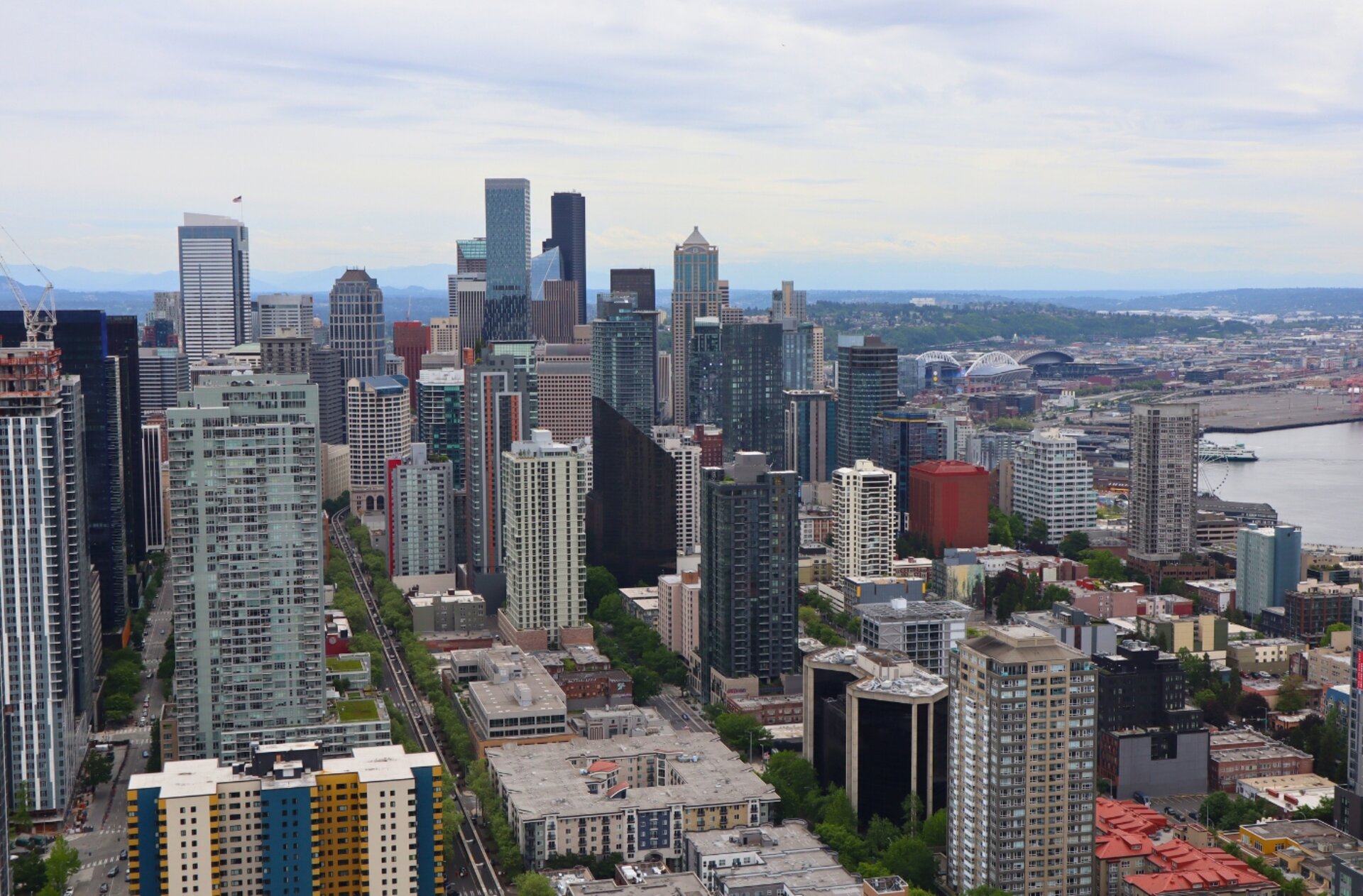
 Seattle, WA
Seattle
Photography Conditions
Sunset · Astrophotography · Drone Flight · Pre-loaded for Seattle

The most photographed view in Seattle. Space Needle, the skyline, and Mount Rainier (when visible) all line up from this small park on Queen Anne Hill. Golden hour light hits the glass towers and the mountain simultaneously on clear evenings. Rainier is visible roughly 80 days a year — check weather before you go.
Check tonight's conditions →When the Pacific Northwest weather cooperates, Rainier is extraordinary. The glacier-capped summit at 14,411 ft creates an otherworldly backdrop for star photography. Reflection Lakes on clear nights mirror the Milky Way over the peak. The window of clear nights is short — late July through September. Starcast is essential here: drive time is not worth it on a cloudy night.
Check Rainier tonight →Alki faces northeast toward downtown Seattle — one of the only spots where you can shoot the full skyline from the waterfront at sunrise. The reflected skyline in calm Elliott Bay water is a strong wide-angle composition. Sunset from here faces west over the Olympic Mountains, which turn pink at alpenglow.
Check conditions →The Olympic Peninsula is an International Dark Sky Reserve — one of the darkest places in the contiguous US. The Hoh Rain Forest and Hurricane Ridge give dramatically different foreground options. Best accessed June–September when mountain roads are clear and the (brief) Pacific Northwest summer window opens.
Check Olympics tonight →| Location | Distance | Bortle | Best for | |
|---|---|---|---|---|
| Olympic Peninsula | 85 mi W | 3–4 | Dark Sky Reserve, rain forest | Starcast → |
| Mount Rainier NP | 90 mi SE | 2–3 | Glacier + Milky Way, Reflection Lakes | Starcast → |
| Palouse region | 280 mi E | 3–4 | Rolling hills, minimal light | Starcast → |
| North Cascades | 110 mi NE | 2–3 | Alpine lakes, exceptional dark sky | Starcast → |
- Pacific Northwest: cloud cover is the primary limiting factor, not moon or Bortle
- Goldcast score above 55 in spring is a genuine call to action — don't wait
- Mount Rainier becomes accessible in May: check road conditions before driving
- Golden hour at 8:00–8:30 PM by late May, extending rapidly toward summer
- July–August is Seattle's clear sky season: the only reliable window for astrophotography
- Milky Way over Rainier and the Olympics is world-class when skies clear
- Golden hour at 9:00–9:15 PM in midsummer — very late, plan evening dinners early
- Wildfire smoke from Eastern Washington can drift west: check Starcast transparency
- September still has clear nights: last chance for Milky Way before the season ends
- Fall foliage in the Cascades peaks late September — golden hour in the mountains
- Rain returns in October: each clear day is a significant photography opportunity
- Kerry Park Mount Rainier views are best in fall before winter clouds close in
- Pacific storms produce dramatic pre-frontal and post-frontal light conditions
- Snow on the Olympics visible from Kerry Park and Alki on rare clear winter days
- Post-storm clearing with wet streets creates excellent reflection opportunities downtown
- Astrophotography is essentially off the table November–March due to cloud cover