StarCast · Craters of the Moon, ID

Night Sky Tonight in Craters of the Moon

Reading tonight's sky conditions…
/ 100
Moon
Dark window
Galactic core
Conditions
Tonight
Bortle class · Craters of the Moon
LightCast
Now on iOS
LightCast Suite
Push alerts · 3-day forecast · nearby dark skies

Get notified before clear nights. Set your threshold once and never miss a prime shooting window again.

Download on the App Store
7-day free trial · $2.99/mo · Cancel anytime in App Store
Learn more →

What's in the score
Cloud cover
Moon illumination
Bortle class
Transparency
Humidity

What the app shows you
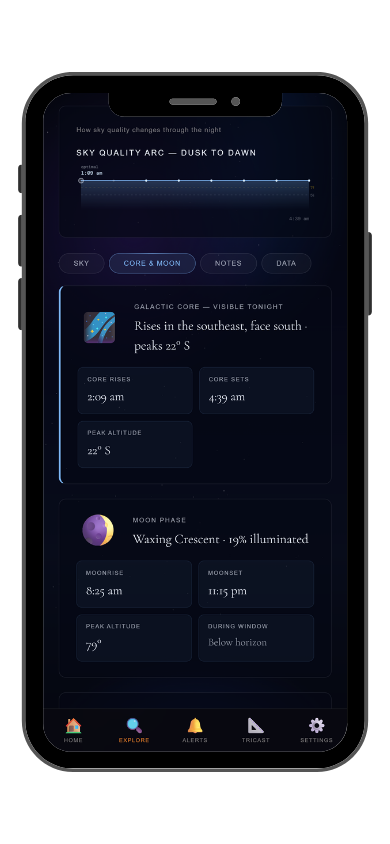
StarCast galactic core forecast
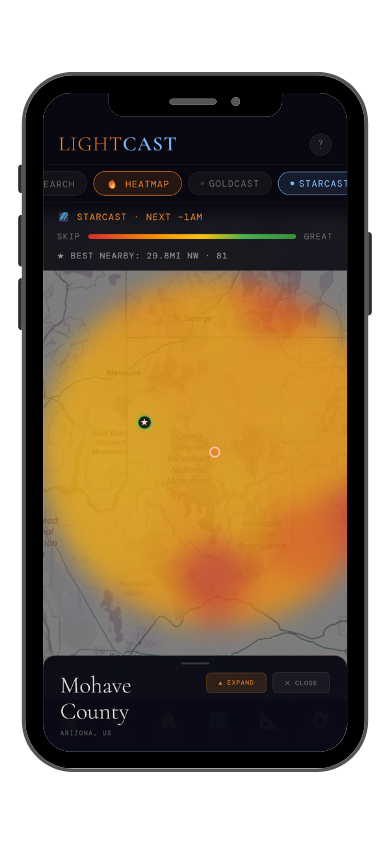
Nearby dark sky locations

Live scores for the night sky, Milky Way Core windows, darker skies nearby, & more
Get LightCast Suite on iOS


Frequently asked
Is tonight good for stargazing at Craters of the Moon?
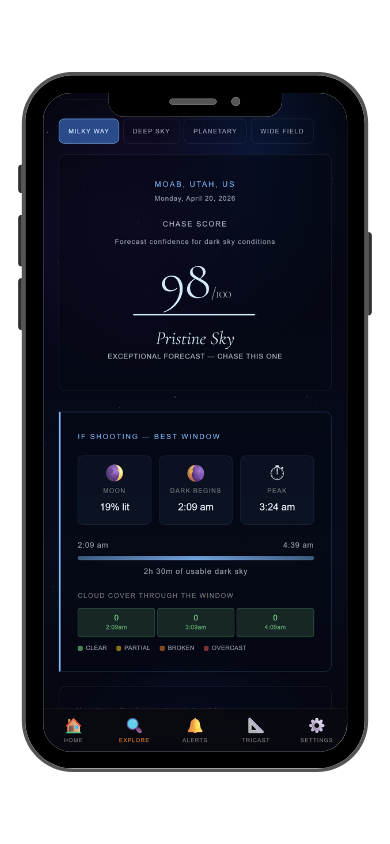
The live score above pulls today's forecast and runs it through StarCast's scoring model, which factors in cloud cover, moon illumination, Bortle class, humidity, and atmospheric transparency. Above 70 is an excellent night. Below 40, conditions are poor. The score updates daily.
What makes Craters of the Moon good for astrophotography?
Craters of the Moon National Monument in central Idaho sits in one of the darkest regions of the Pacific Northwest. The black lava flows absorb any residual light and create an otherworldly foreground that genuinely looks like a lunar landscape under a starry sky. The monument holds Dark Sky Park status, and the surrounding Snake River Plain is sparsely populated with minimal light pollution. The dramatic cinder cones, lava tubes, and spatter cones provide geological foreground that's unlike any other dark sky site in the US. The high desert air is dry and clear, and summer nights bring stable atmospheric conditions ideal for long exposures.
When is the Milky Way visible at Craters of the Moon?
The galactic core is visible at Craters of the Moon from April through October. June and July are the peak months when the core rises high enough in the southern sky for full arch shots over the lava fields. The monument is accessible year-round but winter conditions can be extreme — spring through fall is the practical shooting season.